
The Future of Environment and Climate Dynamics conference gave the National Green Tribunal (NGT) a global stage on 19 and 20 September at Vigyan Bhawan, New Delhi. Prime Minister Narendra Modi inaugurated it, and President Droupadi Murmu addressed the valedictory session. This report sets out what was said, as recorded by the Press Information Bureau (PIB), and adds independent context.
Future of Environment and Climate Dynamics: who took part
The two-day conference brought together jurists, academics, policymakers, scientists and environmental experts from 17 countries, along with UNEP and the Asian Development Bank. On the second day, two technical sessions covered ‘Planetary Environmental Challenges and Cooperation’ and ‘Forests for the Future’. The forest session looked at governance, community participation and satellite-based monitoring. The NGT also released a souvenir titled ‘Harit Nyayam’, which chronicles the tribunal’s growth.
The claims made in the inaugural speech
According to PIB’s record of the speech, Mr Modi made these points:
- India’s per capita carbon emissions are less than half the global average, and developed nations emit up to six times more per capita.
- India is the only G20 country to have met its COP21 (Paris) commitments ahead of time.
- Solar capacity has grown from about 2 GW a dozen years ago to over 160 GW. PM Surya Ghar has solarised over 50 lakh homes, and 30 lakh farmers have received solar pumps under KUSUM.
- The One Nation-One Grid project has prevented 200 million tonnes of carbon emissions.
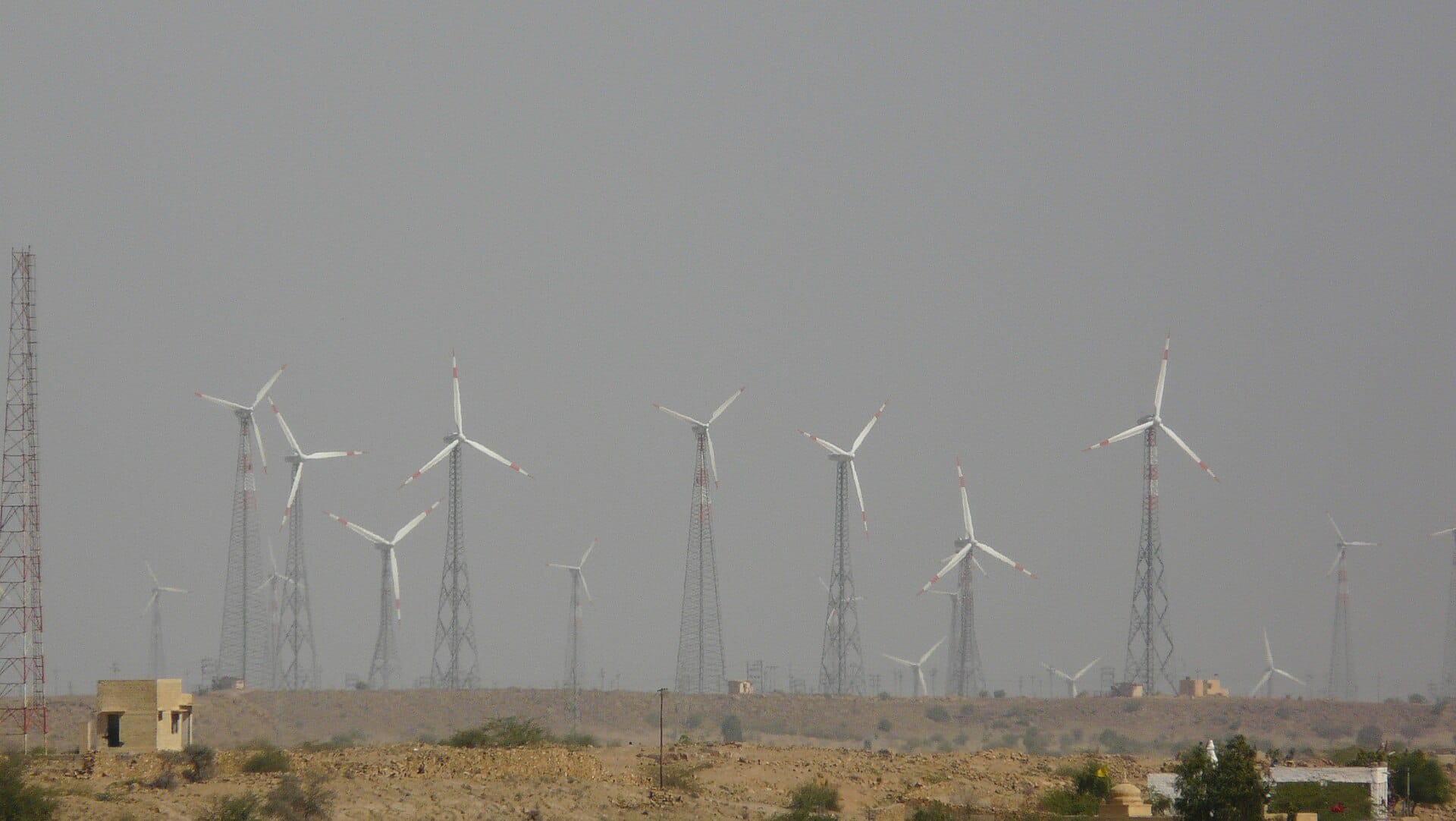
- Wind capacity has tripled, and non-fossil capacity has nearly quadrupled. Electric vehicle sales rose from under three thousand before 2014 to roughly 25 lakh last year.
- India has launched its first hydrogen train, which he described as the world’s longest.
He also cited more than 70,000 Amrit Sarovars, 24,000 natural farming clusters and a 22 per cent rise in very dense forest cover over 12 years. In addition, he pointed to international platforms India has helped start, such as the International Solar Alliance, the Global Biofuel Alliance and the International Big Cat Alliance.
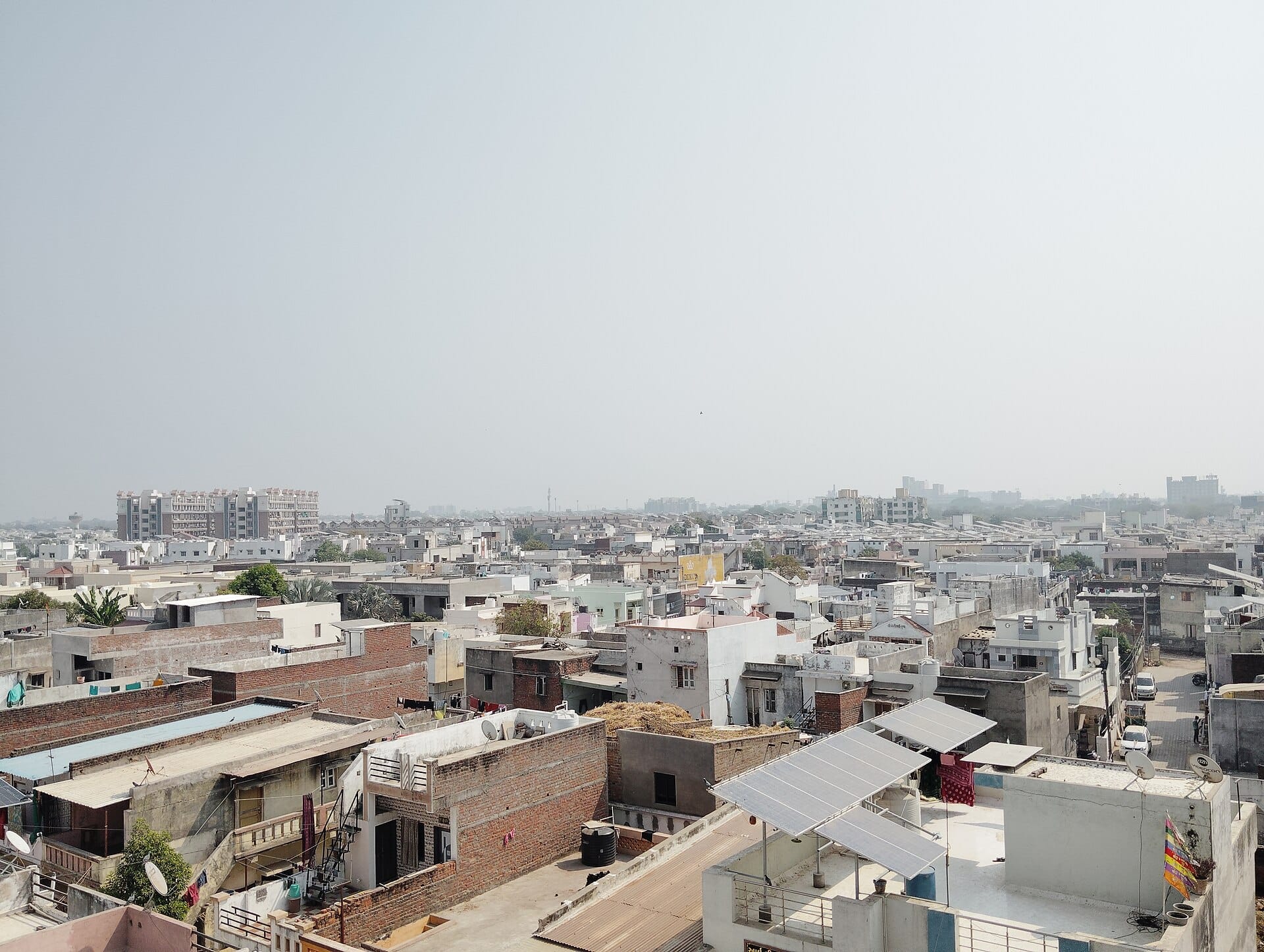
Some of these claims can be checked against public data. Reported government figures put India’s solar capacity at about 165 GW in July 2026, in line with the speech’s “over 160 GW”. Non-fossil sources passed 50 per cent of installed capacity in June 2025, five years ahead of the 2030 target. At the valedictory session, Union Minister Manohar Lal said they now account for nearly 55 per cent.
How to read the Future of Environment and Climate Dynamics claims
These are government statements, and some depend on baselines and definitions. The per capita point is well documented. Independent datasets put India at about 2.2 tonnes of CO2 per person in 2024, against a global average near 4.8 tonnes. However, India is also the world’s third-largest emitter in total, at roughly 3.2 billion tonnes, and coal still dominates its power mix. The speech did not dwell on that side of the picture.
Terms matter too. “Non-fossil” and “renewable” are different categories, and capacity is not the same as generation. Comparative claims, such as being the only G20 country to meet its Paris commitments early, are the speaker’s assertion. The PIB release does not cite a source for them, so we report them as such.
What other speakers said
At the valedictory session, the President stressed climate resilience through people-centric, community-based adaptation rooted in traditional knowledge. Justice B.V. Nagarathna of the Supreme Court said environmental governance must balance development and conservation. She noted the court’s shift towards an ecocentric approach and called for effective institutions, transparency and access to justice.
NGT Chairperson Justice Prakash Shrivastava said the discussions showed a need to move beyond identifying challenges towards building laws, institutions and partnerships. Solicitor General Tushar Mehta called environmental protection “a condition for enduring progress” rather than an impediment to it, according to PIB’s summary.
What comes next
The conference ended with a shared call to turn principles and commitments into action, stronger institutions and sustained international cooperation. The real test is verified emission cuts, not capacity numbers alone. That is where tools such as the new Net Zero Portal and NAPCC dashboard come in. Waste and resource use are part of the same story, as the World Circular Economy Forum in Gandhinagar showed. For more, explore our renewable energy coverage and India sustainability news.
Source: Press Information Bureau, Government of India (Prime Minister’s Office, 19 September 2026) and release 2312747 (Ministry of Environment, Forest and Climate Change, 20 September 2026). Statements are as recorded by PIB. Independent context from Climate Scorecard and the MNRE. Images: Ashwin Kumar (CC BY-SA 2.0) and Nizil Shah (CC BY-SA 4.0), via Wikimedia Commons.