
Prakati Products · Natural Foods
Organic Honey in India
What organic honey really means, how to check what is in the jar, and the best-rated organic honeys on Amazon.in.
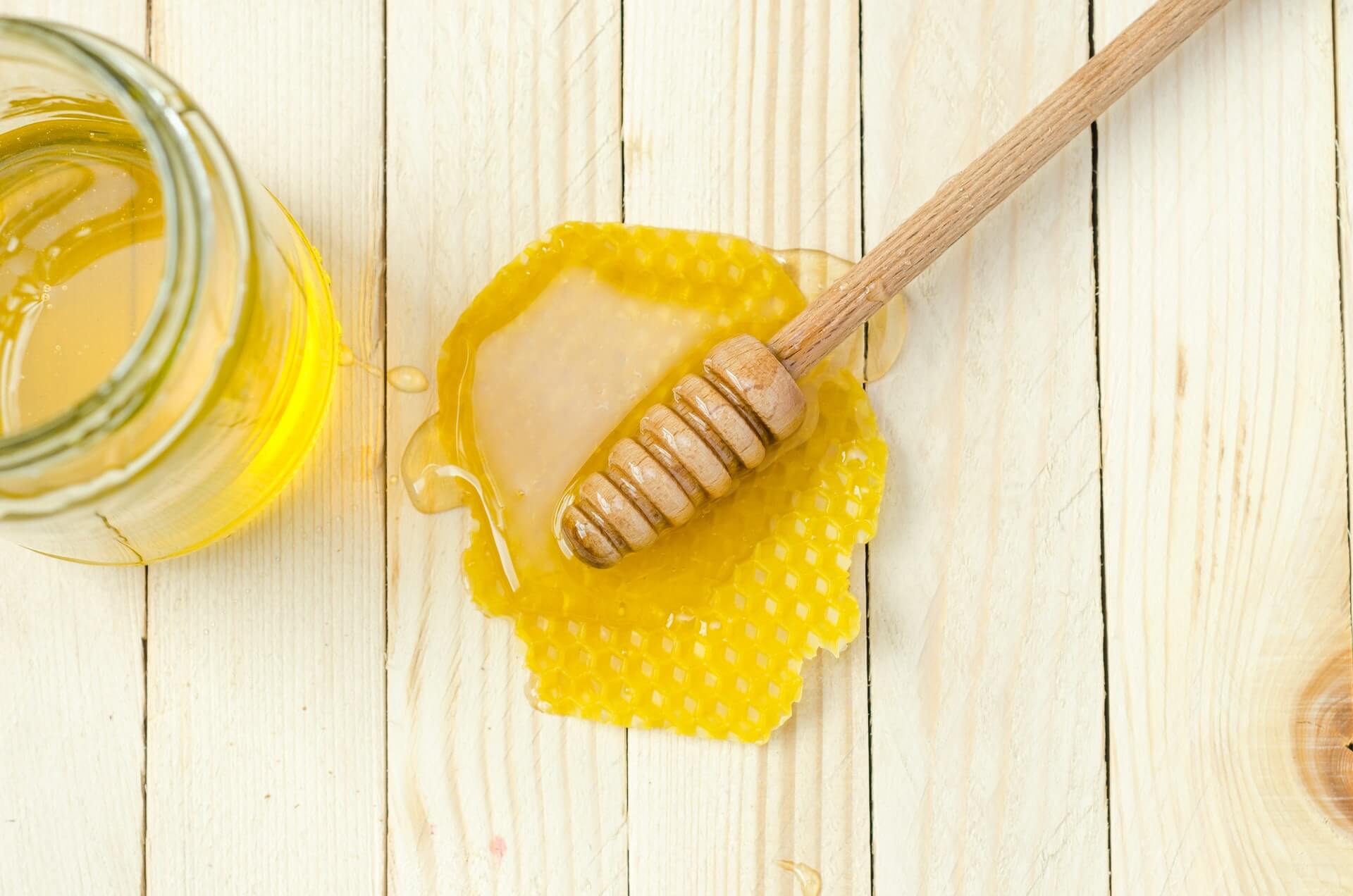
Honey sits in almost every Indian kitchen, from the morning cup of tea to home remedies passed down in families. But the jar on the shelf is not always what the label promises. Adulteration with sugar syrups has been in the headlines since our HoneyGate report, and “organic” is a word that gets used loosely. This guide explains what organic honey is, how it differs from raw and forest honey, what the evidence says about its benefits, and how to choose a jar you can trust.
Organic honey at a glance
- What it is
- Honey produced by bees whose hives are managed under an organic standard, from the siting of the hive to how the honey is handled
- Certification in India
- National Programme for Organic Production (NPOP), run by APEDA, with an accredited certifier named on the pack
- Organic logo
- The India Organic mark, now being replaced by a unified organic logo from FSSAI and APEDA
- FSSAI honey limits
- Moisture up to 20% and sucrose up to 5%
- Purity testing
- NMR testing is mandatory for exported honey and voluntary at home. FSSAI’s domestic check looks for a rice-syrup marker (SMR)
- Natural changes
- Colour, aroma and texture vary with the flowers. Honey that crystallises is normal
- Not for
- Babies under 12 months
Sources: APEDA (NPOP), FSSAI, CDC. Standards change, so check the certifier’s details on the pack.
What makes honey organic
Bees do not respect farm boundaries. A colony forages across a few kilometres, so honey can only be organic if the hives sit among organically managed fields or uncultivated land such as forests and hills. That is why much of the certified organic honey in India comes from forest and Himalayan foothill regions.
Organic standards such as NPOP set rules on where the hives are placed, how the colony is looked after and how the honey is extracted and packed. An accredited certifier checks the producer, and the certification is what separates “organic” from a marketing word. Our explainer on the Jaivik Bharat and NPOP organic logos shows what to look for on a pack.
Extraction is simple. Beekeepers cut the wax cappings from the honeycomb frames and spin them in a centrifuge so the honey flows out, then strain it. Raw honey is stopped at that point, while processed honey is also heated and finely filtered.
Organic, raw, forest or multifloral: what the labels mean
These words describe different things, and a jar can carry several of them or just one. An organic jar is not automatically raw, and a raw or forest jar is not automatically organic.
| Label | What it tells you | What it does not tell you |
|---|---|---|
| Organic | Produced under an organic standard and checked by a certifier | That it is unheated, or that it tastes or performs better |
| Raw | Not heated or pasteurised, and only lightly strained | Where the bees foraged or how the hive was treated |
| Forest or wild | Collected from wild colonies or forest hives, often from the rock bee, Apis dorsata | That it is certified organic |
| Multifloral | Nectar from many kinds of flowers, so the flavour varies by season and region | Purity or certification |
Forest honey is sometimes confused with honeydew honey, which bees make from sap excreted by insects on trees. They are different products.
What honey can and cannot do
Honey is mostly sugar, around four-fifths of it, with water and small amounts of antioxidant compounds. That makes it a more interesting sweetener than refined sugar, but it is still a sweetener, and the evidence for big health claims is thin.
- Cough. The World Health Organization suggests honey to soothe a cough in children older than one year. Reviews find it can reduce how often and how badly children cough, although the quality of the evidence is low.
- Wounds. Medical-grade honey dressings are used in clinics. Honey from the kitchen shelf is not a substitute for proper wound care.
- Diabetes, blood pressure and weight. Honey raises blood sugar like other sugars, and it is not a treatment for any of these. People managing diabetes should ask their doctor before using it.
- Babies. Never give honey to a child under 12 months. It can carry spores that cause infant botulism.
For a side-by-side look at honey and its closest traditional rival, read Honey and Jaggery: Which is the Healthier Choice.
Sources: WHO, Cochrane review of honey for acute cough in children, CDC.
How to choose organic honey in India
- Look for the organic logo and the certifier’s name. A genuine organic jar names the certification body. If it only says “organic” in large letters, treat that as a claim, not proof.
- Find the FSSAI licence number. It should appear on the label of any packaged honey sold in India.
- Read the ingredients. The list should say honey and nothing else. Syrups and “sugar” are red flags.
- Ask for a recent lab report. A third-party test for the batch is a good sign, though no single test is a guarantee. NMR testing is voluntary for honey sold in India.
- Check the origin. Honest brands name the region, the flowers and the harvest season.
- Be wary of very low prices. Honey is slow, labour-intensive work, and a jar priced far below its peers deserves a second look.
- Skip the home tests. The water-glass, thumb and flame tests are widely shared but cannot reliably detect modern syrups.
- Do not fear crystals. Honey that turns grainy or solid has not gone off. Warm the jar gently in lukewarm water to loosen it.
Best-rated organic honey on Amazon.in
These are the highest-rated organic honeys on Amazon.in in a snapshot taken on 6 October 2026. We included jars that name themselves organic, show a glass pack in the product photo and have more than 1,000 ratings, then ranked them by star rating, using the number of ratings to break ties. Ratings are customers’ opinions, not lab results, and they change over time. We have not tested any of these honeys.
Disclosure: these are Amazon India affiliate links. If you buy through them, Prakati may earn a small commission at no extra cost to you, which helps keep our sustainability journalism free.
| Honey | Stars (out of 5) | Ratings | What the listing says |
|---|---|---|---|
| Indigenous Raw Organic Honey, 500 g | 4.2 | 17,575 | The title states NMR tested, NPOP organic and USDA certified, raw and unpasteurised |
| The Honey Shop Raw Organic Wild Forest Honey, 320 g | 4.2 | 3,044 | Wild forest honey from Apis dorsata bees, which the listing says was tested by a lab in Germany. No organic certificate is named in the listing text we read |
| Saffola Wild Forest Organic Honey, 500 g | 4.2 | 1,202 | Sourced from the forests of the Aravallis, with no added sugar. No organic certificate is named in the listing text we read |
| Dabur Organic Honey, 500 g | 4.1 | 11,147 | The title states NPOP organic certified, raw, unprocessed and unpasteurised |
Ratings and review counts from Amazon.in, 6 October 2026. Where a listing names no certificate, check the jar for the certifier’s name and logo before you rely on the word “organic”.
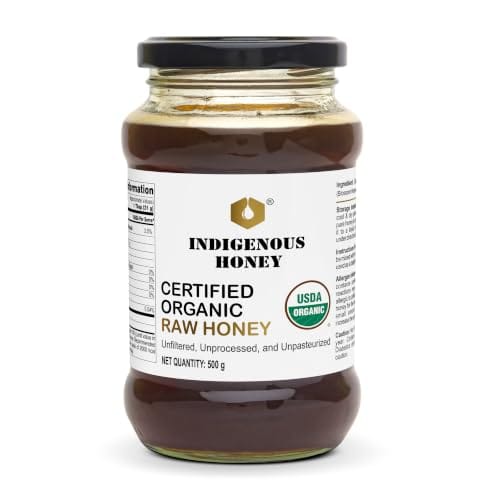
Indigenous Raw Organic Honey, 500 g
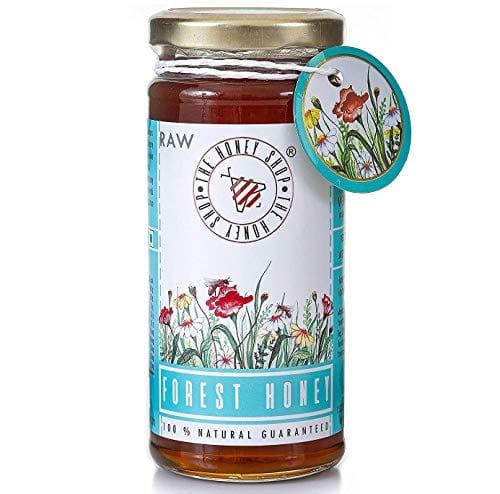
The Honey Shop Wild Forest Honey, 320 g
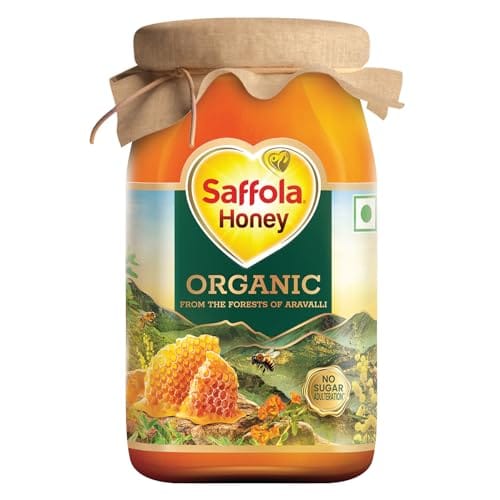
Saffola Wild Forest Organic Honey, 500 g
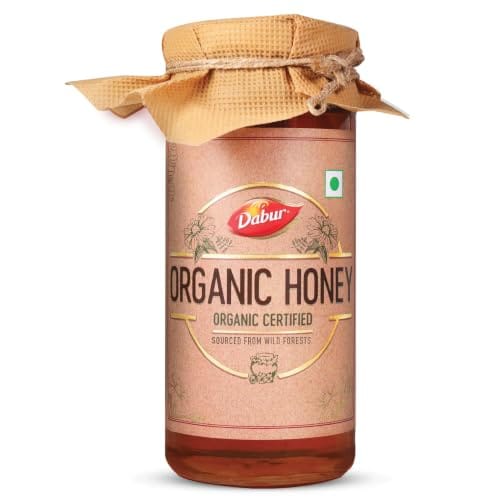
Dabur Organic Honey, 500 g
Storing and using honey
Keep honey in a tightly closed jar at room temperature, away from heat, sunlight and moisture. It keeps for a long time when sealed, so you can buy the size you will actually finish and still enjoy it at its best. If it crystallises, stand the jar in lukewarm water until it loosens. For tea, stir it in once the cup has cooled a little rather than into boiling water.
Honey and the planet
Bees are among the most important pollinators for India’s crops and wild plants, so buying honey from producers who protect hives and habitat helps more than the jar alone. Responsible harvesters leave enough honey for the colony to feed on, and organic standards limit the chemicals used around hives. Choose the pack size you will finish, and reuse or recycle the container.
Frequently asked questions
Is organic honey better than regular honey?
Organic describes how the honey was produced and certified, not how nutritious it is. There is no strong evidence that organic honey is healthier than pure regular honey. The value of the label lies in the standards around hive location, colony care and traceability.
Is raw honey the same as organic honey?
No. Raw means the honey was not heated or pasteurised. Organic means it was produced under an organic standard and certified. A jar can be raw, organic, both or neither.
How can I tell if honey is pure?
No home test is reliable. Look for the certifier’s name and logo on organic honey, the FSSAI licence number, an ingredient list that says only honey, and a recent third-party lab report from the brand. NMR testing is mandatory only for exports, so a voluntary report is a useful signal for honey sold in India.
Why has my honey turned solid?
Crystallisation is natural and does not mean the honey is spoiled or adulterated. Warm the jar gently in lukewarm water and stir to bring it back to a liquid.
Can babies have honey?
No. Honey should not be given to children under 12 months because it can carry spores that cause infant botulism. For children older than one year, the World Health Organization suggests honey to soothe a cough.
Can people with diabetes eat honey?
Honey is a sugar and raises blood glucose, so it is not a safe swap for treatment. Anyone managing diabetes should ask their doctor or dietitian how much, if any, suits them.
Sweetness worth asking questions about
Keep reading with HoneyGate: honey adulteration in India and organic jaggery, explore more organic living guides and our eco-friendly products, or find organic food producers in the Prakati Green Directory.