

Flush a toilet in an Indian town and the water starts a journey. In a few cities it ends at a modern treatment plant. In many places it ends in a drain, a pond or a river. The Namami Gange programme, launched in 2014 to clean the Ganga, has become a testing ground for sewage treatment in towns of every kind, and a recent government backgrounder lays out the toolbox. This guide translates it into plain language.
The scale of the problem
India generates far more sewage than it treats. Central Pollution Control Board data from 2021, as reported by Down To Earth and in a government reply, put urban sewage at about 72,368 million litres a day (MLD) against 31,841 MLD of installed treatment capacity, and roughly 20,235 MLD actually treated. Different sources round the percentage differently, and capacity does not always equal treated flow, so treat the figures as indicative. The point stands: the gap is large.
Namami Gange’s own numbers show the effort. The programme has taken up 219 projects worth about Rs 35,664 crore, with 147 completed, across 10 Ganga basin states. It targets 6,603 MLD of sewage treatment capacity, of which 4,341 MLD has been created according to the backgrounder. (Other government releases use slightly different cut-off dates for capacity, so figures vary by report.)
Sewage treatment: one size does not fit all
The programme calls its approach “technology-neutral”: choose the process that suits the town, the land and the discharge rules, not a standard design everywhere. Here are the main options.
The workhorses. Activated sludge, upflow anaerobic sludge blanket reactors, sequencing batch reactors and moving bed biofilm reactors are the established ways of letting microbes digest the organic matter in sewage.
NEREDA. This uses aerobic granular sludge: the same kinds of bacteria, but clumped into compact granules that settle fast. The backgrounder cites power savings of about 50 per cent against activated sludge and 20 per cent against a sequencing batch reactor. At the 60 MLD Pahadi Patna plant, the bioreactor takes about 1,900 square metres, against 5,400 for a comparable sequencing batch reactor.
Food Chain Reactor. Introduced to India through the programme, it adds fixed media and plant roots to the process for a smaller footprint, lower power and nutrient removal. Five plants are working in Bhatpara (West Bengal) and Prayagraj (Uttar Pradesh), and one is being built at Bhagalpur.
Where land is scarce
Multi-storey plants. At Muni Ki Reti near Rishikesh, a 7.5 MLD plant stacks its processes over four storeys on roughly 900 square metres. That works out to about 120 square metres per MLD with nutrient removal, compared with about 400 for the conventional alternative the report cites. It is the country’s first four-storey municipal plant under the programme.
Electrocoagulation. In cold, hilly, hard-to-reach places such as Badrinath and Chamoli, systems that use electric current to clump pollutants have been set up (17 installations in Uttarakhand).
On-site advanced oxidation. A pilot at Varanasi’s Assi drain treats water in the drain itself, avoiding long diversion sewers. Its payment model is unusual: the contractor is paid by the quantity of water treated and by hitting performance targets, with no upfront capital payment.
Johkasou. A prefabricated, plug-and-play unit from Japan that treats household-scale flows, useful underground and where there are few operators. Six are installed in Uttarakhand.
Nature-based options for small towns
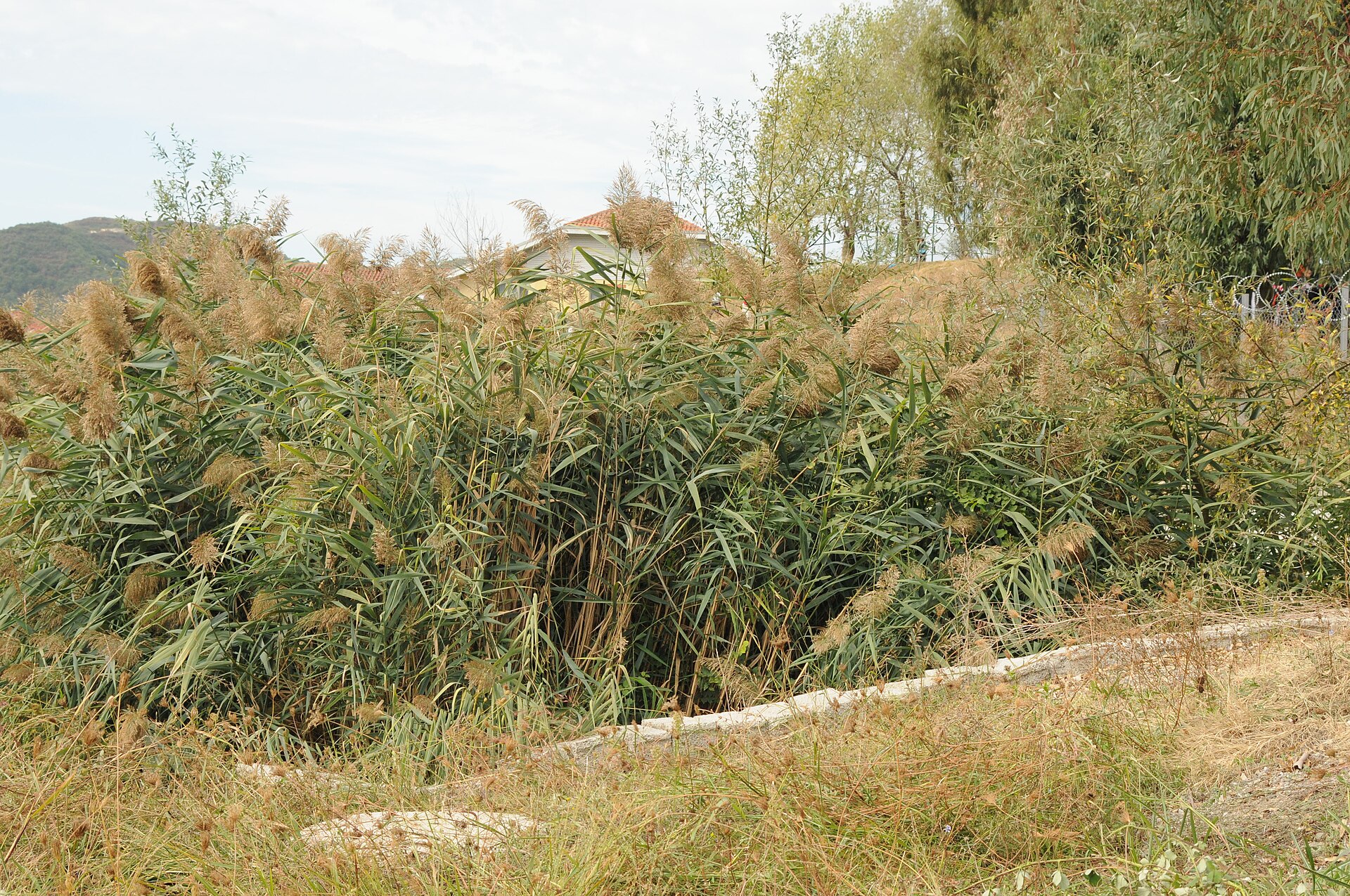
Not every town can afford a sewer network. In Bithoor (Uttar Pradesh), with about 20,000 people, six constructed wetlands were built on the drains to treat roughly 2 MLD in place. Biochemical oxygen demand, a measure of organic pollution, fell from around 75 mg per litre at the inlet to under 10. A soil biotechnology plant at Devprayag (1.2 MLD) uses native microbes, plants and a mineral filter bed, with few moving parts.
For homes on septic tanks, faecal sludge treatment plants, such as a 10 kilolitre per day pilot at Chunar costing Rs 2.7 crore, handle the periodic sludge that tankers bring. They complement, rather than replace, sewage plants: septage can also be received at a plant and treated alongside city sewage.
Energy and resources from sewage
Sewage plants are big electricity users, so the programme is pushing them to generate their own. Varanasi’s 140 MLD Dinapur plant, handling about 110 MLD, produces biogas covering roughly 52 to 72 per cent of its power use, and Prayagraj’s 80 MLD Naini plant gets about half its daily power from biogas. A 1,000 kW solar plant at the 42 MLD Naini plant generates about 3,850 units a day, and a 220 MLD plant at Meerut is planned as a “Green STP” with 100 per cent solar power and bio-CNG. A sludge incineration pilot in Rishikesh dries and burns dewatered sludge to a stable ash that could be considered for fire bricks or concrete. (For the biogas link, see our explainer on India’s compressed biogas push.)
Keeping plants running
Building is the easy part. Old plants often miss treatment standards, and old trunk sewers silt and crack. The programme rehabilitates both, relining a 7 km brick trunk sewer in Varanasi and a 9.3 km one in Kanpur. It also uses a hybrid annuity model, with construction payments plus performance-linked payments over 15 years and “one city, one operator” contracts. Thirty-one projects covering 1,955 MLD have been taken up this way, with 11 (454 MLD) complete.
The caveat
Capacity is not the same as clean rivers. India’s national auditor flagged in 2025 that some plants run under capacity and untreated sewage still reaches the Ganga, so how the plants are operated, and whether drains actually connect to them, decides the result. Government data show bathing-water standards for faecal coliform are met across Uttarakhand and Jharkhand and parts of other states, while other stretches still exceed limits.
What readers can take from it
The big idea is matching the technology to the place: a vertical plant for a cramped pilgrimage town, a wetland for a small bazaar town, a prefabricated unit for a hillside, an energy-positive plant for a metro. As Prakati has covered in industrial pollution under Namami Gange and a new dye-wastewater filter, cleaner water needs better technology and better operations at the same time. See more in our water section.