
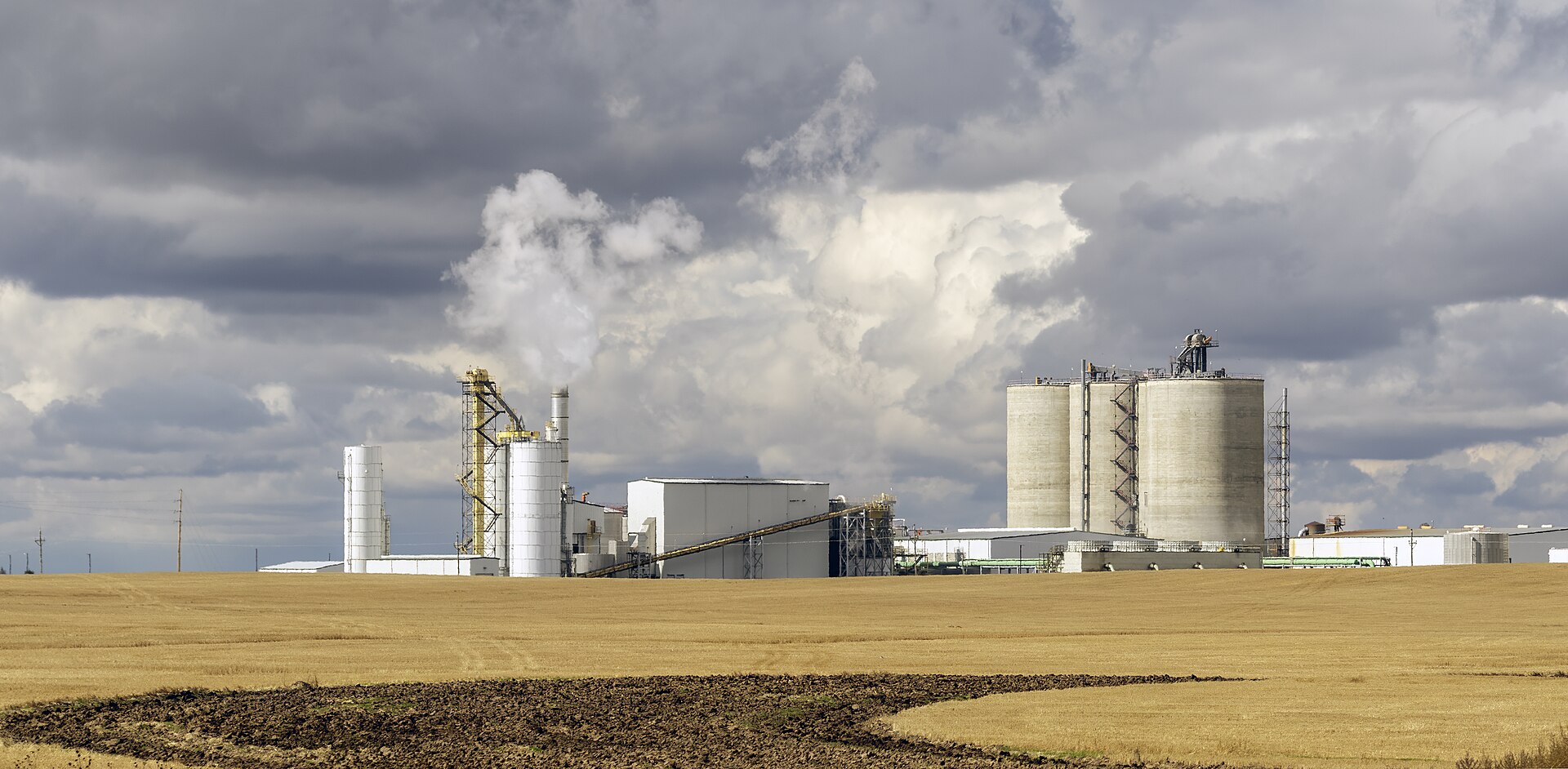
Some factories cannot simply plug into solar power. Cement makers release carbon dioxide from the limestone itself. Steel mills use coal to strip oxygen from iron ore. Fertiliser and chemical plants use carbon as a raw material. These “hard-to-abate” industries are why India’s net-zero 2070 goal needs more than renewable electricity, and why a technology called carbon capture, utilisation and storage (CCUS) keeps coming up. A new government backgrounder lays out where CCUS in India stands.
How CCUS works, in three steps
- Capture. Equipment separates carbon dioxide from the gases leaving a plant, then purifies, dries and compresses it.
- Move. The compressed CO2 travels by pipeline, or by ship or other transport over longer distances.
- Use or store. It is either put to work (in concrete, urea, green methanol, food and beverages, enhanced oil recovery) or injected deep underground into depleted oil and gas fields, deep saline aquifers or basalt rock, to stay there permanently.
Why CCUS in India is gaining interest
The backgrounder says emissions from hard-to-abate sectors and thermal power could reach nearly 2,300 million tonnes a year by 2030. As of August 2026, fossil-based sources still made up 45.12 per cent of installed power capacity, so existing plants will be around for a while. NITI Aayog has described CCUS as critical for steel, cement, oil and gas, petrochemicals, chemicals and fertilisers. It also features in plans for “blue” hydrogen made from coal gasification with carbon capture, as opposed to green hydrogen made with renewable power (see our report on India’s green hydrogen offtake record).
The hub-and-cluster idea

Rather than every plant building its own pipeline and storage, India’s framework imagines shared regional hubs where several emitters feed common infrastructure. The Department of Science and Technology’s CCUS Roadmap identifies likely regions: the Gujarat coast (refineries and chemicals), the Odisha-Jharkhand belt (steel and cement) and the oil and gas areas of north-east India.
What India has built so far
- Budget 2026-27: a Rs 20,000 crore CCUS scheme over five years across power, steel, cement, refineries and chemicals.
- DST CCUS R&D Roadmap (December 2025): research, funding and deployment direction, with a focus on commercial readiness.
- National CCUS Centres at IIT Bombay and JNCASR, Bengaluru (set up in 2022).
- First integrated CCUS field laboratory, IIT Bombay (inaugurated May 2026): captures up to 3 tonnes of CO2 a day from industrial emissions and ambient air, converts it to carbonate and bicarbonate products, and will test storage in the Deccan basalts.
- CCU testbeds: a cluster of five carbon capture and utilisation testbeds for cement (May 2025), plus two coal-gasification testbeds aiming at methanol and DME.
- Project pipeline (as of April 2026): 3 operational projects (Madhya Pradesh, Tamil Nadu, Maharashtra), 6 under construction (Andhra Pradesh 3, Telangana 2, Maharashtra 1) and 16 proposed (Assam and Odisha four each).
The honest debate
CCUS is useful, but it is not a magic switch, and Prakati’s readers should see the criticism too. Global capture capacity is still small: figures vary by source and date, but the Global CCS Institute’s 2026 status report counts about 68 million tonnes a year across 113 commercial facilities, and critics note this is a tiny share of global fossil emissions. Less than 5 per cent of announced capture capacity worldwide involves utilisation rather than storage, and analysts at IEEFA argue projects have frequently suffered cost overruns and underperformance. The IEA, by contrast, expects capture capacity to keep growing, to around 430 million tonnes a year by 2030 on the current project pipeline.
For India, the sensible reading is “complement, not substitute”. Renewable energy, efficiency and electrification should do the heavy lifting, with CCUS reserved for emissions that cannot be removed any other way. Safe long-term storage also has to be proven in Indian geology, which is exactly what the IIT Bombay basalt drilling is meant to test. Several of the listed uses, such as enhanced oil recovery, keep fossil production going, so how a project uses its captured carbon matters.
What to watch
Whether the Rs 20,000 crore scheme moves from announcement to funded projects, whether regional hubs get shared pipelines and storage, and whether Indian exporters in cement and steel find CCUS a useful hedge against carbon border taxes (see India-EU talks on CBAM). For wider climate context, browse our net-zero and carbon reduction sections.