
Every two years, the countries that signed the UN Convention to Combat Desertification (UNCCD) gather to compare notes on one of the least glamorous but most consequential fights in the sustainability world: keeping land alive. This year’s edition, UNCCD COP17, ran from 17–28 August 2026 in Ulaanbaatar, Mongolia, under the theme “Restoring Land, Restoring Hope” — and by the time it wrapped, it had produced a headline number that matters well beyond the summit hall: roughly USD 1.3 billion in new and pipeline financing pledged for land restoration and drought resilience worldwide.
India came to Ulaanbaatar with its own numbers to show, and Union Environment Minister Bhupender Yadav spent the week making India’s case across four separate ministerial dialogues — on land restoration outcomes, on financing mechanisms, on drought resilience, and on rangelands. Taken together, the four addresses sketch out a fairly complete picture of where India’s degraded-land problem stands, and what the government is betting on to fix it.
The Bonn Challenge Number: 21.76 Million Hectares
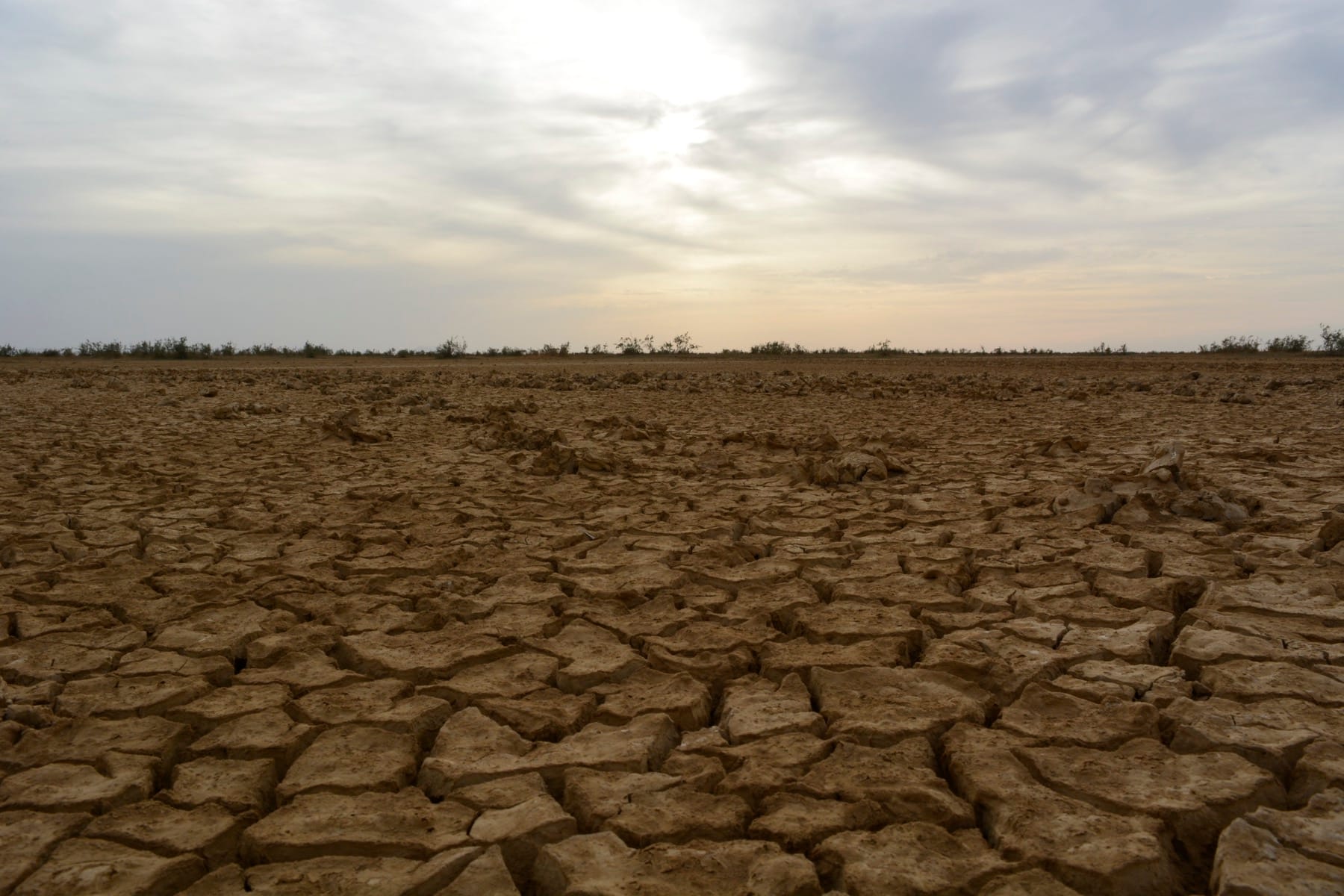
According to the new report, covering 2011–2020, India brought 21.76 million hectares under restoration during that decade — and in doing so generated an estimated 1.22 billion person-days of employment. That employment figure is worth sitting with: it means restoration in India isn’t purely an ecological line item, it’s also functioning as a genuine rural jobs programme, built into watershed development, agroforestry, and afforestation work that pays people to do the physical work of reviving land.
India’s restoration accounting isn’t limited to counting hectares of forest planted. Yadav described an assessment that spans forests, agricultural land, soil and water conservation, and other land-use systems — a broader definition than the tree-planting-photo-op version of “restoration” that often dominates the public conversation. The next reporting cycle, covering 2021–2025, will track the same three dimensions (area restored, financial flows and employment generated) in partnership with the ICFRE Centre of Excellence on Sustainable Land Management and IUCN.
The delivery mechanisms behind that number are largely familiar names for anyone who follows Indian environmental policy: the Green India Mission for forest and tree cover, the Compensatory Afforestation Fund for directing money from forest diversion into afforestation elsewhere, and the Nagar Van Yojana extending the restoration push into cities through urban forestry. What India described at COP17 was less a new programme than an argument that these existing pieces, run together, are producing results at meaningful scale.
Paying For It: Green Bonds and a Green Credit Market
A restoration target is only as real as the money behind it, and Yadav used a separate dialogue — on innovative financing for land restoration — to lay out India’s answer to the “who pays” question.
The government’s pitch rests on three legs. First, a blended green-finance framework that channels funding toward climate adaptation, sustainable land use, forestry, agriculture, and biodiversity conservation. Second, Sovereign Green Bonds, which India has used to raise capital earmarked for environmental and climate priorities since 2022. Third, and arguably the most structurally interesting piece, the Green Credit Programme — a mechanism that lets private entities finance the restoration of degraded forest land and, once that land clears specific restoration thresholds (five years of work, at least 40% canopy density), earn tradeable credits usable once toward compensatory afforestation or CSR obligations.
Whether the Green Credit Programme scales into a genuine restoration-finance market or remains a niche instrument is still an open question — it’s a young scheme, and questions about additionality and verification are the same ones that dog carbon-credit markets generally. But the pitch India made in Ulaanbaatar was explicit: don’t treat land restoration as a cost centre funded purely out of public budgets. Treat it as an investment category that can pull in private capital if the incentive structure is right. “Land restoration is not a cost, but an investment in food, water, biodiversity, livelihoods and long-term resilience,” Yadav told the dialogue — a framing India is clearly hoping other countries, and international financiers, start to adopt too.
From Drought Response to Drought Prevention
The third dialogue tackled a subtly different problem: not restoring land after the fact, but keeping drought from becoming a full-blown crisis in the first place. Yadav’s framing here was blunt — drought, he argued, should be treated as “a predictable and preventable risk, not a recurring disaster,” and the goal should be “preparedness over response, prevention over crisis management, resilience over recovery.”
Concretely, that means India leaning on satellite-based drought assessments and rainfall monitoring to trigger preparedness measures before a dry spell turns into an emergency, alongside catchment-forestry work aimed at improving water retention and groundwater recharge — summed up in the line “restore the forest, before the flow.” On the ground, that translates into watershed programmes structured on a ridge-to-valley basis, community-led restoration of mountain springs, drinking-water reliability programmes for vulnerable areas during dry periods, and crop insurance designed to soften the financial blow when a drought does hit anyway.
None of this is entirely new policy — most of the individual pieces (watershed development, crop insurance, groundwater recharge) already exist. What COP17 offered was a chance for India to frame them collectively as a drought-resilience system rather than a scattered set of programmes, and to make the case internationally that early-warning-plus-prevention beats disaster relief on cost and human impact alike.
Rangelands: The Quietly Underrated Ecosystem
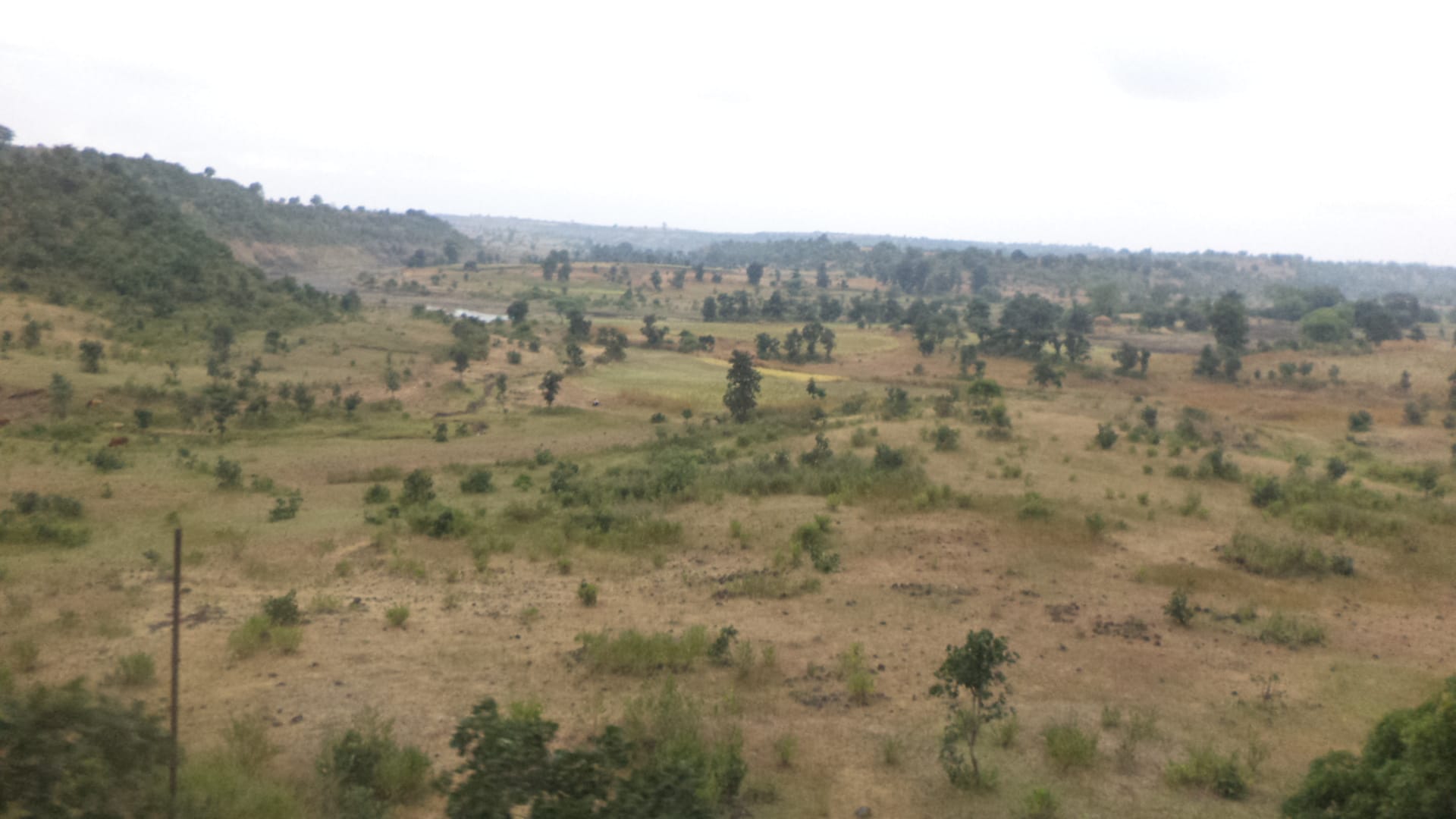
The final dialogue, on rangelands, is arguably the most interesting of the four — partly because rangelands rarely get this kind of policy spotlight in India, and partly because the underlying land-classification problem is a long-standing one. India’s rangelands stretch from Himalayan alpine pastures to the Central Indian savannas, the arid Thar and Kachchh, and the southern sholas — roughly 10 million hectares of permanent pastures and grazing lands nationally, sustaining both livestock economies and pastoralist communities who have often been treated, in policy terms, as land users rather than land custodians.
Yadav’s core message flipped that framing: “Successful restoration begins with pastoralists as custodians, not merely beneficiaries.” He pointed to India’s roughly 25,000 community-protected sacred groves — known as Orans in Rajasthan — covering around 0.6 million hectares, as a working example of traditional community stewardship that predates any government restoration scheme and, in many cases, is now protected under statutory provisions. These groves also matter for wildlife: they double as habitat for species like the Great Indian Bustard, one of the world’s most critically endangered birds, whose population has collapsed largely due to grassland and scrubland loss across its historic range.
The dialogue also touched on India’s Cheetah reintroduction programme, with plans to expand the species’ range into grassland habitats such as Banni in Gujarat — a reminder that grassland restoration isn’t only a carbon or livelihoods story, it’s directly tied to some of India’s highest-profile conservation efforts. Deep-rooted grasses in these ecosystems do quiet but significant work: storing soil carbon, improving water infiltration, and supporting the same groundwater recharge that shows up in the drought-resilience conversation.
Reading Between the Speeches
It’s worth being honest about what these four dialogues were and weren’t. They were speeches — carefully framed statements of policy position and progress, delivered at a diplomatic summit, not independently audited outcome reports. The 21.76-million-hectare figure comes from India’s own Bonn Challenge self-reporting; the Green Credit Programme is still early enough that its real-world impact at scale hasn’t been tested; and “community-led restoration” is a phrase that can mean genuine devolution of control or can mean very little, depending entirely on implementation on the ground.
What they add up to, though, is a coherent policy narrative that India is trying to export: restoration paying for itself through carbon and credit markets, drought treated as an engineering and data problem rather than a fate to be endured, and rangelands reframed as ecosystems worth protecting on their own terms rather than “wasteland” awaiting some other use. Whether India’s 26-million-hectare Bonn Challenge target gets hit by 2030 will depend far less on what got said in Ulaanbaatar than on how much of this actually reaches the ground — the same gap between commitment and delivery that shadows every restoration pledge, everywhere. But as a statement of where the country wants the conversation to go next, COP17 was about as clear as it gets.
Land restoration connects directly to the broader push for sustainable farming practices across India, where healthier soil and better water retention on agricultural land do much of the same resilience-building work described in the drought dialogue. It also builds on the momentum from India’s first-ever Guide to Grasslands and Other Open Natural Ecosystems, launched at the same UNCCD COP17 summit, and connects to the government’s wider Green Credit Programme, referenced above as one of the financing pillars India pitched in Ulaanbaatar. For readers tracking India’s broader climate diplomacy, this summit followed closely on the heels of the BRICS Environment Ministers’ Meeting earlier this year — a reminder that the summit-stage conversation about degraded land and the everyday conversation about how India farms are really the same conversation, just at different scales.
Source: Press Information Bureau, Government of India — India restored 21.76 mn ha Land during 2011–2020, generating 1.22 bn person-days of Employment, India calls for Diversified, Adequate, Predictable and Sustained International Finance for Land Restoration and Drought Resilience, India calls for a shift from Drought Response to Drought Resilience, India Calls for Community-Led Restoration of Rangelands