
On 26 August 2026, a small Indian delegation sat down with counterparts from Russia’s Academy of Sciences in Moscow to talk about one of the hardest animals on Earth to count: the snow leopard. The venue was the A.N. Severtsov Institute of Ecology and Evolution, the occasion was a Russian-Indian Roundtable Meeting on Snow Leopard Study and Conservation, and the underlying reason it happened at all traces back to an alliance India built from scratch just three years earlier.
It’s easy to skim past a press release about a “roundtable meeting” as bureaucratic filler. This one is worth a second look, because it says something concrete about how India has positioned itself in global wildlife conservation — not just as a country with big cats to protect, but as a source of the science other countries now come to learn from.
Why Counting Snow Leopards Is Genuinely Hard
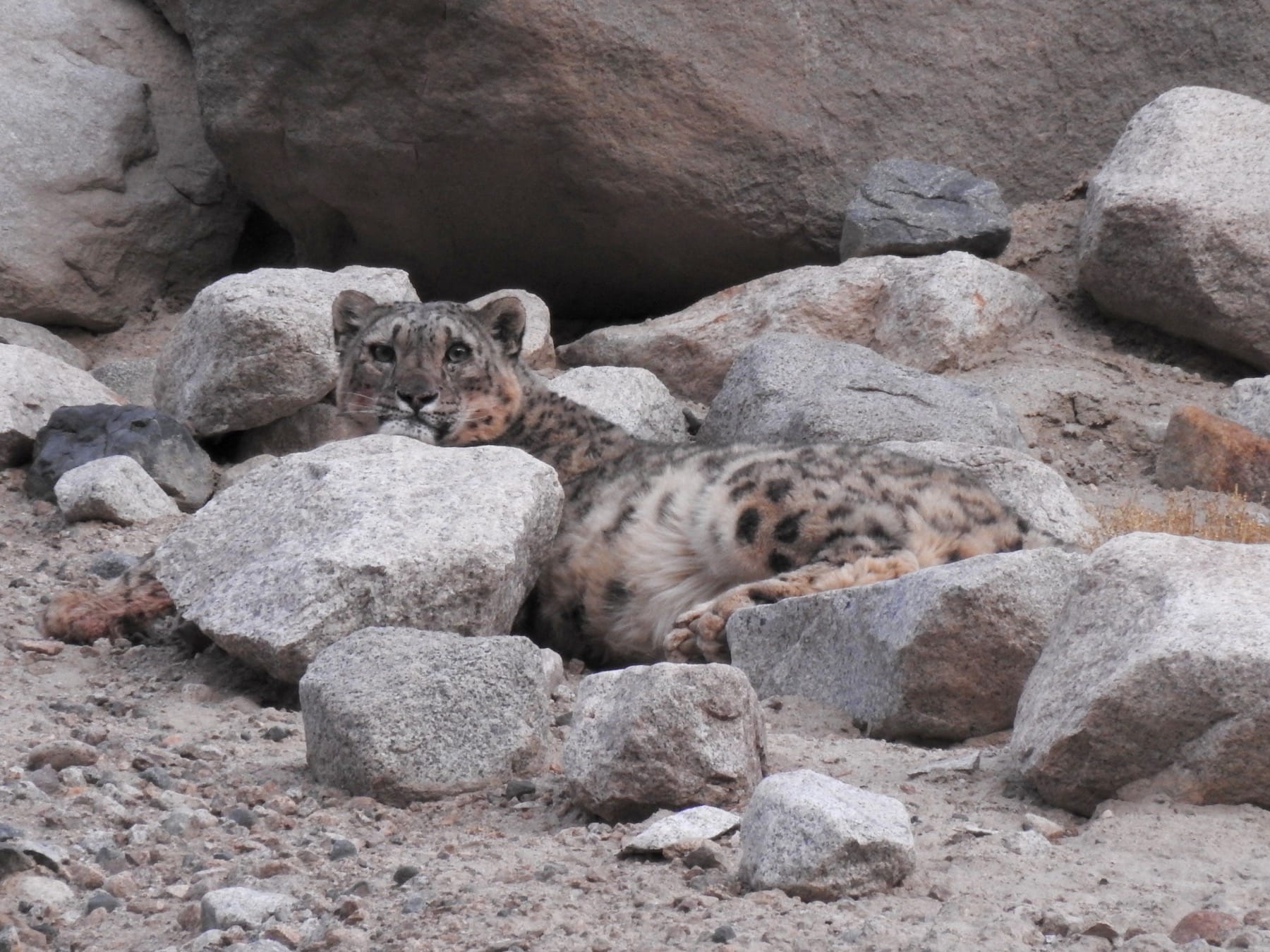
Snow leopards are famously elusive — solitary, camouflaged against rock and snow, spread thinly across some of the most remote and inhospitable high-altitude terrain on the planet. For decades, population estimates for the species worldwide were closer to educated guesses than hard counts, because the standard wildlife-survey toolkit (camera traps, direct sighting, dung-based DNA sampling) is punishingly difficult to deploy consistently across terrain that regularly sits above 4,000 metres.
India changed that calculus for its own population in a meaningful way with the Snow Leopard Population Assessment in India (SPAI), a first-of-its-kind national census carried out between 2019 and 2023, with results released in January 2024. The exercise covered roughly 1,20,000 square kilometres — more than 70% of the species’ potential range in the country — using a two-stage method that combined occupancy-based sampling to map where the animals live with camera-trap-based abundance estimation in specific high-density zones. The headline number that came out of it: an estimated 718 snow leopards across India, with Ladakh alone home to 477, followed by Uttarakhand (124), Himachal Pradesh (51), Arunachal Pradesh (36), Sikkim (21), and Jammu & Kashmir (9).
That census — plus the ongoing work under SECURE Himalaya, a UNDP-backed programme protecting high-altitude ecosystems while supporting local livelihoods — is the scientific foundation the Indian delegation carried into Moscow. According to the PIB release, officials from the Wildlife Institute of India briefed their Russian hosts specifically on India’s advances in population estimation methodology, radio telemetry (tracking individual animals via GPS-fitted collars to understand movement and territory), and genetic analysis used to assess population structure and diversity across fragmented habitats.
The IBCA Connection
None of this happened in isolation. The Moscow roundtable was organised under a partnership agreement between the Interregional Association ‘Irbis’ and the International Big Cat Alliance (IBCA) — an India-launched global coalition that is, in many ways, the reason this kind of India-Russia wildlife-science exchange exists at all.
IBCA was launched by India in April 2023, timed to the 50th anniversary of Project Tiger, with a mandate covering all seven of the world’s principal big cat species: tiger, lion, leopard, snow leopard, cheetah, jaguar, and puma. Twenty-seven countries have since signed on. India’s pitch for the alliance rests on a genuinely unusual credential — it’s the only country on Earth currently home to five of those seven species (tiger, lion, leopard, snow leopard, and, since the 2022 reintroduction programme, cheetah). That gives India a working claim to conservation expertise across an unusually wide range of big-cat ecology, from tropical forest tiger reserves to high-altitude snow leopard habitat, and IBCA is the vehicle through which India is trying to turn that domestic experience into international technical leadership — sharing methodology, coordinating anti-poaching and anti-trafficking cooperation, and building shared scientific standards across range countries.
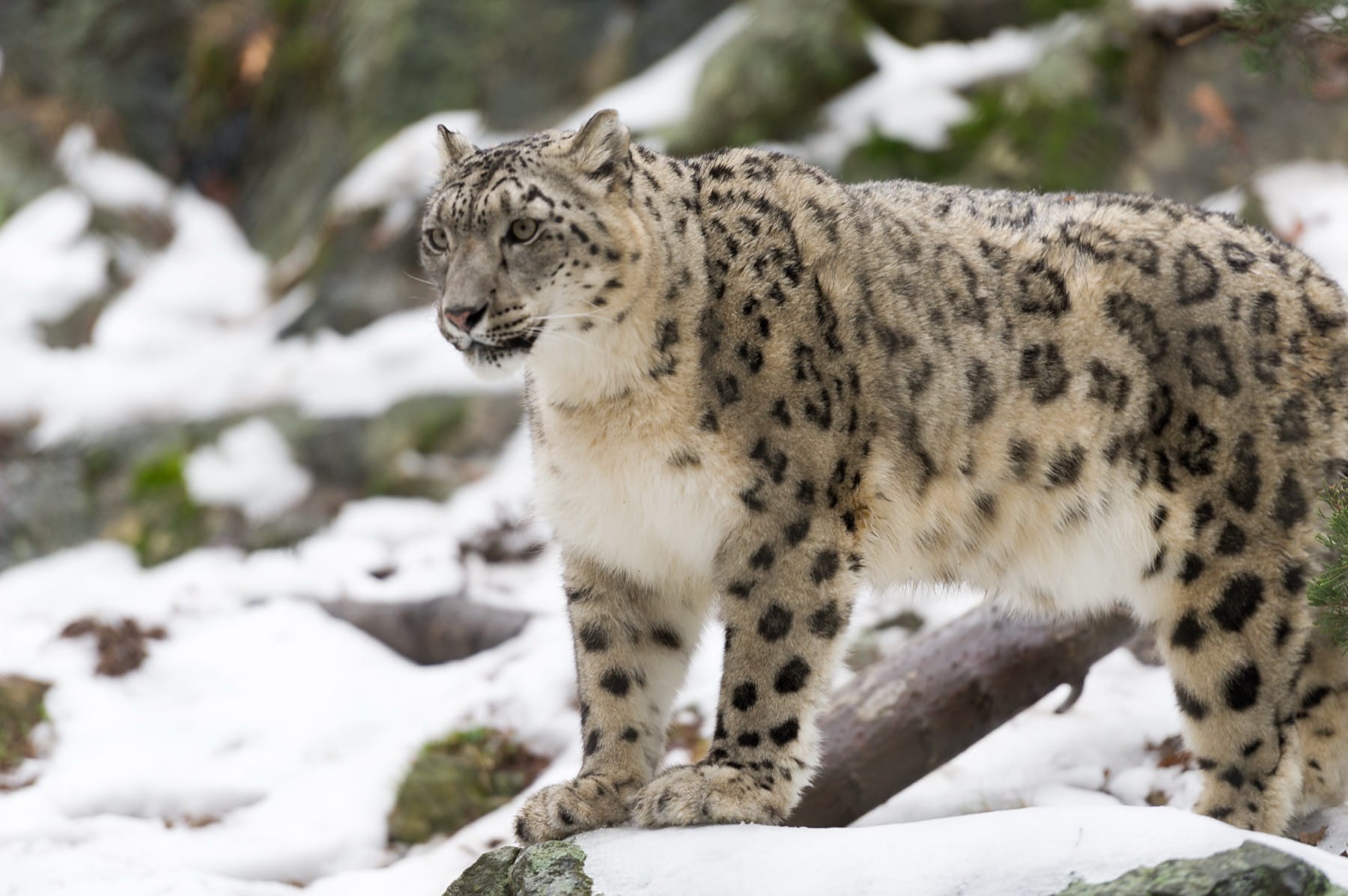
The Moscow meeting fits that pattern precisely: less a diplomatic photo opportunity than a working technical exchange, bringing together India’s WII scientists with Russia’s Ministry of Natural Resources and Environment, the Severtsov Institute, Moscow Zoo, and Rosprirodnadzor (Russia’s federal environmental oversight agency) — the kind of institution-to-institution science exchange that rarely makes headlines but is exactly what transboundary species conservation actually depends on.
Why Cross-Border Science Matters for a Species Like This
Snow leopards range across twelve countries spanning the high-altitude belt from Afghanistan and Pakistan through India, China, Mongolia, and into Russia’s own mountain regions — meaning no single country’s population data or conservation strategy is complete in isolation. A snow leopard doesn’t recognise a national border, and threats to the species (habitat fragmentation, prey depletion, human-wildlife conflict over livestock predation, and illegal trade in pelts and body parts) don’t respect one either.
That’s the logic behind the wider Global Snow Leopard and Ecosystem Protection Program (GSLEP), the umbrella transboundary framework that predates IBCA and that initiatives like this Moscow roundtable feed into — shared population-monitoring standards, coordinated habitat corridors, and joint research make range-wide conservation strategy possible in a way that twelve separate, methodologically inconsistent national efforts never could.
Whether a single roundtable meeting translates into deeper joint research programmes or coordinated field conservation remains to be seen — meetings like this are, by nature, a starting point rather than an outcome. But the fact that India is now positioned as the delegation sharing methodology rather than the one asking for it says something real about the distance India’s snow leopard science has covered in a fairly short window — from having no comprehensive national population estimate at all, to being invited to Moscow to explain how it built one.
For a species this hard to see, let alone count, that kind of institutional memory and shared expertise may end up mattering more for the animal’s long-term survival than any single conservation action taken within one country’s borders. This is part of a wider pattern in India’s big-cat diplomacy — the same IBCA framework has recently paired with the Clouded Leopard Conservation Action Plan and India’s broader push on environment and wildlife protection across its highest-profile conservation programmes.
Source: Press Information Bureau, Government of India — India highlights its Science-based advances in Snow Leopard Conservation including Population Estimation, Radio Telemetry and Genetic Analysis, at Moscow Roundtable Meeting