
Most of India’s marquee wildlife conservation stories revolve around a small cast of famous, camera-ready species: tigers, elephants, rhinos, snow leopards. The clouded leopard has never quite made that list — not because it’s any less remarkable, but because it’s spent decades being genuinely hard to find. It hunts mostly at night, moves through dense canopy rather than open ground, and lives in some of the least accessible forest in the country. That obscurity is exactly why a new, dedicated Conservation Action Plan for the species — released this week by the Ministry of Environment, Forest and Climate Change to mark International Clouded Leopard Day — is a bigger deal than it might first appear.
The Action Plan (CAP) was prepared under a joint Government of India–GEF–UNDP initiative and was actually finalised back in July 2026, during the 91st meeting of the Standing Committee of the National Board for Wildlife in Coimbatore, before being formally released this week. It sets out, for the first time, a coordinated national framework specifically built around this one species — habitat protection, scientific monitoring, landscape connectivity, and community participation, concentrated almost entirely across Northeast India, which the plan identifies as the clouded leopard’s principal stronghold in the country.
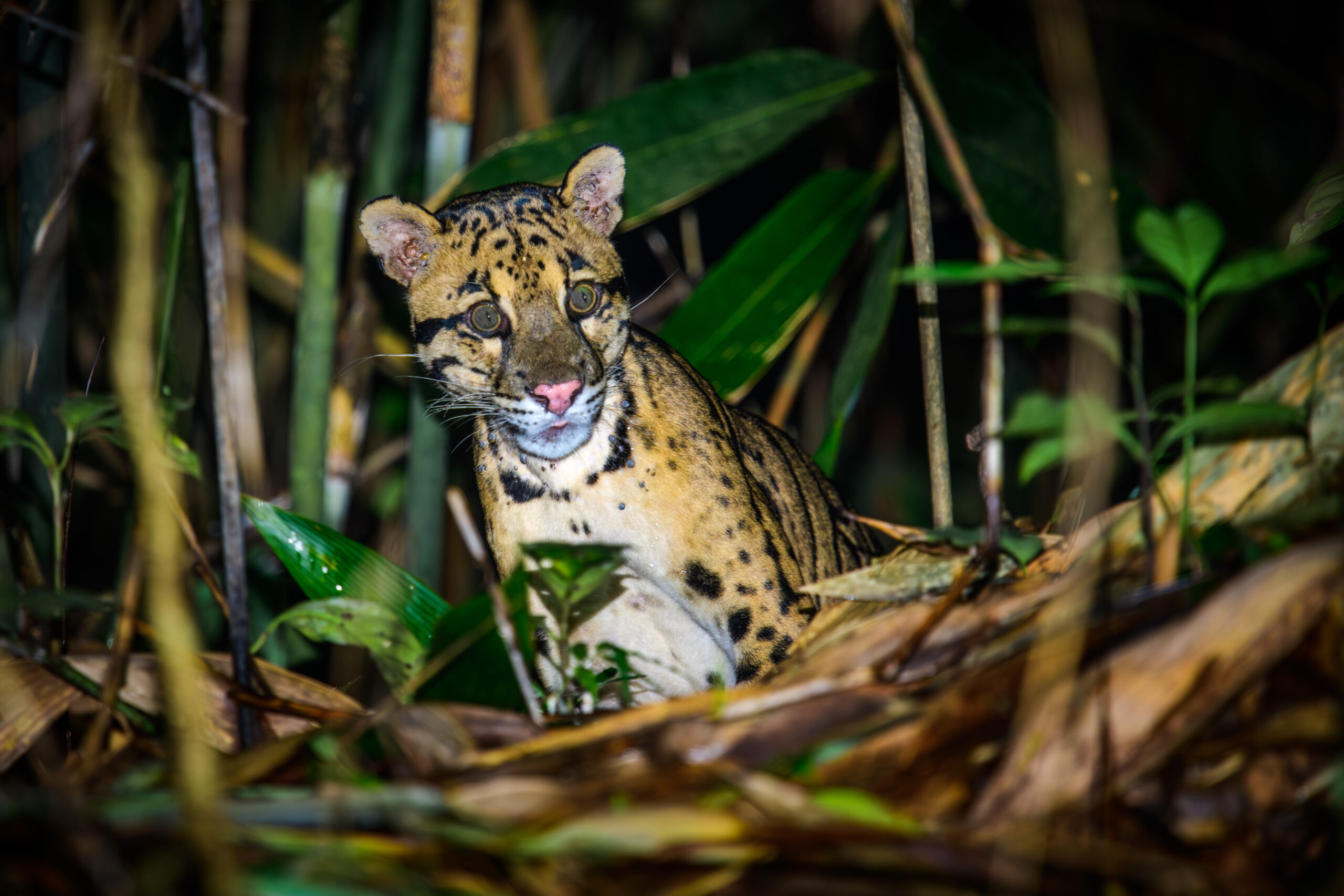
The clouded leopard (Neofelis nebulosa) is listed as Vulnerable by the IUCN, with global populations believed to have declined by more than 30% over the past three generations, driven mainly by deforestation, habitat fragmentation, and poaching for its distinctive pelt and canines. In India, it holds the highest legal protection available — Schedule I of the Wildlife Protection Act, 1972 — and survives in scattered, isolated pockets across Assam, Arunachal Pradesh, Meghalaya, Nagaland, Mizoram, Manipur, and Tripura. What’s striking is that despite that protection status, India still has no reliable estimate of how many clouded leopards actually live within its borders — a data gap the new Action Plan is explicitly designed to close.
That data gap is arguably the plan’s most consequential starting point. You cannot conserve what you haven’t counted, and for a species this elusive, counting requires more than the traditional pugmark surveys used for tigers. The CAP calls for standardised scientific monitoring built around camera traps, occupancy surveys, genetic sampling, and environmental DNA (eDNA) — a technique that detects a species’ presence from traces it leaves behind in soil or water, without ever needing a direct sighting. That’s a meaningfully more modern toolkit than India has historically applied to lesser-known carnivores, and it mirrors the direction conservation science has been moving globally: away from charismatic-species headcounts and toward landscape-level, technology-assisted monitoring of entire ecological communities.
Fourteen landscapes, one connected map
The plan’s second major pillar is connectivity. It identifies 14 priority conservation landscapes across Northeast India and commits to landscape-scale habitat restoration and corridor conservation between them — recognising that an isolated patch of good forest is far less useful to a wide-ranging predator than a network of connected ones. This is the same logic that has driven India’s more publicised elephant and tiger corridor work, now being extended to a species that has, until now, mostly been conserved by accident, as an incidental beneficiary of tiger reserves and protected areas rather than a conservation priority in its own right.
The clouded leopard has now been formally included under the Species Recovery Programme of the Integrated Development of Wildlife Habitats (IDWH) scheme — a move that unlocks dedicated funding and institutional attention that species outside marquee conservation programmes typically don’t receive. Frontline staff will also be trained to use the M-STrIPES smart application, a field-data tool originally built for tiger monitoring, now being adapted for clouded leopard tracking and anti-poaching work.
Why community participation is written into the plan, not added as an afterthought
Northeast India’s forests are unusual within the Indian conservation landscape in one important respect: a large share of them fall outside the formal protected-area network and are instead managed under community and customary land tenure systems. A conservation plan that ignores this reality tends to fail quietly, regardless of how good its science is. The CAP explicitly promotes community-based conservation and sustainable livelihood support as core components rather than side programmes, and it also builds in transboundary cooperation with neighbouring range countries — relevant because clouded leopard habitat doesn’t respect the India-Myanmar border any more than the animal itself does.
The plan additionally folds in climate resilience and adaptive management, a nod to the fact that Northeast India’s forests are themselves under pressure from shifting rainfall patterns and land-use change, and that a species-specific conservation plan written in isolation from those broader ecological pressures would have a shorter shelf life than one designed to adapt alongside them.
A quieter kind of conservation milestone
There’s no dramatic population-recovery number to report here, no before-and-after photograph of a species pulled back from the brink — largely because, as the plan itself acknowledges, nobody yet knows precisely how close to the brink the clouded leopard actually is in India. What this Action Plan represents instead is something more foundational: the first time a notoriously hard-to-study, historically overlooked wild cat has received the kind of dedicated, landscape-level, community-anchored planning that species like the tiger have had for decades. For a country whose conservation successes are usually measured in headline population figures, this is a bet that better data, better connectivity, and better-included communities will eventually produce headline numbers of its own — just not yet. Prakati has previously covered India’s tiger reintroduction efforts at Sariska and the new Centre of Excellence on Human-Wildlife Conflict — both part of the same broader shift toward more systematic, science-led wildlife conservation across India. Explore more environment and conservation coverage, or browse our India sustainability news section.
Source: Ministry of Environment, Forest and Climate Change / Press Information Bureau, “On International Clouded Leopard Day, India Strengthens Conservation through Dedicated Conservation Action Plan for the Wild Cat,” 4 August 2026.