
In 2005, a CBI inquiry confirmed what conservationists had feared for months: Sariska Tiger Reserve in Rajasthan had no tigers left. Poachers, working with apparent collusion from some forest staff, had killed the reserve’s last animals over the preceding years while official census reports kept reporting a healthy population — one of Indian wildlife conservation’s most uncomfortable scandals. This week, eighteen years after the reintroduction effort that followed, Union Environment Minister Bhupender Yadav stood in Alwar and pointed to Sariska not as a cautionary tale anymore, but as the world’s first successful scientific tiger reintroduction — a reserve that now holds 56 tigers, rebuilt from zero.
The occasion was a National Workshop on “Tiger Re-introduction: Opportunities & Challenges,” organised by the National Tiger Conservation Authority with the Rajasthan government, bringing together field directors and wildlife experts from across India’s tiger landscapes. It wasn’t a celebration so much as a working session — the kind of meeting where success stories get studied hard enough to figure out what’s repeatable.
What actually made Sariska work
Tigers were translocated to Sariska from Ranthambhore in stages starting in 2008, reaching 43 individuals by 2024 and 56 today — a slow, staggered approach to rebuilding genetic diversity rather than a single founder batch. The workshop’s organisers offered a sharp contrast to make the point about what matters most: in 2018, NTCA attempted a similar reintroduction at Satkosia Tiger Reserve in Odisha. The female killed two people within months, triggering violent local protests; the project was suspended. Sariska and Panna succeeded substantially because forest officials built local buy-in before reintroduction began; Satkosia didn’t, and the project collapsed almost immediately.
That contrast — not the technical mechanics of translocation — is what the workshop’s “active management” roadmap is really trying to institutionalise. Community participation isn’t a soft add-on to reintroduction; it’s the hard prerequisite that determines whether the project survives contact with the communities already living in and around the forest.
The bigger numbers behind one reserve’s story
Sariska’s recovery sits inside a genuinely remarkable national trend. India’s tiger population has grown from roughly 1,800 in the early 1970s, when Project Tiger launched with nine reserves, to 3,682 according to the 2022 All India Tiger Estimation — the largest camera-trap wildlife survey ever conducted, recognised by Guinness World Records. The country now holds an estimated 70–75% of the world’s wild tiger population. The workshop also touched on Project Cheetah: the population at Kuno and Gandhi Sagar has grown to roughly 57 animals, including the first wild litter born to a cheetah that was herself born in India — an early signal of a self-sustaining population.
Why an “umbrella species” framing isn’t just rhetoric
Minister Yadav’s framing — that protecting tigers means protecting “forests, watersheds and the rich biodiversity” sharing their habitat — isn’t only a talking point. An NTCA-commissioned economic valuation found the water-provisioning value of ten tiger reserves alone exceeds ₹33,000 crore a year, with roughly 600 of India’s rivers originating in or passing through tiger-reserve catchments that function as natural water-recharge zones for an estimated 340 million people and 19 million hectares of farmland. Conservation focused on a single charismatic species turns out to be, in practical terms, a water conservation strategy with better political traction than “watershed protection” usually gets on its own.
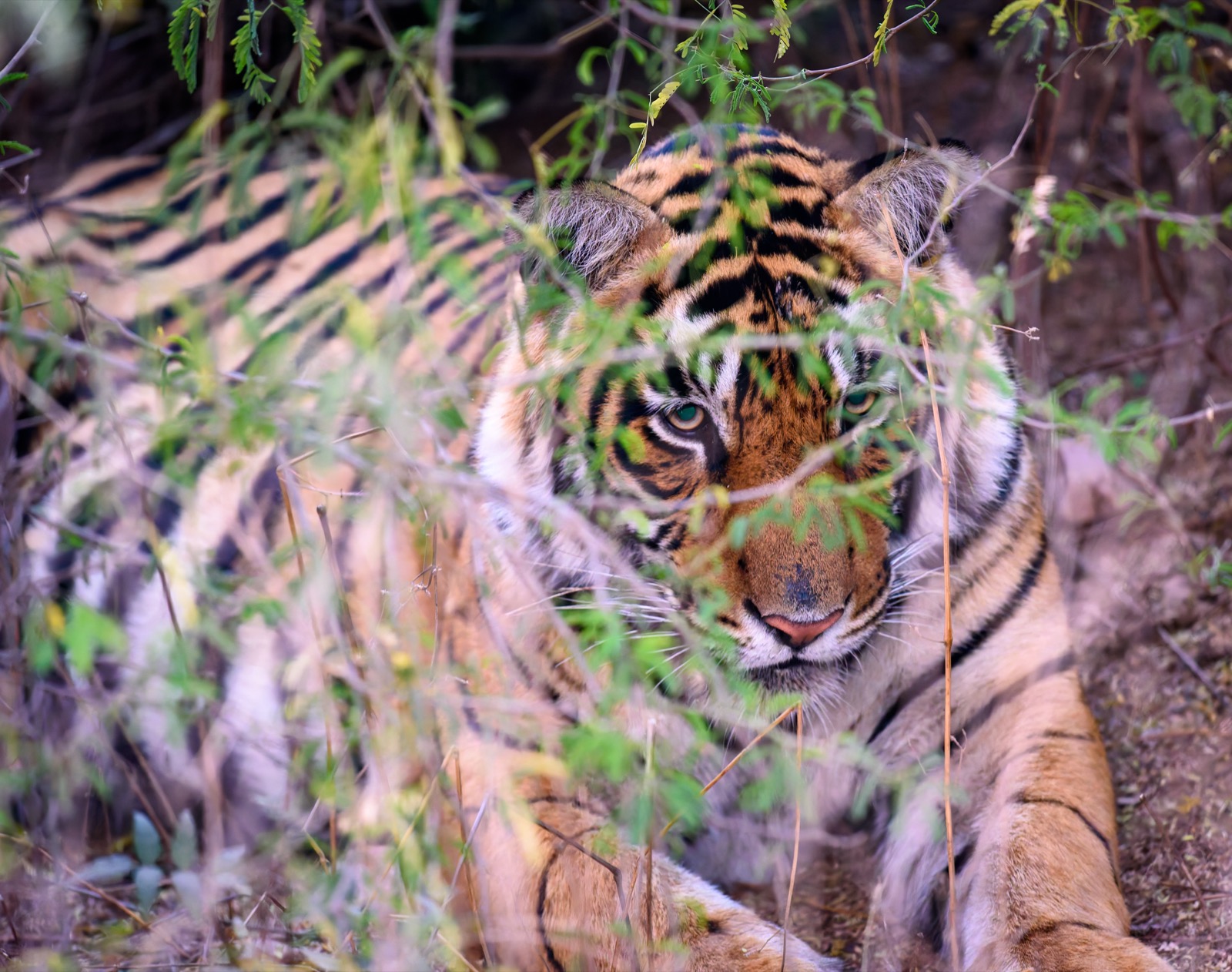
If Sariska’s eighteen-year arc from zero tigers to a functioning, community-backed population proves anything, it’s that the science of moving tigers from one forest to another was never really the hard part. The hard part, every time, is the work of getting the people living alongside that forest to want the tigers back.
Source: Press Information Bureau, Government of India (PRID 2278589)