
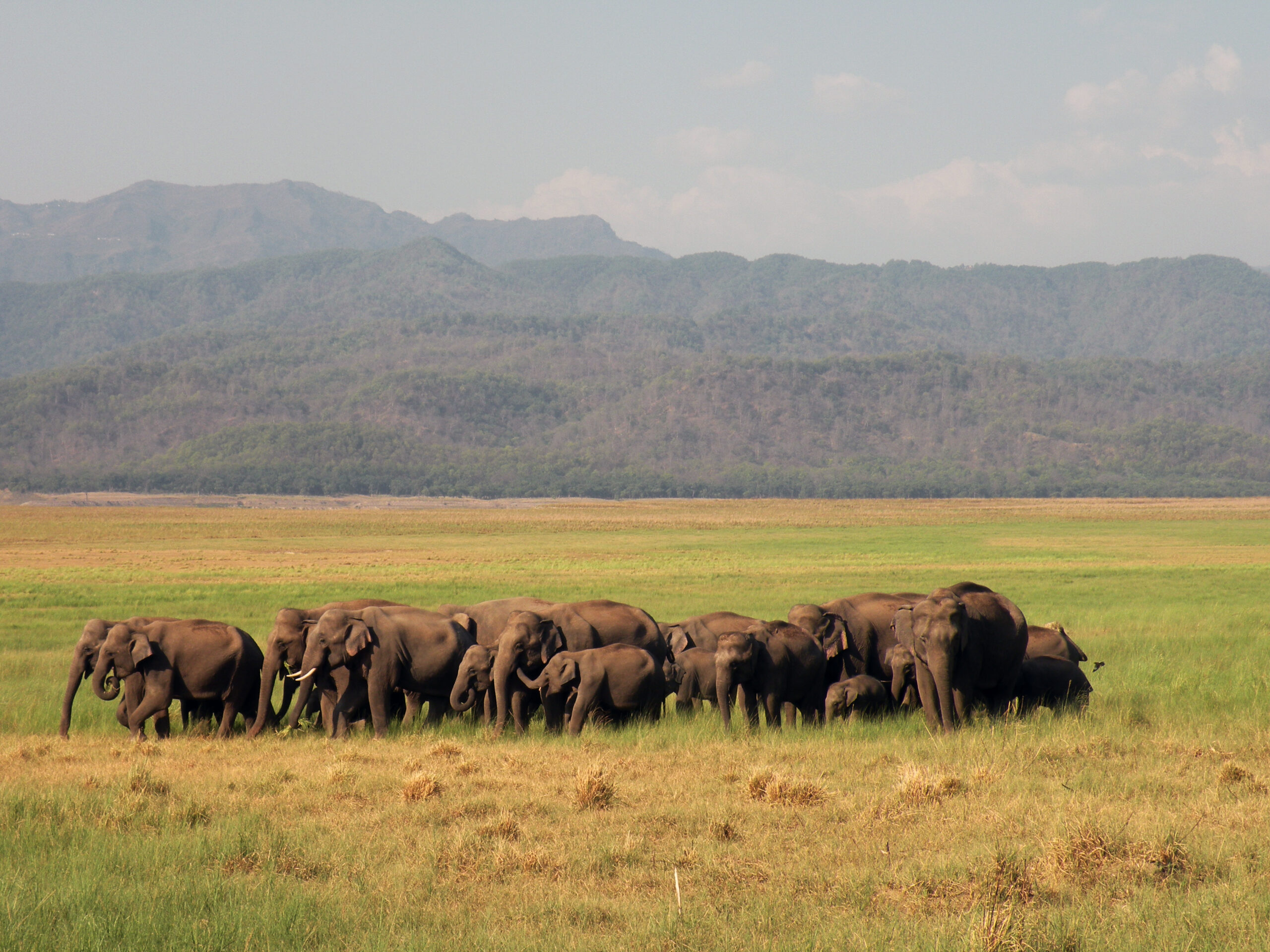
Every 12 August, World Elephant Day arrives with the same reassuring statistic: India is home to nearly 60% of the world’s wild Asian elephants, a fact repeated so often it can start to sound like a permanent guarantee rather than a number that can move. This year, a Press Information Bureau backgrounder marking the day led with that figure too. But tucked inside the same release is a far more consequential piece of news — one that deserves more attention than the celebratory framing around it suggests.
For the first time, India has counted its wild elephants using DNA.
What Actually Changed in This Census
Every previous national elephant count relied on methods that conservationists have long known were imprecise — direct sightings, dung-pile counts, and block counts that could double-count the same herd as it moved between forest ranges. The Synchronous All India Elephant Estimation (SAIEE) 2021–25, coordinated by the Ministry of Environment, Forest and Climate Change and the Wildlife Institute of India, changed the method entirely. Field teams collected more than 21,000 dung samples across elephant landscapes nationwide and ran DNA fingerprinting on each one, allowing scientists to identify individual elephants and avoid recounting the same animal twice as it crossed state or forest-division lines. It’s the most scientifically rigorous elephant count India has ever conducted.
The result: an estimated 22,446 wild elephants across the country.
The Number the Press Release Doesn’t Emphasise
Here is the part worth sitting with: the previous nationwide estimate, from 2017, put India’s elephant population at 29,964. Read against that baseline, SAIEE 2021–25 represents roughly a 25% decline over eight years.
Some of that gap is almost certainly a methodology effect — a DNA-based count that avoids double-counting will, almost by definition, produce a lower and more accurate number than block counts that historically inflated totals. Scientists involved in the study have been candid that SAIEE should be treated as a new, more reliable baseline rather than a like-for-like comparison with 2017. But even accounting for methodological correction, wildlife researchers and the Wildlife Institute of India itself have flagged the decline as real and concerning enough to warrant urgent attention — not simply an artefact of better counting.
The regional breakdown makes the concern concrete. The Western Ghats — spanning Karnataka, Tamil Nadu, and Kerala — remains India’s elephant stronghold with nearly 12,000 animals, and the Northeastern Hills and Brahmaputra Plains hold another 6,500-plus. But some individual states tell a starker story: elephant numbers in Jharkhand and Odisha have reportedly fallen sharply over the same period, a trend researchers link to mining expansion, linear infrastructure (roads, railways, transmission lines) cutting through elephant corridors, and the resulting spike in habitat fragmentation. A handful of states — Chhattisgarh and Madhya Pradesh among them — actually saw elephant numbers rise, largely because animals are migrating away from the more disturbed eastern landscapes into relatively less pressured ones.
Why a Shrinking Range Matters as Much as a Shrinking Headcount
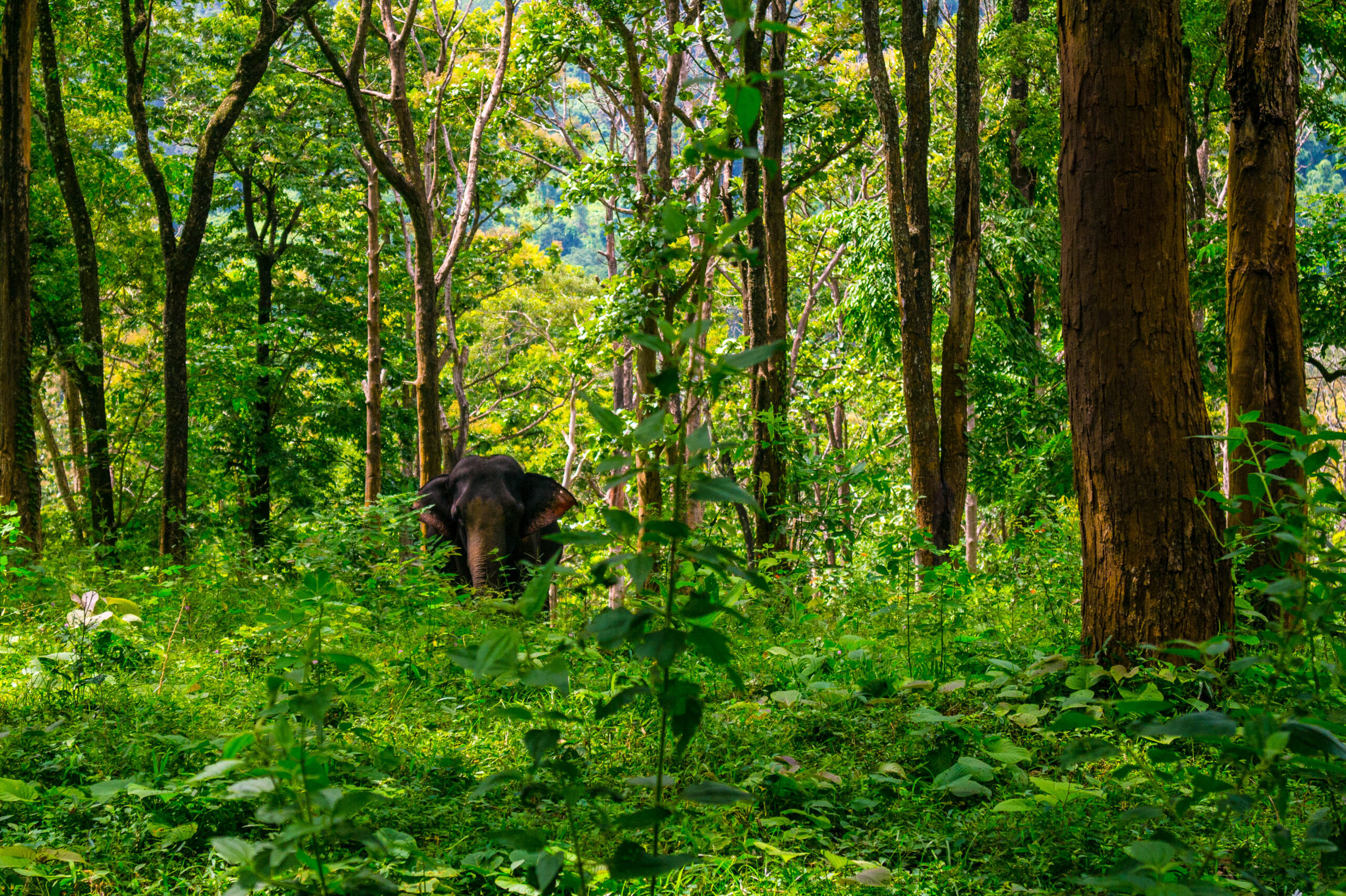
Elephants are what ecologists call a keystone species — their daily movement through a forest does ecological work that ripples outward. They disperse seeds across long distances as they forage, carve and maintain water holes that sustain other wildlife, and their sheer scale of movement (a single elephant’s home range can span anywhere from 100 to 3,000 square kilometres) is part of what keeps forest landscapes ecologically connected rather than fragmented into isolated pockets.
That’s also precisely why habitat fragmentation is such a serious threat: when highways, mines, and farmland cut across a corridor an elephant herd has used for generations, the animals don’t simply disappear — they’re forced into closer, more frequent contact with human settlements, which is the single biggest driver of human-elephant conflict. Electrocution from unsafe power lines and train collisions on tracks that cross elephant corridors are now among the leading causes of elephant deaths in India, a grim illustration of what happens when infrastructure planning and wildlife corridors aren’t designed together.
What India Is Doing About It
The government’s primary response mechanism remains Project Elephant, the flagship conservation programme run by the Ministry of Environment, Forest and Climate Change, which funds habitat protection, corridor maintenance, and human-elephant conflict mitigation across 33 designated Elephant Reserves and 150 scientifically validated corridors spanning 14 states. The PIB backgrounder points to a growing set of technology-driven interventions layered on top of that framework — AI-enabled monitoring systems, radio-collaring of individual elephants, genetic databases built from exactly the kind of DNA sampling used in SAIEE, and early-warning systems designed to alert villages before an elephant herd arrives rather than after.
Whether these measures can outpace the twin pressures of mining expansion and infrastructure growth is the real question SAIEE 2021–25 puts on the table. A DNA-verified baseline is genuinely valuable — India can now track population trends with a precision it never had before, and that matters enormously for conservation planning going forward. But precision cuts both ways: the same rigour that makes this count trustworthy is what makes the decline it reveals hard to explain away.
The Bigger Picture
World Elephant Day exists to mark this animal’s ecological and cultural significance — and in India, where the elephant is woven into religious tradition from Ganesha to temple processions across the south, that significance runs deep. But the most useful thing a nation can do with a landmark scientific survey isn’t repeat the celebratory statistics it already knew. It’s use the uncomfortable ones to change what happens next — where the next highway gets routed, whether a mining lease overlaps a known corridor, and how seriously “coexistence” is actually built into infrastructure planning rather than added afterward as a mitigation measure.
Source: Press Information Bureau, Government of India — World Elephant Day: Celebrating Elephants, Ecosystems and Coexistence (PRID 2298058); companion release PRID 2298047.
Read more sustainability news from India on Prakati.