
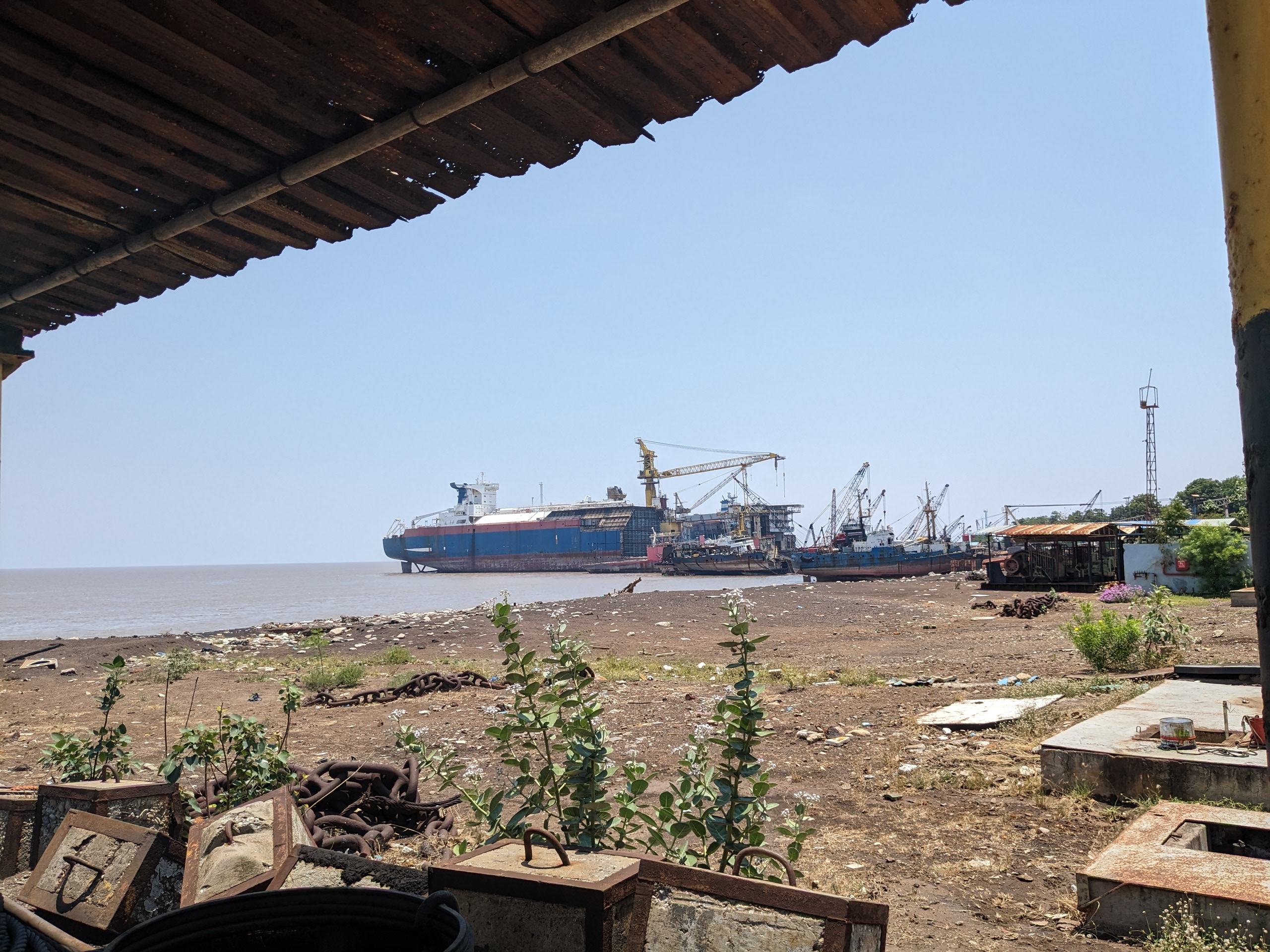
There is a version of the circular economy that rarely makes it into the glossy sustainability reports: the business of taking apart the giant machines that carried the last version of the economy — the container ships, the tankers, the bulk carriers — and turning them back into raw material. In 2025, India quietly became the best in the world at doing exactly that.
According to new data cited in a Press Information Bureau backgrounder released this week, India’s share of global ship recycling rose from 30.1% in 2024 to 35.4% in 2025, according to the UN Conference on Trade and Development (UNCTAD). Recycling volume jumped from 1.86 million gross tonnes to 2.99 million gross tonnes — a nearly 60% increase in a single year. That makes India the world’s number one ship recycling nation, hitting a target the government’s Maritime India Vision had set for 2030, five years early.
If that sounds like a niche industrial statistic, it’s worth pausing on what ship recycling actually involves — and why doing it well, rather than just doing it a lot, is the real story here. It’s a genuine example of the circular economy at work, at industrial scale.
From Alang’s Reputation Problem to a Regulatory Turnaround
For decades, the name most associated with Indian ship recycling was Alang — a stretch of coastline in Gujarat’s Bhavnagar district that became, and remains, the largest ship-breaking yard on the planet. It also became a byword for everything that could go wrong with the industry: workers dismantling hulls with cutting torches and little protective equipment, asbestos and heavy metals leaching into the intertidal zone, and fatality rates that international labour bodies repeatedly flagged as among the worst of any occupation.
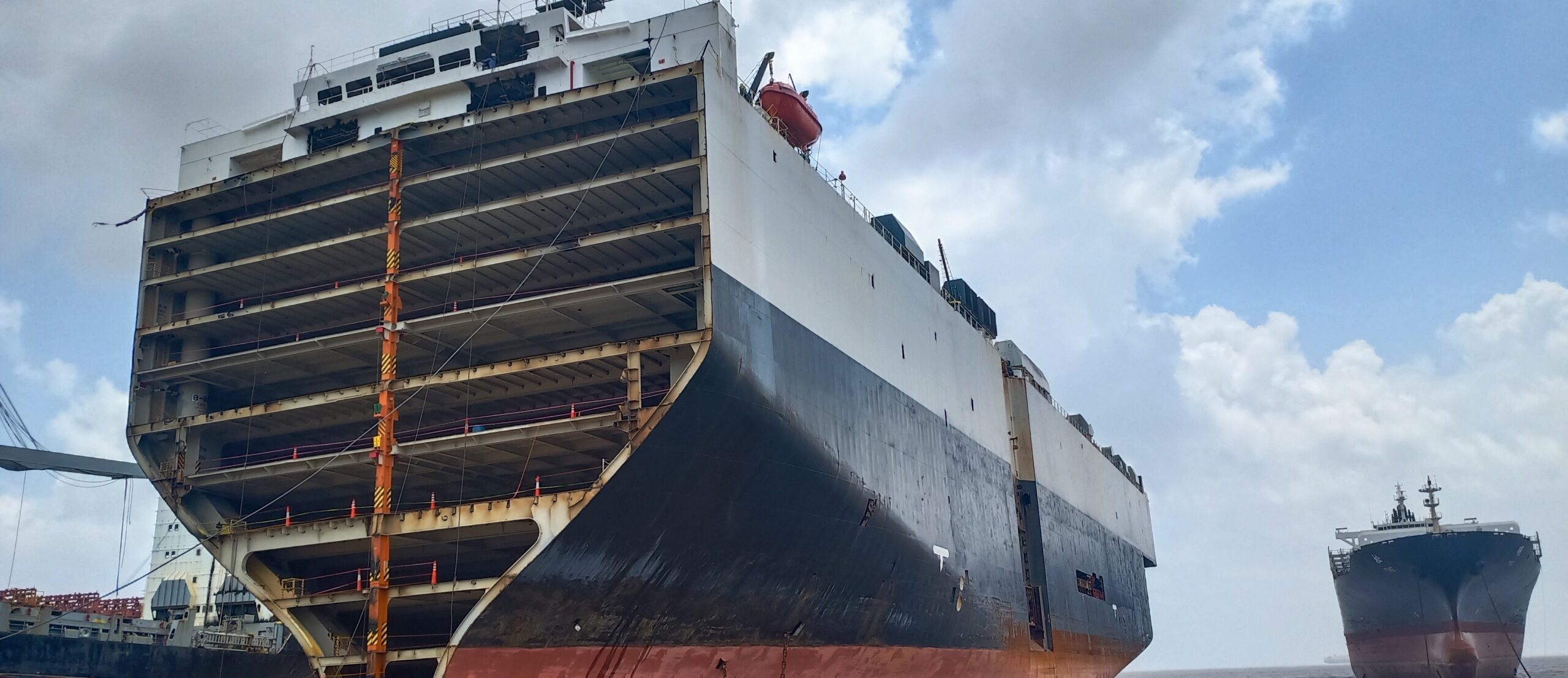
That history matters because it’s the backdrop against which this week’s numbers should be read. The 2025 leadership position isn’t simply “India recycled more ships” — it follows a genuine regulatory overhaul. India ratified the Hong Kong International Convention for the Safe and Environmentally Sound Recycling of Ships and passed the Recycling of Ships Act, 2019, to give it domestic legal force. At Alang-Sosiya today, the great majority of the roughly 128 recycling plots are certified compliant with the Convention’s environmental and safety standards, and yards have invested in impermeable flooring, hazardous-waste handling protocols, and worker training programmes. The PIB backgrounder notes the Safety Training and Labour Welfare Institute at Alang has cumulatively trained more than 1.5 lakh workers in occupational safety and emergency response.
None of this means the industry’s old problems have vanished overnight — worker-safety advocates continue to push for stronger enforcement — but the trajectory is real, and it’s the reason India could credibly claim global leadership without simply out-competing rivals on cost or laxity.
Why Recycling a Ship Is a Genuine Climate Story
Recycling a ship is, first and foremost, a steel story. Alang alone produces around 3.5 million metric tonnes of steel annually from dismantled vessels — steel extracted without mining a single tonne of new iron ore. Recycled steel typically requires a fraction of the energy of primary steelmaking and comes with correspondingly lower greenhouse gas emissions, which is precisely why the backgrounder frames ship recycling as contributing to India’s “sustainability and decarbonisation objectives,” not just its industrial output.
There’s also an end-of-life argument that’s easy to miss: every large ship eventually stops sailing, and what happens to it next is either handled responsibly onshore, in a facility built for the purpose, or it happens informally and unsafely, often with serious consequences for coastal ecosystems. A regulated, Convention-compliant recycling sector is what stands between a genuine circular economy and an environmental hazard for an entire category of end-of-life industrial assets that most sustainability conversations never touch.
The Numbers Behind the Milestone
- India’s global ship recycling market share: 30.1% (2024) → 35.4% (2025)
- Recycling volume: 1.86 million GT (2024) → 2.99 million GT (2025), a ~60% increase
- Alang-Sosiya accounts for roughly 98% of India’s national ship recycling activity
- Annual capacity at Alang-Sosiya: around 6 million GT, with plans to nearly double total capacity to about 9 million light displacement tonnes
- Around 3.5 million metric tonnes of steel produced annually at Alang without new resource extraction
- India also operates smaller yards at Amar Iron Udyog (Kolkata) and Steel Industrials Kerala Limited (SILK)
A Sector That Connects to Other Recent Wins
This isn’t India’s first ship-recycling headline this year. In July, the country signed cooperation agreements with the European Union on sustainable ship recycling, with three Indian yards working toward EU recognition under the bloc’s own ship recycling regulation — a separate, and in some ways more stringent, certification track than the Hong Kong Convention. Together, the two developments suggest Alang isn’t just chasing volume; it’s positioning itself as the destination international shipowners can point to when they need to prove their fleets are being retired responsibly, not dumped.
For a country whose maritime story is more often told through new port capacity and green maritime ambitions, this is a reminder that what happens at the end of a ship’s life is just as much a part of the sustainability ledger — and, as of 2025, it’s a ledger where India leads the world.
Source: Press Information Bureau, Government of India — Ship Recycling in India: Regulatory Transformation and Global Leadership (PRID 2297515)
Read more sustainability news from India on Prakati.