
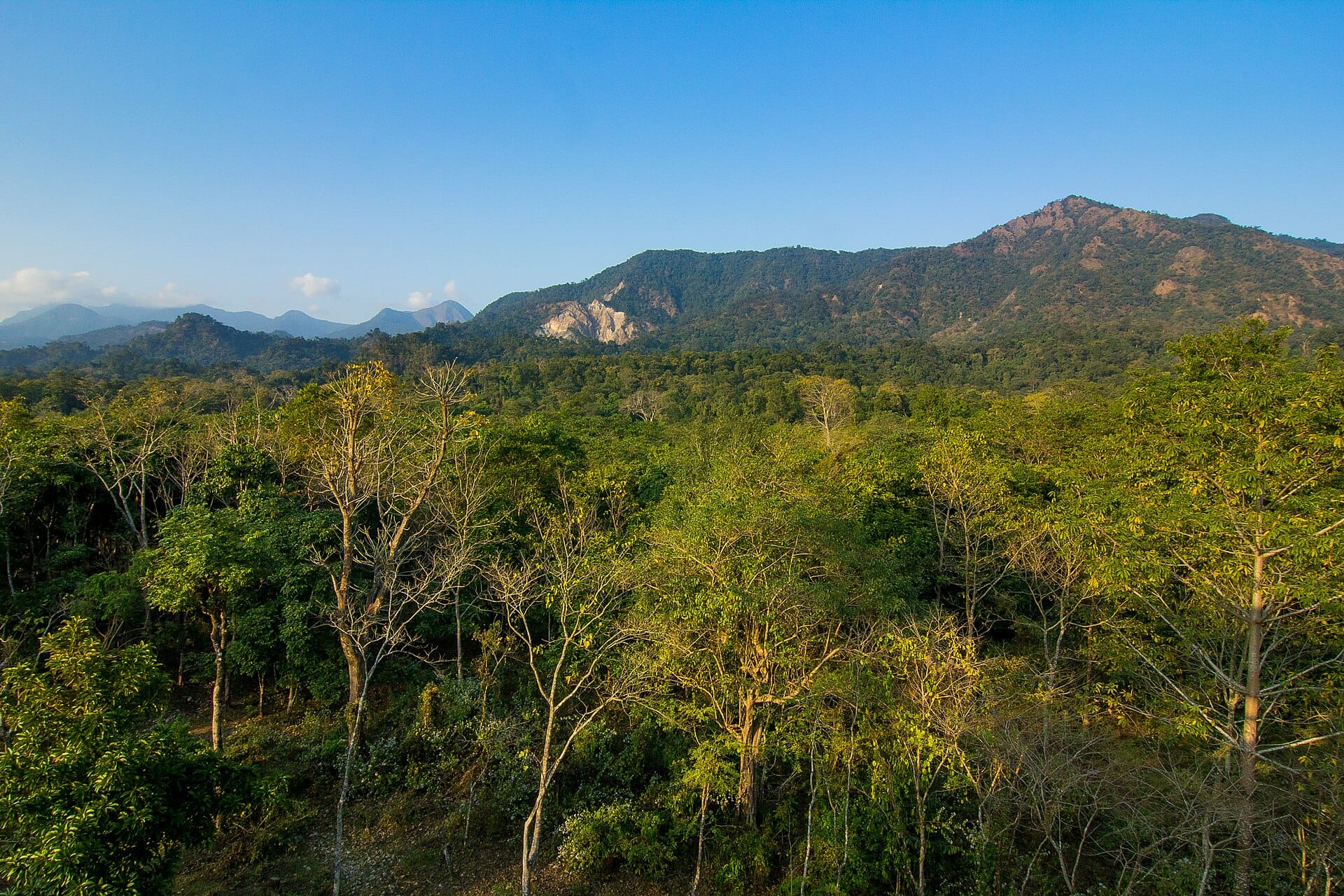
The Buxa tiger reintroduction began on 2 October 2026, the first day of Wildlife Week. A three-year-old tigress, identified as T138, was released into Buxa Tiger Reserve in West Bengal. She was brought from Valmiki Tiger Reserve in Bihar. Union Environment Minister Bhupender Yadav and West Bengal Chief Minister Suvendu Adhikari were present at the release, which starts a phased programme to restore a self-sustaining tiger population in North Bengal.
Why Buxa needed a tiger reintroduction
Buxa was declared a tiger reserve in 1983. It forms part of a larger landscape that connects to forests and protected areas in Assam and Bhutan. Over the decades, however, habitat degradation and fragmentation, changes in land use and a falling prey base wore down the conditions that tigers need. According to the Ministry, the reserve then went through a prolonged absence of a stable resident tiger population.
Tigers have still passed through. Camera traps recorded them in 2021, 2023 and 2026, and one animal photographed in 2023 was matched with a tiger from Manas Tiger Reserve in Assam. That shows tigers can move across the landscape, even if none had settled in Buxa.
Eight years of groundwork before the release
The Ministry stresses that this release follows long preparation, not a quick transfer. The Tiger Augmentation and Recovery Project, started by the West Bengal government in 2018 with support from the National Tiger Conservation Authority (NTCA) and the Wildlife Institute of India, has rebuilt the ecosystem first. Its main results so far are:
- more than 800 chital (spotted deer) released to rebuild the prey base
- about 380 hectares of grassland restored or converted over eight years
- stronger protection, monitoring and capacity building
- 64 Eco-Development and Joint Forest Management Committees engaged on livelihoods, conflict mitigation and conservation-linked benefits
Scientific monitoring shows a positive trend in prey abundance. In other words, the prey is recovering before the predator returns, which is the right order for a reintroduction.
What happens next after the tigress release
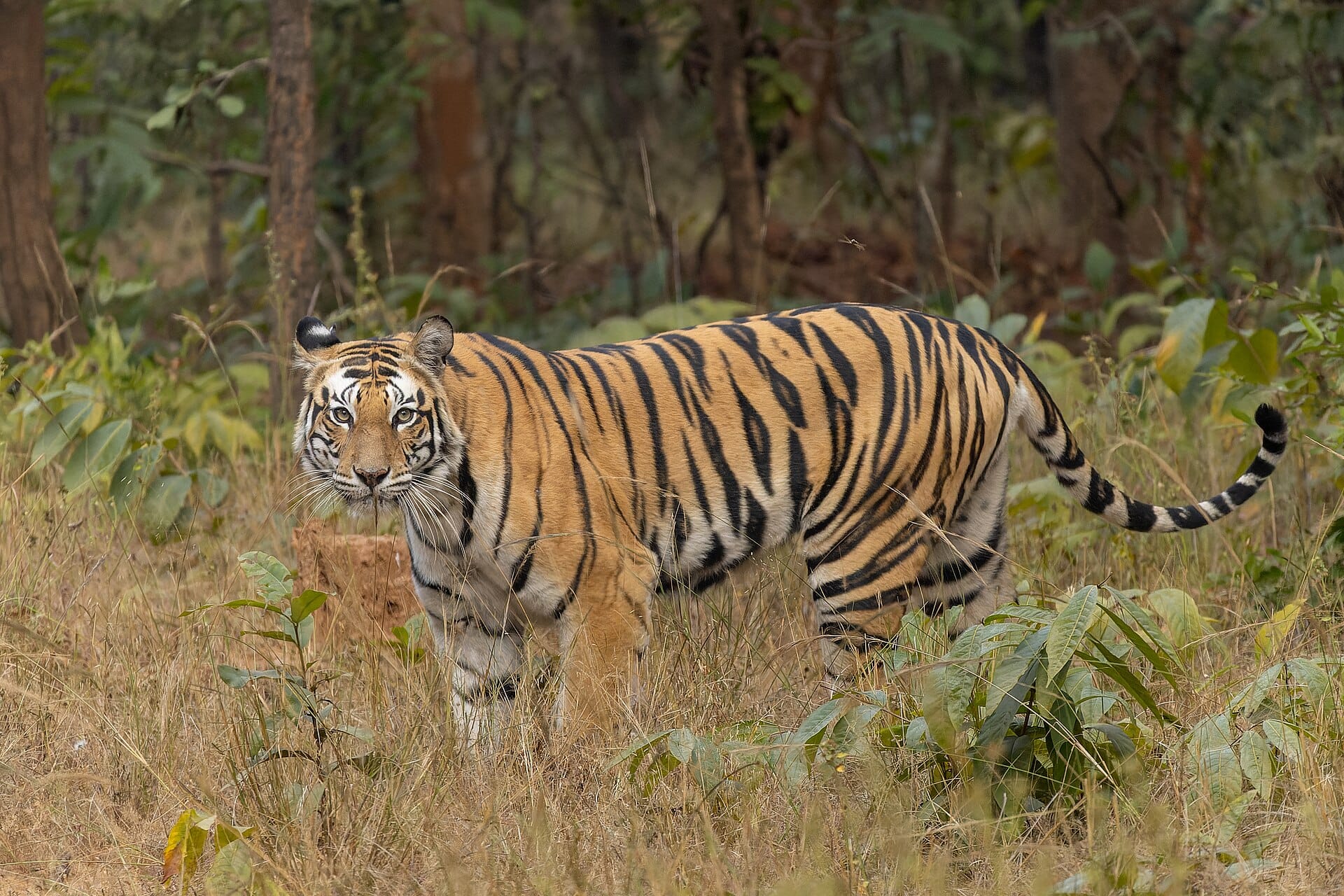
T138 will be tracked closely after release. The team will use telemetry, camera traps and field monitoring to follow her movement, adaptation, health and behaviour. The Ministry calls this the first step of a “planned, phased and adaptive” programme. Further tigers will be added only where habitat, prey, protection, population viability and expert advice support it.
Media reports add some detail that is not in the official release. They say the tigress spent time in a temporary enclosure of roughly 2.2 hectares before moving into the wider habitat, and that officials believe Buxa could eventually sustain 10 to 15 tigers. Treat those numbers as estimates for now.
Why the Buxa tiger reintroduction matters
A single tigress does not make a population. Breeding and survival over several years will. Reintroductions elsewhere in India show that success depends as much on people as on animals, because villages at the forest edge need trust, fair compensation and ways to coexist. The Sariska story, for instance, is told in our piece on how Sariska is teaching India to bring tigers back.
Still, restoring a top predator to Buxa signals that the grassland and prey recovery are working. It also strengthens the wildlife corridor linking North Bengal, Assam and Bhutan. As the Ministry puts it, success will be measured not by the number of tigers released, but by a healthy, free-ranging and self-sustaining population over time.
To follow the wider story, read how tiger reserves are now assessed for management effectiveness and what the IBCA-ADB financing deal means for big cat landscapes. You can also explore more environment sustainability stories on Prakati.
Source: Press Information Bureau, Government of India (Ministry of Environment, Forest and Climate Change, 2 October 2026). Additional context from The Week and India Wildlife News. Images: Swaroop Singha Roy (Buxa forest) and Tisha Mukherjee (representative Bengal tiger, not T138), both CC BY-SA 4.0, via Wikimedia Commons.