
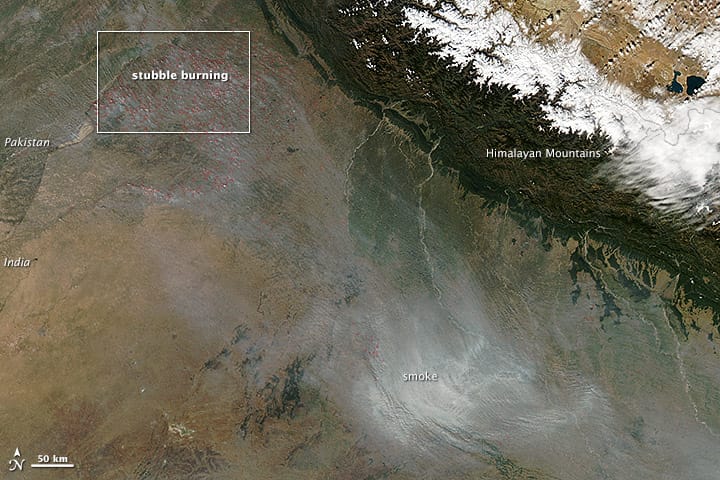
Every October, the same question returns to north India’s skies: will this be the year the smoke eases? On 13 October, the Union Agriculture Minister Shivraj Singh Chouhan and Environment Minister Bhupender Yadav co-chaired a review of stubble burning 2026 at Krishi Bhawan with agriculture ministers from Delhi-NCR, Punjab, Haryana, Uttar Pradesh and Madhya Pradesh, asking states to run crop residue management “in mission mode” for the rest of the paddy harvest.
Stubble burning 2026: what the numbers say so far
Between 15 September and 12 October, stubble-burning incidents fell sharply against the same period last year in some states. Haryana recorded a 53.3 per cent reduction and Uttar Pradesh about 32 per cent. Punjab also saw some decline. The worrying part is elsewhere: Madhya Pradesh and Rajasthan reported increases, and both were asked to identify affected districts and villages and launch special action plans. The ministers also cautioned that a large share of harvesting is still pending, so early gains could be reversed.
Machines, money and the last-mile problem
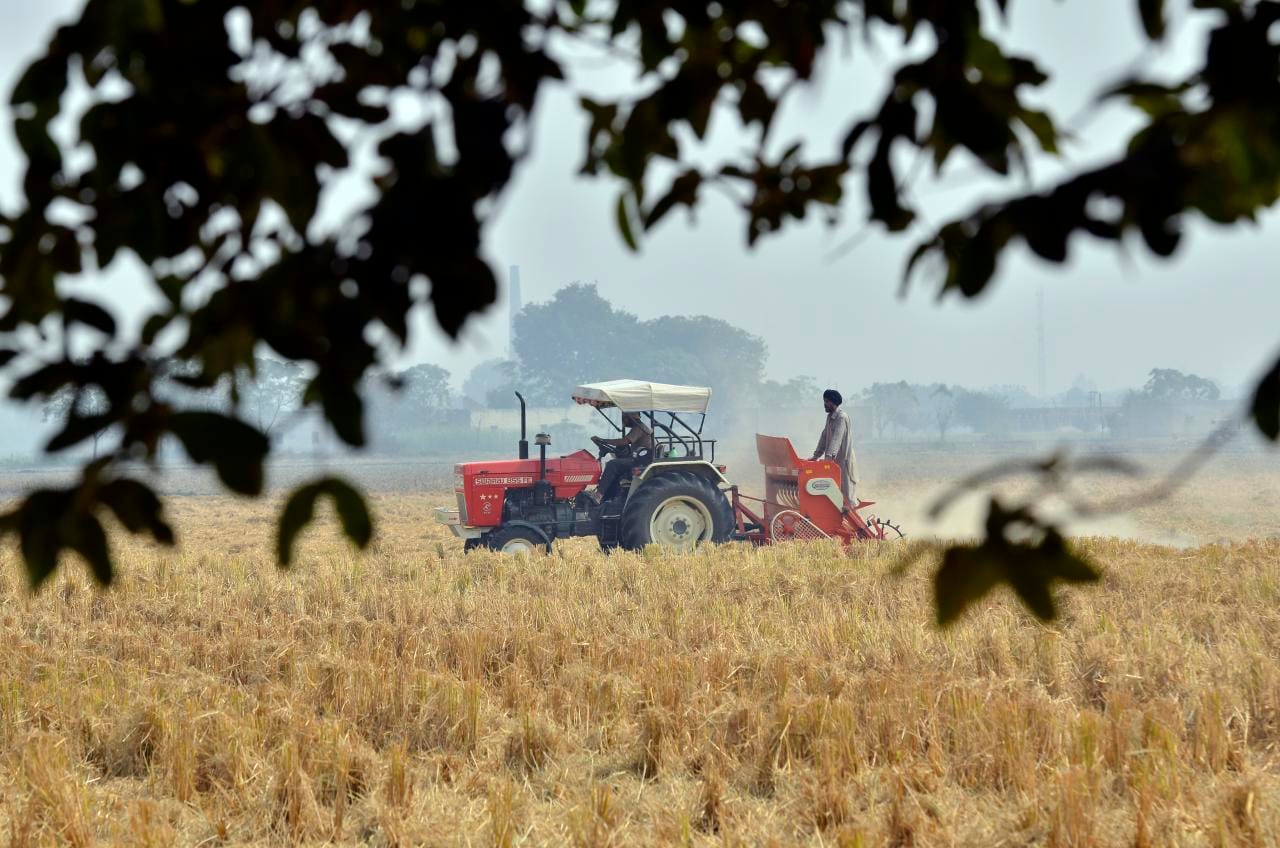
The tight window between paddy harvest and wheat sowing is the root of the problem: farmers who need to clear fields in a couple of weeks often find fire the cheapest option. The Centre says it has supplied states with more than 3.54 lakh crop residue management machines, including 26,109 new ones in 2026-27. Since 2018-19 it has released Rs 4,266.47 crore under the Crop Residue Management scheme (Rs 2,056.50 crore to Punjab, Rs 1,171.71 crore to Haryana, Rs 868.67 crore to Uttar Pradesh). This year’s allocation is Rs 592.57 crore, of which Rs 430.87 crore is already released.
But the minister flagged slow utilisation of funds and asked Punjab to submit its Utilisation Certificate so the next instalment can flow. He also asked that idle older machines be repaired, and that Custom Hiring Centres make equipment available to small and marginal farmers at subsidised rates. Machines sitting unused, in other words, are as much a gap as machines not yet bought.
From waste to income
Chouhan framed stubble as a resource rather than a nuisance. Directions included:
- Collecting and storing straw as fodder in drought-affected areas.
- Linking farmers directly to buyers: thermal power plants that co-fire biomass pellets, compressed biogas (CBG) plants and second-generation (2G) ethanol plants.
- Promoting short-duration paddy varieties such as Pusa 2090 and PR126 over longer-duration Pusa-44, so fields clear earlier.
- Exploring carbon-credit income for farmers who adopt sustainable residue practices.
Why it matters
Residue burning is a seasonal contributor to north India’s winter air pollution, and it also burns off soil nutrients and beneficial microbes. The durable fix is economic: a farmer needs a reliable, affordable alternative on the exact day the field must be cleared. Whether district-level execution matches the rhetoric will show up in the daily fire counts over the next three weeks.
Context for readers: if you live in the region, the practical contribution is to follow local air-quality advisories and support products and projects built from agri-residue, such as biomass pellets and bio-CNG. Follow more India sustainability news on Prakati.
Source: Press Information Bureau, Government of India (Ministry of Agriculture & Farmers Welfare, 13 October 2026). Images: satellite view of north India fires by NASA (public domain) and tractor sowing wheat in Punjab by CIAT (CC BY-SA 2.0), via Wikimedia Commons.