
Ask most people what’s choking Delhi’s air, and they’ll say cars, or stubble burning, or firecrackers. The uncomfortable statistic that rarely makes it into that conversation: within the region’s transport sector, trucks and buses make up only about 3% of the vehicle fleet but account for roughly 36% of its PM2.5 emissions. A single pre-BS-VI heavy vehicle can emit as much particulate matter as fourteen BS-VI compliant ones combined. It’s a small, identifiable slice of the vehicle population doing an outsized share of the damage — which also makes it, in theory, one of the more tractable pollution problems to actually fix.
This week, the Ministry of Housing & Urban Affairs approved the detailed operating guidelines for the PARIVARTAN Scheme — the Programme for Accelerated Renewal and Incentivization of Vehicle Assets for Reducing Transport Air Pollution and Network Emissions — turning a scheme the Union Cabinet approved back in early June into something that can actually start disbursing incentives.
What’s In the Scheme
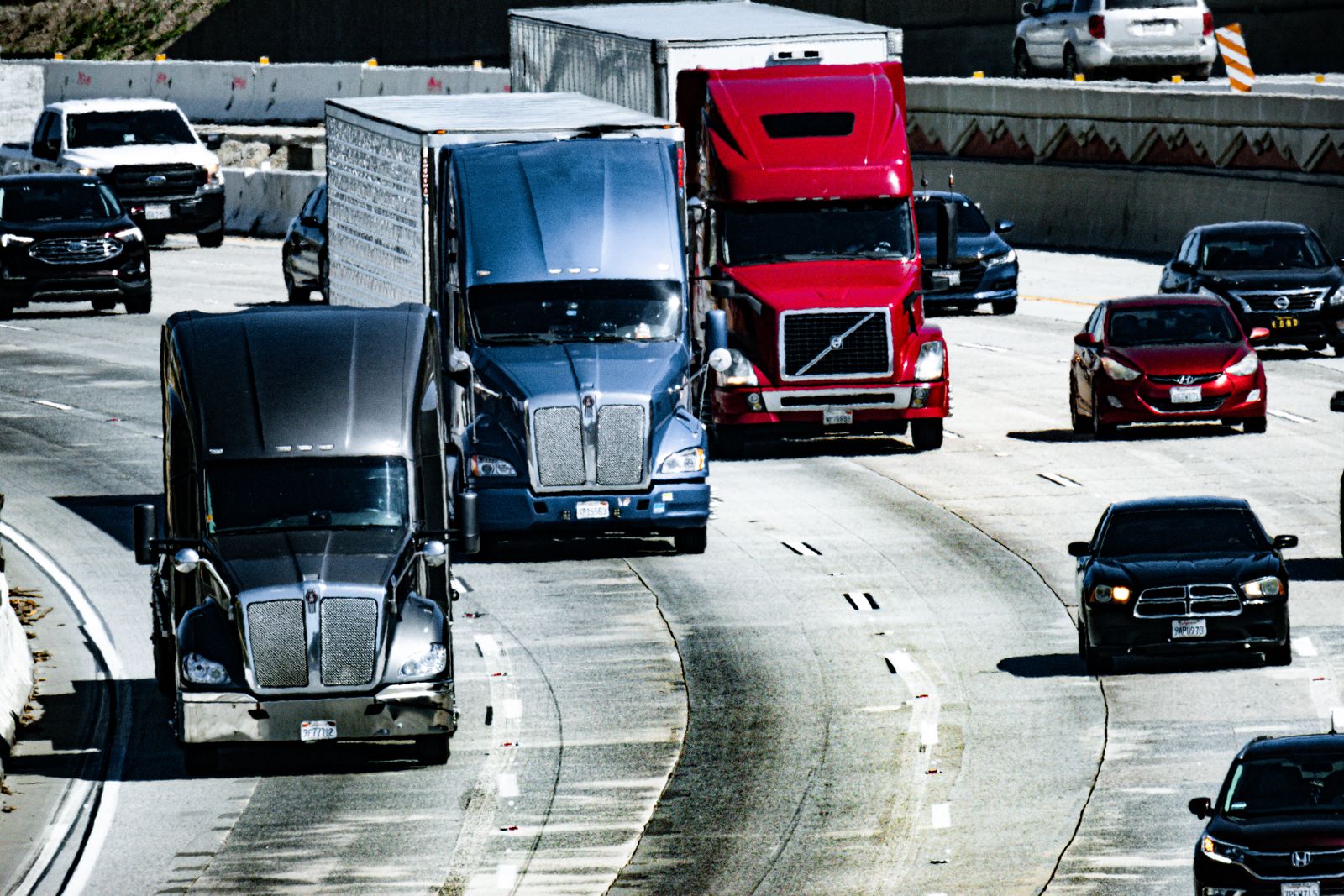
PARIVARTAN carries a total outlay of ₹9,585 crore, including ₹5,041 crore in direct budgetary support from the Central government, aimed squarely at replacing older, more polluting trucks and buses across the National Capital Region with either Bharat Stage-VI compliant vehicles or electric alternatives. The Ministry of Road Transport and Highways will implement it, funded through the National Capital Region Planning Board, reflecting a deliberately region-wide approach rather than a Delhi-only fix — vehicles crossing in from Haryana, Uttar Pradesh, and Rajasthan contribute meaningfully to the same airshed.
The incentive package is built to make the switch easier to justify financially for fleet owners and small operators who might otherwise keep an older vehicle running as long as physically possible: Motor Vehicle Tax concessions, registration fee waivers, a 5% interest subvention on vehicle loans, a minimum 8% OEM discount on eligible new vehicles, monthly fuel voucher support for diesel and CNG replacement vehicles, and one-time financial assistance for those who go electric, on top of Certificate of Deposit trading support. Eleven original equipment manufacturers — collectively representing more than 95% of the commercial vehicle market in India — have already signed on to extend the OEM discount to eligible buyers, which matters: a scheme with generous paper incentives but no manufacturer buy-in tends to move very few actual vehicles.
Implementation is also built to be digital-first from day one, interfacing with the VAHAN vehicle registration database, the V-Scrap and DigiELV vehicle-scrappage systems, the Public Financial Management System, participating lenders, and fuel voucher systems — an attempt to avoid the paperwork bottlenecks that have slowed down previous vehicle-scrappage incentive schemes in India.
Why This Particular Fix Matters
India’s vehicle scrappage policy, launched in 2021, has always had a structural weak spot: voluntary scrappage works best when the financial case for scrapping is obviously better than the financial case for keeping an old, paid-off vehicle running a few more years. For individual truck and bus operators — often small businesses or owner-operators running on thin margins — that math frequently didn’t favour early replacement, which is part of why India’s vehicle-scrappage uptake has lagged the ambitions set for it.
PARIVARTAN is explicit about targeting that gap directly, and about targeting it in the one metro region where the political and public-health stakes of vehicular air pollution are highest and most visible. Delhi-NCR’s air quality crisis is seasonal in its worst extremes — the post-monsoon stubble-burning and inversion-layer weeks each winter — but the vehicular contribution to background pollution runs year-round, and old commercial diesel vehicles are one of the few sources of that background pollution that a targeted, well-funded incentive scheme can plausibly move the needle on within a few years rather than a few decades. It builds on the momentum of CAQM’s year-round enforcement drive across the NCR, adding a financing mechanism to what has so far mostly been an inspections-and-penalties approach.
The Test Ahead

The scheme’s real test won’t be the guidelines released this week — it’ll be uptake. Truck and bus replacement is capital-intensive even with subsidies, and past incentive programmes in India have sometimes struggled to convert announced outlays into actual vehicles off the road, whether due to financing friction, unclear scrappage-certificate processes, or simple inertia among small operators. The digital, VAHAN-integrated delivery mechanism here is a genuine attempt to remove some of that friction, and the scale of manufacturer commitment already secured is a reasonably strong early signal. Whether ₹9,585 crore is enough to move a meaningfully large share of NCR’s oldest, dirtiest trucks and buses off the road within the scheme’s window is the number worth watching over the next two winters, and one more data point in India’s broader push toward sustainable living in its most polluted cities.
Source: Press Information Bureau, Government of India — MoHUA Approves Guidelines for PARIVARTAN Scheme to Accelerate Replacement of Old Trucks and Buses in NCR