
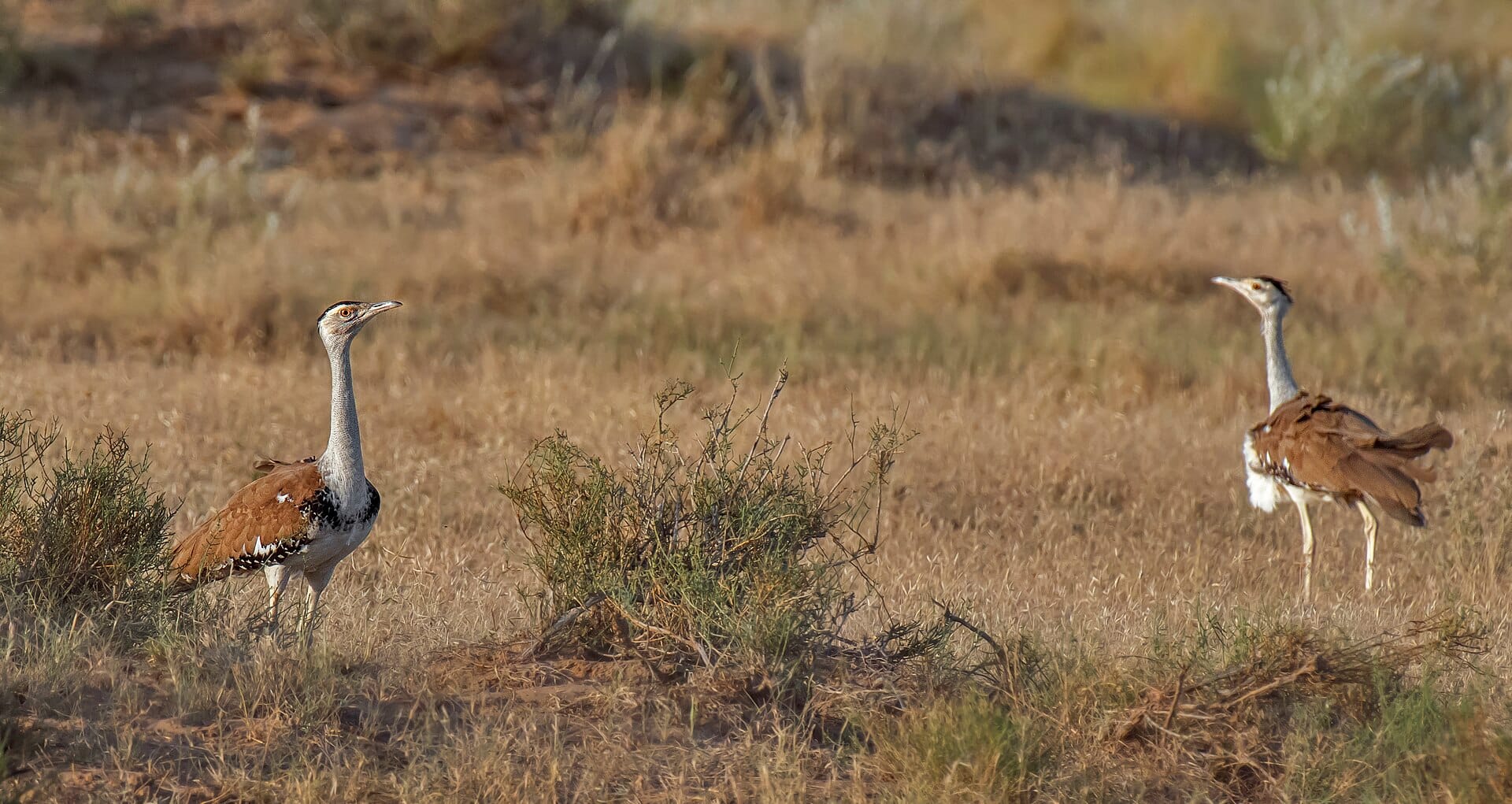
On the morning of 4 October, during Wildlife Week 2026, two male Great Indian Bustards were released into the wild at Sam, inside Rajasthan’s Desert National Park near Jaisalmer. The birds were bred in captivity, which makes this Great Indian Bustard release the first of its kind for the programme. Union Environment Minister Bhupender Yadav, who oversaw the release, described it as the result of nearly a decade of work by scientists, researchers and ground staff. For a species that conservationists often describe as being on the brink, it is a quiet but significant turning point.
From breeding to rewilding
The Great Indian Bustard is a tall, heavy ground bird of the Thar’s dry grasslands and is listed as critically endangered. Media reports put the wild population at roughly 110 to 150 birds, with Rajasthan’s desert the last real stronghold. The Government of India launched a recovery programme in 2016, run jointly by the environment ministry, the Rajasthan Forest Department and the Wildlife Institute of India (WII), with technical collaboration from the International Fund for Houbara Conservation and funding from National CAMPA.
Until now the programme’s job was to build a safe, breeding captive population. This release marks the shift to the next stage: putting captive-bred birds back into their natural habitat and boosting the wild numbers. Officials describe it as a pilot, and say the learnings will be used to refine protocols for later releases. The release was done with limited human presence at the site to keep disturbance to a minimum.
The numbers behind the Great Indian Bustard release
According to the Press Information Bureau (PIB):
- The breeding facilities at Sam and Ramdevra now hold 97 birds, of which 40 came from wild-laid eggs and 57 were bred in captivity.
- 86 birds are kept for captive breeding; 11 are earmarked for release, and two of them went out on 4 October.
- Captive breeding produced 24 live chicks in 2025 and 29 in 2026.
- A “jumpstart” technique, placing captive-laid eggs into wild nests that wild females then incubate, has so far hatched six chicks in Rajasthan and two in Gujarat.
- About 200 sq km of fenced grassland enclosures inside Desert National Park serve as prime breeding habitat, based on long-term WII telemetry.
On 3 October, ahead of the release, the ministers also inaugurated a new Rewilding Aviary at Ramdevra, measuring 160 m by 64 m by 14 m and built by the Rajasthan government at a sanctioned cost of Rs 9.25 crore. Its pillar-less, high-ceiling design gives captive-bred birds room to fly and build flight muscles before release, a practical bridge between a breeding pen and open desert.
Why it matters beyond one bird
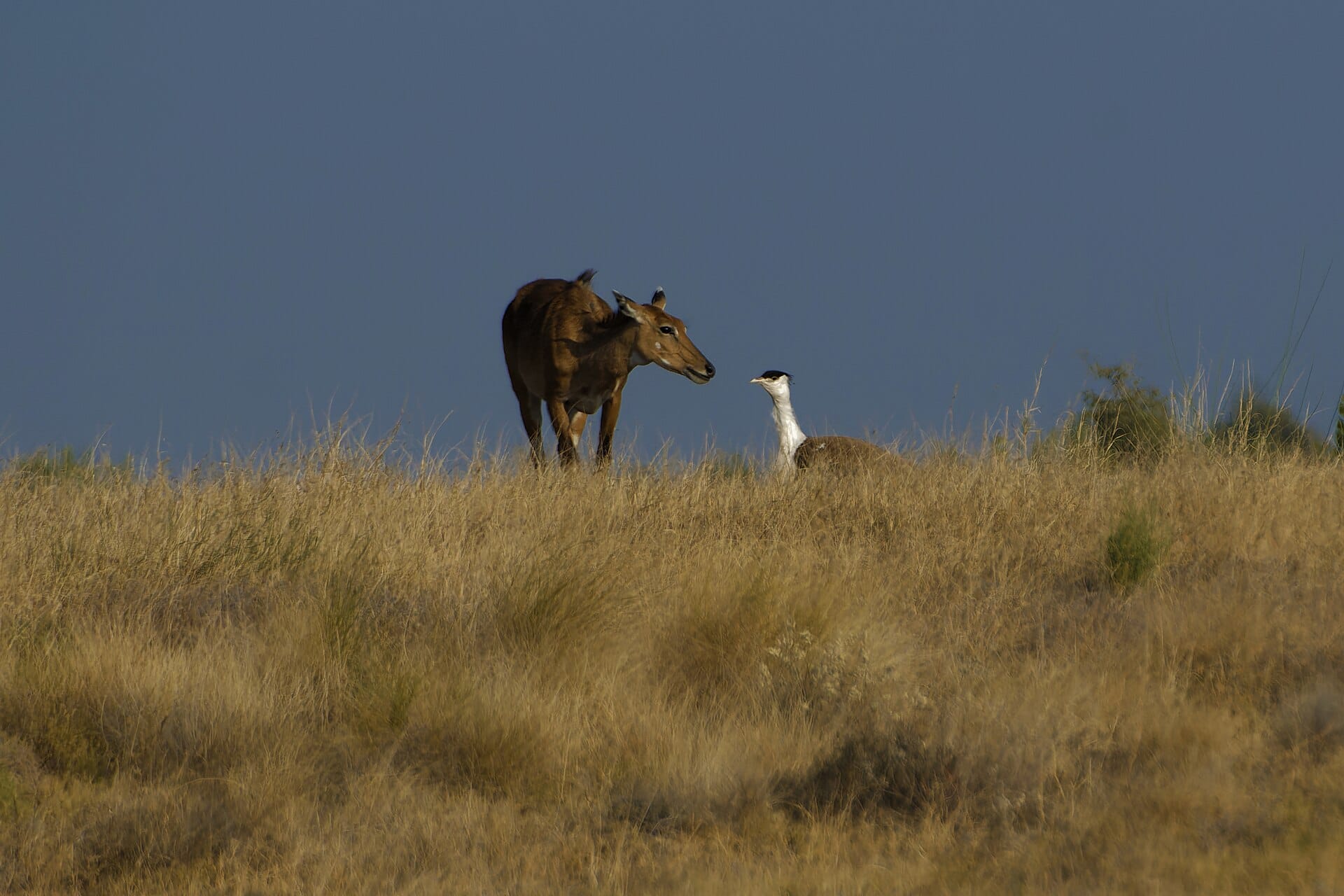
The bustard is what ecologists call an umbrella species. Protecting enough open grassland for it also protects the wider Thar ecosystem, supports land degradation neutrality and provides a stopover for migratory birds on the Central Asian flyway, as the minister noted. Eco-tourism built around the bird could also bring income to local communities, though that remains a promise for now.
The real tests lie ahead. Survival is the first. Power lines have long been identified as a major threat to bustards in the Thar: a Wildlife Institute of India report cited in media coverage describes power-line collisions as the biggest single threat, and a 2021 Supreme Court order directed that lines in priority bustard habitat in Rajasthan and Gujarat be moved underground and fitted with bird diverters. That background is not part of the PIB release, which says the released birds will be monitored for survival, behaviour and habitat use, and eventually for breeding in the wild. The ministry says the conservation actions are guided by a Supreme Court judgment based on an expert committee’s recommendations, which is also why habitat protection and power infrastructure remain part of the conversation.
For readers who follow wildlife recovery, this story sits alongside India’s tiger and cheetah efforts, such as the tiger reintroduction in Buxa and the five new cheetah cubs at Kuno. But the bustard’s case is different: this is a native species being rebuilt from a very small base, patiently, one egg and one fenced grassland at a time. It also adds weight to the argument in our piece on India’s first guide to grasslands, and to what the national wildlife board decided on the bustard and other species. Explore more environment sustainability stories on Prakati.
Source: Press Information Bureau, Government of India (Ministry of Environment, Forest and Climate Change, 3 and 4 October 2026). Images: Great Indian Bustard pair at Desert National Park by SVKMBFLY (CC BY-SA 4.0) and bustard with nilgai in Thar grassland by Shiv’s fotografia (CC BY-SA 4.0), via Wikimedia Commons.