
In 2014, if you’d asked what share of India’s electricity came from the sun, the honest answer was: barely any. The country’s total installed solar capacity stood at around 3 gigawatts (GW) — a rounding error next to coal.
By 30 June 2026, that number had grown more than fiftyfold, to 162.15 GW. That’s according to a new Press Information Bureau backgrounder released this week by the Ministry of New and Renewable Energy. Solar now makes up the single largest share of India’s renewable energy capacity. It’s bigger than wind, bigger than hydro, bigger than biomass.
The headline number for last year is even more striking. India added 37 GW of new solar capacity in 2025, edging past the United States’ 34 GW. That made India the world’s second-fastest-growing solar market, behind only China. It’s the kind of milestone that would have sounded implausible a decade ago. Back then, solar power in India cost more than ten times what it does now.
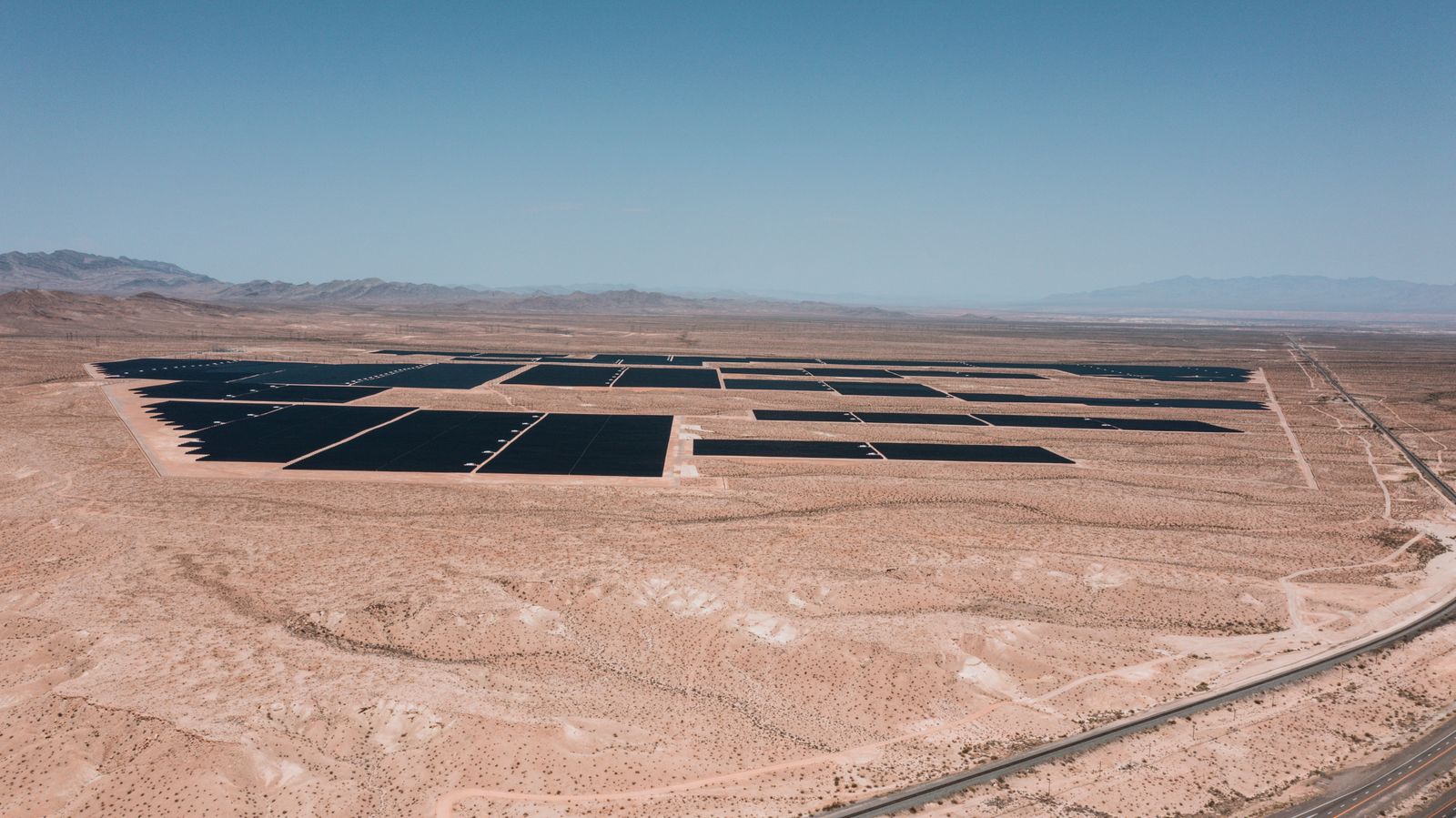
Rajasthan’s Bhadla Solar Park is one example of this scale. It’s built on nearly 5,700 hectares of arid, low-rainfall desert, land that was previously unproductive. Today it’s one of the largest single solar installations on the planet, with 2,245 MW of capacity. It was also where India discovered, in a 2017 auction, that solar power could be generated for just ₹2.44 per unit. That price reset expectations nationwide for what renewable energy could cost.
That auction-driven price collapse is arguably the real engine behind India’s solar story. Tariffs fell from roughly ₹10.95–12.76 per unit in 2010-11 to that record ₹2.44 low within seven years. It was an unprecedented drop by global standards. Madhya Pradesh’s Rewa Ultra Mega Solar Park pushed the model further in 2017-18. It locked in ₹2.97 per unit without any government subsidy, the first unsubsidised utility-scale solar contract in the country. By 2025, India’s utility-scale solar was being built at a levelised cost of around $35 per megawatt-hour. That’s well below the global average of $44. It makes the country one of the cheapest places on Earth to generate solar electricity.
Five pillars behind the numbers
The PIB backgrounder breaks India’s solar expansion into five reinforcing strands. Reading them together explains why the growth curve has been so durable, rather than a one-off spike:
- Long-term climate commitments — the Panchamrit goals announced at COP26 set a target of 500 GW of non-fossil capacity by 2030, and net-zero by 2070. That gave investors a policy horizon to plan against, reinforced through India’s updated Nationally Determined Contributions.
- Guaranteed demand — Renewable Purchase Obligations require power distribution utilities to source a rising share of electricity from renewables: 35.95% for 2026-27, rising through 2029-30. This creates a captive market that de-risks new solar capacity for developers.
- Falling costs — competitive e-Reverse Auctions, run by agencies like the Solar Energy Corporation of India, forced tariffs down year after year.
- Enabling infrastructure — the Solar Parks Scheme (54 parks, 39,188 MW sanctioned as of February 2026) tackled a problem that stalls renewable buildouts elsewhere: where does the power actually go. The Green Energy Corridor programme reinforced this, evacuating 24,567.8 MW of renewable power through strengthened transmission lines.
- Domestic manufacturing — the PLI Scheme for High-Efficiency Solar PV Modules (₹24,000 crore in combined outlay) helped expand India’s module manufacturing capacity from 2.3 GW in 2014 to roughly 172 GW by March 2026. Meanwhile, the Approved List of Models and Manufacturers (ALMM) quality framework has pushed that capacity toward genuinely bankable, higher-efficiency output.
Beyond the mega-projects: solar reaching households and farms
What’s easy to miss in capacity statistics is how much of this growth is now happening at the household and farm level. It’s not just in giant desert installations. Rooftop solar systems now account for 27.88 GW of India’s installed capacity. And distributed solar, rooftop plus agricultural solar pumps combined, made up 36% of all solar capacity added in FY 2025-26.
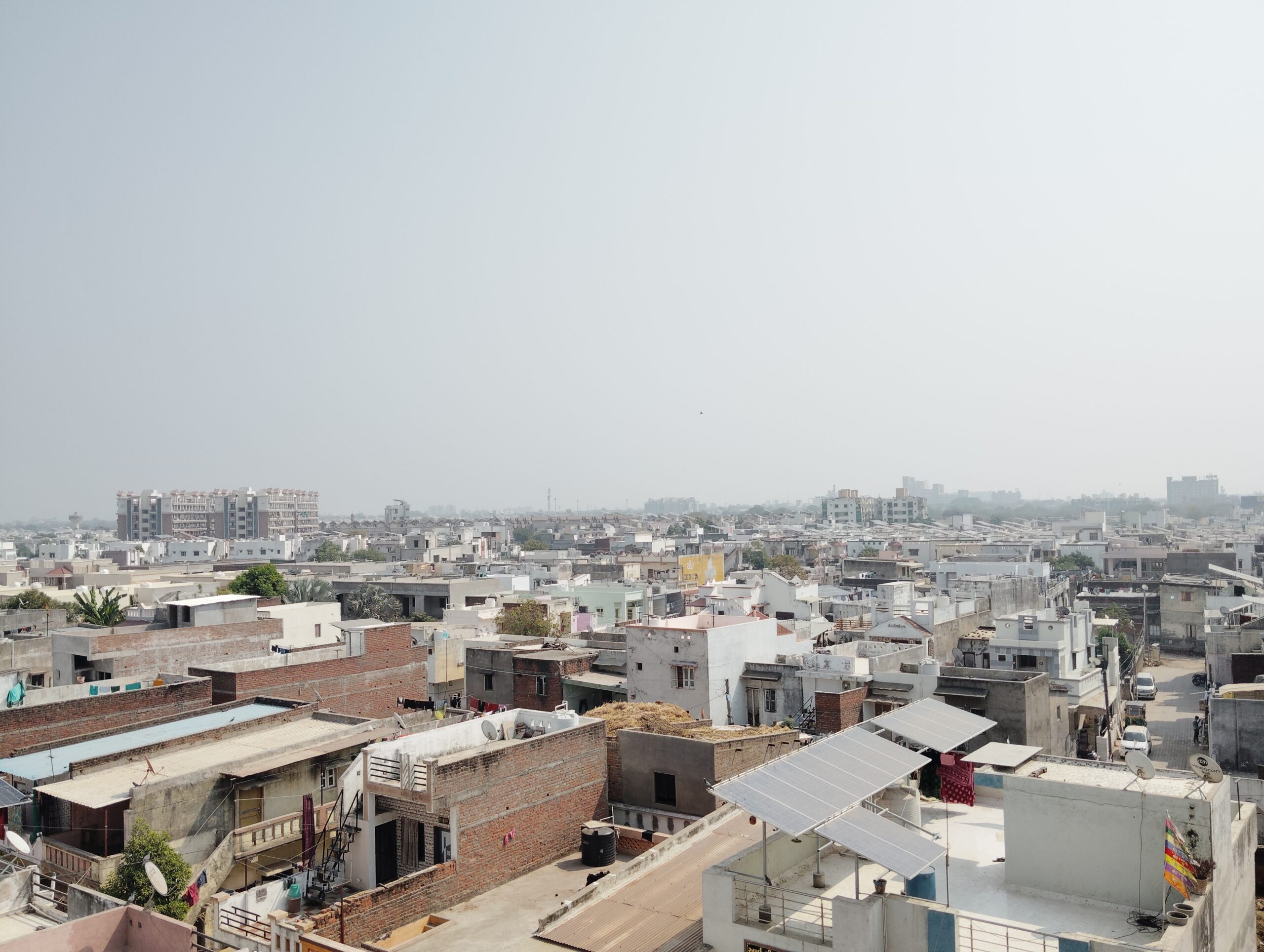
PM Surya Ghar: Muft Bijli Yojana is the world’s largest residential rooftop solar programme. It has solarised over 43 lakh households as of June 2026, disbursing ₹14,771.82 crore in central financial assistance. More than 7.7 lakh of those households now report zero electricity bills. That’s a tangible, monthly difference for families who once budgeted thousands of rupees a month for power.
On the agricultural side, PM-KUSUM has enabled nearly 11.49 lakh off-grid solar irrigation pumps. Feeder-level solarisation now covers more than 15.89 lakh agricultural pumps, reaching over 21.77 lakh farmers. Together, these reduce diesel dependence for irrigation. In some cases, they even let farmers sell surplus power back to the grid.
A newly approved scheme adds a fifth frontier: water
The backgrounder ties this all together with the newest addition to India’s solar policy toolkit: the Pradhan Mantri Surya Sarovar Yojana (PM-SSY). The Cabinet approved it on 31 July 2026. It aims to build 5,000 MW of floating solar capacity on reservoirs and industrial ponds, paired with energy storage. It’s a fundamentally different kind of scale-up, using water surfaces instead of land. That addresses the land-scarcity constraint that increasingly limits new ground-mounted solar in a country as densely populated as India.
Where India fits globally
None of this happened in isolation. India co-founded the International Solar Alliance with France in 2015. It now encompasses partner countries from the Maldives to Argentina. India has also pushed the One Sun One World One Grid (OSOWOG) vision, an interconnected global renewable grid, alongside the UK, Australia, France and the US. During its G20 presidency, India helped build international consensus on tripling global renewable capacity by 2030. That target is now central to post-COP28 climate diplomacy.
The country is tracking toward its own 500 GW non-fossil-fuel target for 2030. It appears to be reaching that goal ahead of schedule. See Prakati’s earlier coverage of India’s overall renewable energy capacity crossing 288.58 GW in June 2026. What this new backgrounder adds is the texture behind that number: the tariff auctions, the manufacturing base, the household rooftops, and the reservoirs about to sprout floating panels. In other words, it’s the machinery that keeps the growth curve climbing rather than plateauing.
Source: Press Information Bureau, Government of India — PIB Backgrounder: India’s Solar Growth Enters a New Era