
Quick answer: Rainwater harvesting is the process of collecting and storing rain — usually from rooftops or paved surfaces — for later use, instead of letting it run off into drains or evaporate. In India, the two most common approaches are rooftop rainwater harvesting (channeling roof runoff into storage tanks or underground sumps) and groundwater recharge (directing rainwater into pits, trenches or borewells so it replenishes the water table). Both methods are legal requirements in several Indian states for new buildings above a certain plot size, and both can be built at a household scale for a few thousand rupees.
India receives roughly 4,000 billion cubic metres of rainfall a year, concentrated into just 100-120 hours of actual rain across the monsoon months. Most of that water is lost to runoff within days because Indian cities have paved over the natural catchment areas that once let rain soak into the ground. Rainwater harvesting exists to interrupt that cycle — capturing water when it falls abundantly and storing or recharging it for use during the dry months that follow.
Why Rainwater Harvesting Matters in India
India is one of the most water-stressed large economies in the world. Groundwater levels in cities like Bengaluru, Chennai and parts of the National Capital Region have dropped sharply over the past two decades as borewells have multiplied faster than aquifers can recharge naturally. At the same time, unplanned urban growth has replaced absorbent soil and open land with concrete and asphalt, so a growing share of monsoon rainfall runs straight into stormwater drains and rivers instead of the ground.
Rainwater harvesting addresses this gap on two fronts. First, it reduces dependence on municipal water supply and groundwater extraction by giving households and institutions an additional, free source of water for non-drinking uses — gardening, washing, cooling, and construction. Second, and more importantly at scale, recharge-focused systems put water back into the ground faster than it would otherwise return, helping stabilise falling water tables in the areas around a well-designed system. The Central Government’s Jal Shakti Abhiyan made rainwater harvesting and recharge a national priority for exactly this reason, and cities such as Chennai have made rooftop rainwater harvesting legally mandatory for buildings since the early 2000s.
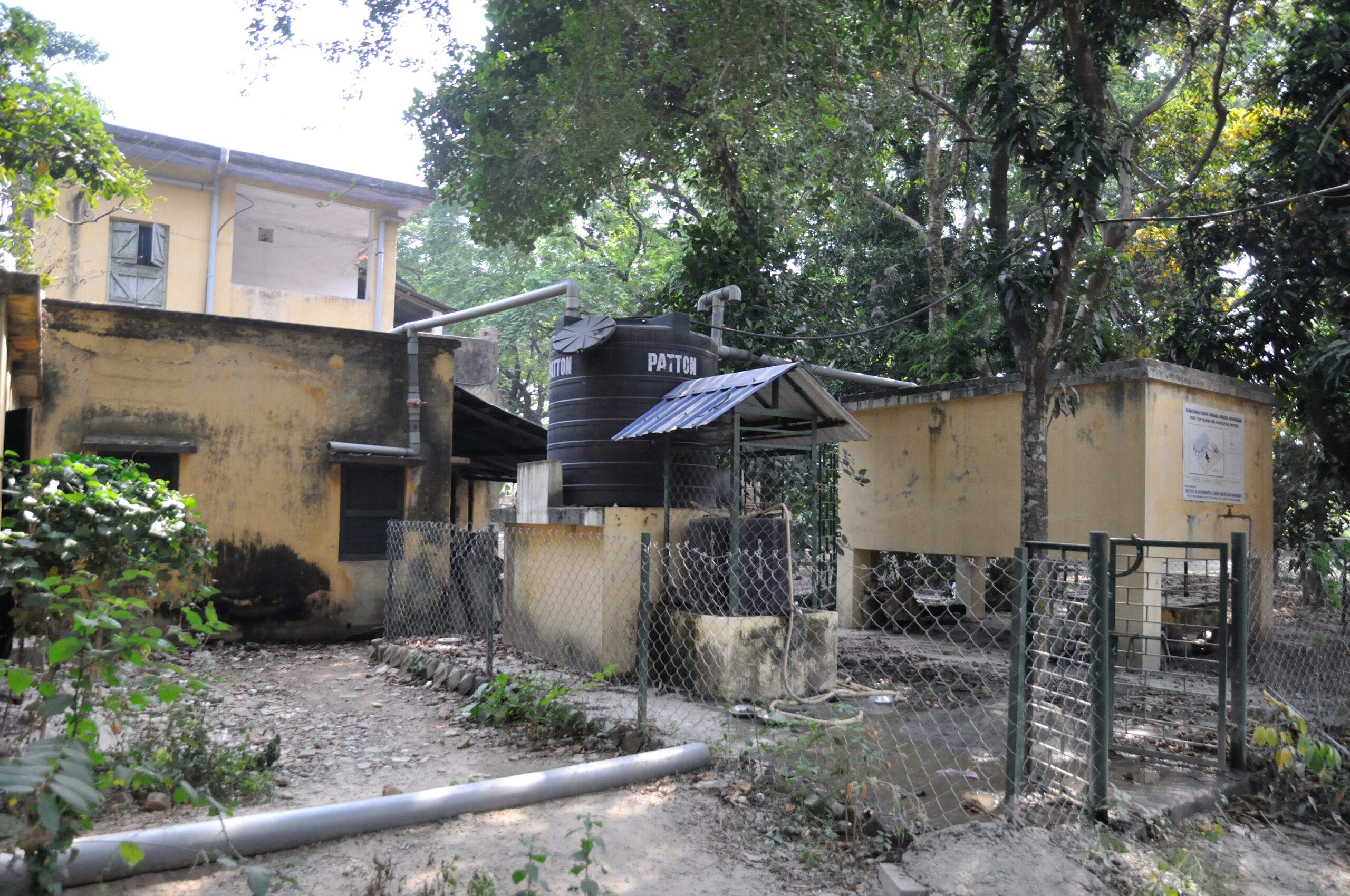
A rooftop rainwater harvesting system is usually the simplest and cheapest way to start: rainwater is guided off the roof through existing gutters and downpipes, passed through a simple filter to remove leaves and debris, and then either stored in a tank for direct use or piped underground to recharge the water table.
Main Methods of Rainwater Harvesting
1. Rooftop Rainwater Harvesting (Storage-Based)
This is the most common method for individual homes and apartment buildings. Rain falling on the roof is directed through the existing gutter and downpipe network, passed through a first-flush diverter (which discards the initial, dirtiest runoff) and a mesh or sand filter, and then collected in an overhead or underground storage tank. Stored water is typically used for gardening, washing vehicles, floor cleaning, and toilet flushing — non-drinking uses that would otherwise draw on treated municipal water.
2. Groundwater Recharge Pits and Trenches
Instead of storing water for reuse, a recharge pit sends filtered rainwater directly into the ground to replenish the local aquifer. A typical recharge pit is 1-3 metres deep, filled with layers of gravel, sand and boulders that filter the water as it percolates down. Recharge trenches work on the same principle but run along the length of a compound wall or driveway, capturing runoff from a larger paved area. These systems don’t provide water you can use directly, but they are the most effective way to reverse falling groundwater levels in dense urban areas.
3. Recharge Wells and Borewells
In areas with deeper water tables, filtered rainwater is injected directly into a dedicated recharge borewell, sending it far below the surface layers that recharge pits can reach. This method is more expensive to install and requires professional drilling, but it can recharge much larger volumes of water and is often used for larger institutional campuses, housing societies and industrial sites.
4. Check Dams and Percolation Tanks
At a community or village scale, small check dams built across seasonal streams slow down monsoon runoff and let it percolate into the surrounding soil rather than draining away rapidly. Percolation tanks work similarly, holding back rainwater in a shallow reservoir long enough for it to soak into the ground. These structures have been used in rural India for centuries and remain central to state-led watershed development and groundwater recharge programmes today.
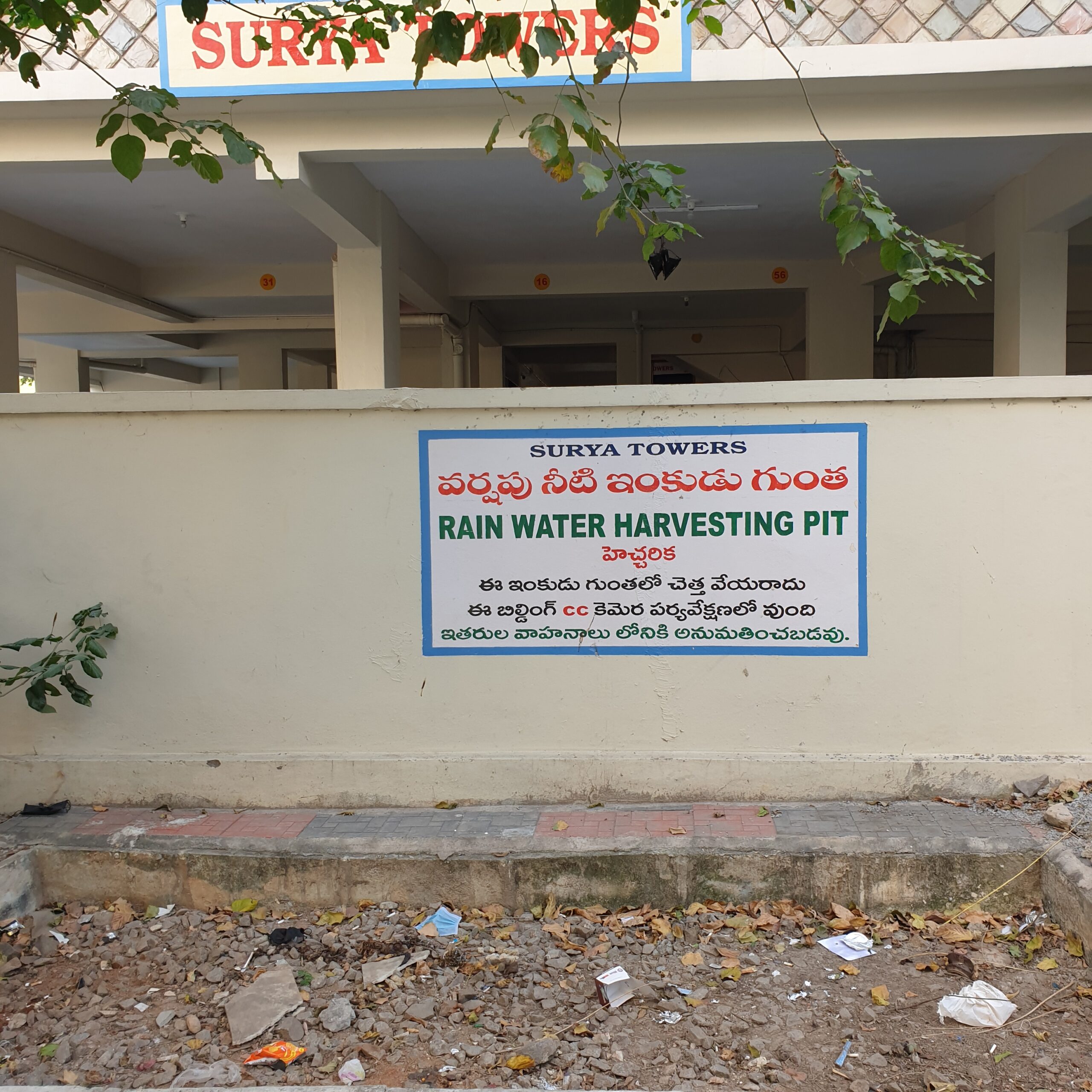
A recharge pit like this one, lined with layers of gravel and sand, lets filtered rainwater percolate slowly into the ground instead of running off into a drain — the single most effective household-scale intervention against falling groundwater tables in Indian cities.
How to Set Up Rainwater Harvesting at Home
- Calculate your catchment area. Measure your roof’s plan area in square metres — this, combined with local annual rainfall, determines how much water you can realistically harvest.
- Choose storage or recharge (or both). If you need usable water, plan for a storage tank sized to your catchment and household needs. If your priority is replenishing groundwater, plan for a recharge pit or trench instead.
- Install a first-flush diverter. This simple device discards the first few minutes of rainfall, which typically carries dust, bird droppings and roof debris, before allowing cleaner water into your storage or filtration system.
- Add a filter. A mesh filter or a simple sand-and-gravel filter bed removes leaves, silt and debris before water reaches your tank or recharge structure.
- Connect to storage or a recharge structure. Route filtered water via PVC piping to an overhead tank, underground sump, or a recharge pit dug into open ground on your property.
- Maintain it every year. Clean filters and first-flush diverters before each monsoon season, and check pipes and tanks for blockages or leaks.
A basic rooftop system for a typical urban home in India — first-flush diverter, filter, piping and a modest storage tank — can be set up for roughly Rs. 5,000 to Rs. 25,000 depending on roof size, tank capacity and whether you hire a contractor or do parts of the installation yourself. A dedicated recharge pit alone, without a storage tank, is usually the cheapest option and can cost as little as Rs. 3,000 to Rs. 10,000 for a household-scale structure.
Benefits of Rainwater Harvesting
- Reduces dependence on groundwater and municipal supply, easing pressure on borewells and treated water systems, especially during summer shortages.
- Recharges local aquifers, helping reverse the falling water tables seen across many Indian cities.
- Reduces urban flooding, since less rainwater is left to overwhelm stormwater drains during heavy monsoon spells.
- Lowers water bills for households and institutions that use harvested water for gardening, cleaning and other non-drinking purposes.
- Improves water quality over time, since rainwater recharge dilutes and displaces contaminated or saline groundwater in some coastal and over-extracted aquifers.
Rainwater Harvesting Rules in India
Several Indian states and cities have made rainwater harvesting mandatory for new construction above a specified plot size, most notably Tamil Nadu (which made it compulsory statewide as far back as 2003), Delhi, Karnataka, and Maharashtra. Building bye-laws in these states typically require a rainwater harvesting structure — either storage or recharge — as a condition for the municipal corporation to approve a building plan or issue an occupancy certificate. Enforcement varies significantly by city, but the direction of policy across India has consistently been toward making rainwater harvesting a standard requirement rather than a voluntary add-on, in line with the broader push under the Jal Shakti Abhiyan and state-level water conservation missions.
Beyond individual buildings, community-scale efforts are showing what’s possible when rainwater harvesting and groundwater recharge are pursued systematically — from nearly 900 Indian cities building recharge structures ahead of the monsoon to a single Chhattisgarh district constructing close to three lakh water structures in a year through community participation. These examples show that rainwater harvesting works at every scale, from a single rooftop to an entire district’s watershed.
Adopting rainwater harvesting at home is one of the most direct ways an individual household can contribute to water conservation — a small, one-time investment that keeps paying back every monsoon.