
Ask most people what India’s clean-energy story looks like and they’ll picture a solar park somewhere in Rajasthan or Gujarat — rows of panels stretching to the horizon, owned by a utility, feeding the grid from a distance. PM Surya Ghar: Muft Bijli Yojana is trying to write a different version of that story, one rooftop at a time, and the latest numbers submitted to Parliament suggest it’s starting to add up.
As of late July 2026, a little over 39.7 lakh rooftop solar systems have been installed under the scheme since its launch in February 2024 — the PM Surya Ghar rooftop solar households count now stands at nearly 48 lakh across the country, urban and rural alike. More than 18.9 lakh of those households have reported at least one month of zero electricity bill, simply from generating and consuming their own solar power.
Why rooftop solar is a harder sell than utility-scale solar
Utility-scale solar is, in some ways, the easy part of the energy transition — a handful of large contracts, a handful of large developers, a predictable financing structure. Rooftop solar is the opposite: it requires millions of individual households to make an upfront decision, navigate a subsidy process, and trust that a system on their own roof will actually pay for itself.
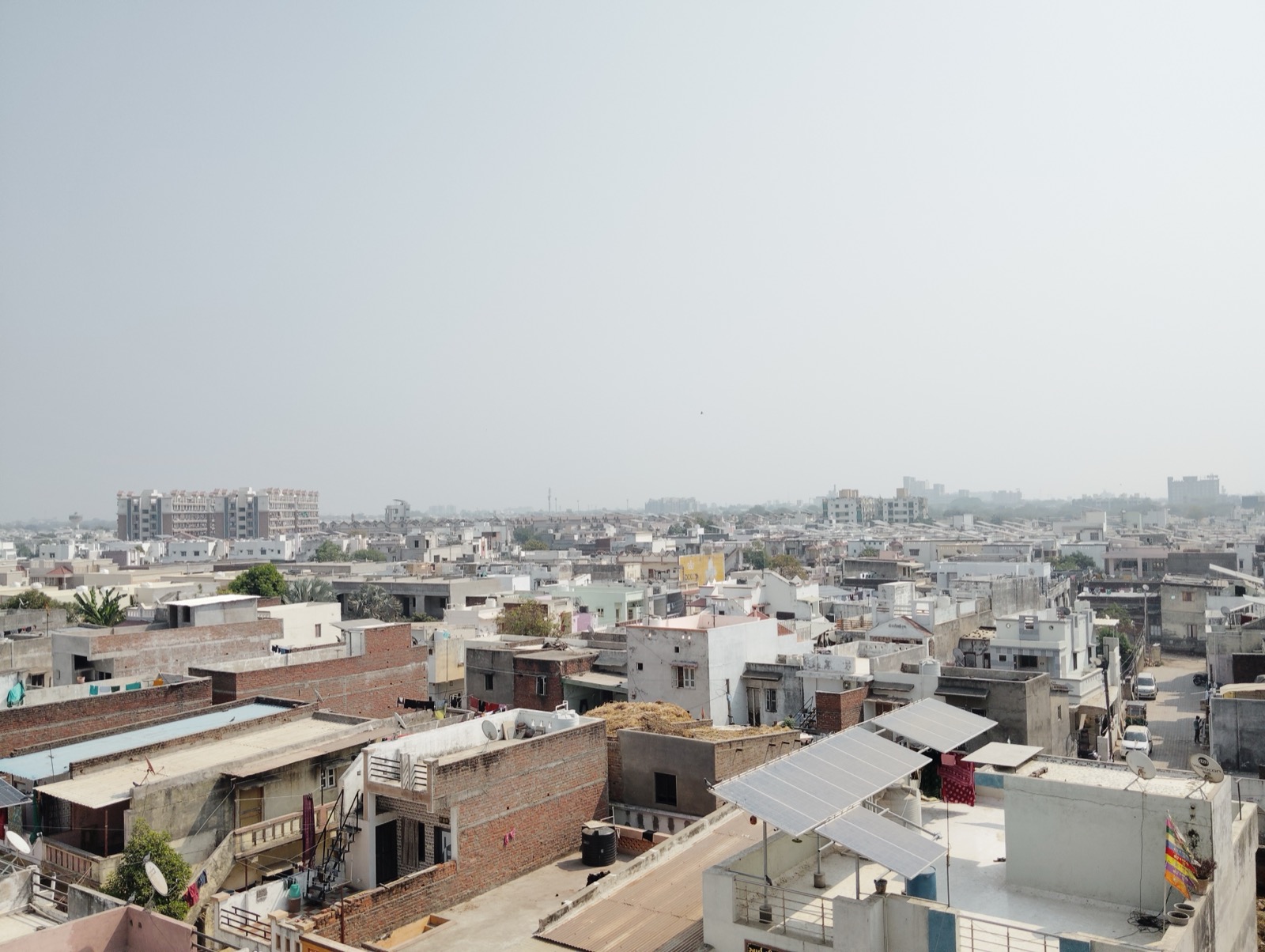
That’s precisely why PM Surya Ghar’s design leans so heavily on removing friction at each of those steps. Households get higher central financial assistance for the first 2 kWp of installed capacity — the portion of a system that covers a typical home’s core electricity needs. For anyone who still can’t cover the balance upfront, nationalised banks offer collateral-free loans at a concessional rate — currently repo rate plus 50 basis points, working out to about 5.75% per annum, over a 10-year tenure. And for households or institutions that would rather not own the system outright, the scheme also permits RESCO and Utility-Led Aggregation models, where a third party owns and maintains the rooftop installation and the household simply buys the power it generates.
The money behind the momentum
The scale of public investment behind this has grown steadily. In FY 2024-25, the scheme’s budget was ₹6,250 crore, but actual expenditure came in higher, at ₹7,822.92 crore. FY 2025-26 saw a budget of ₹20,000 crore against ₹16,166.23 crore spent. For the current financial year, FY 2026-27, ₹22,000 crore has been budgeted, with ₹10,392.48 crore already disbursed as of late July — suggesting the pace of installations, and subsidy disbursement, continues to climb rather than plateau.
Independent tracking of the scheme backs that up: momentum has been building through 2026, with monthly installation additions setting new records earlier in the year and applications in the pipeline running into the tens of lakhs — put simply, demand for rooftop solar in India is currently outpacing what any single year of the scheme has processed so far.
Solar reaching where the grid alone hasn’t
What distinguishes PM Surya Ghar from a purely urban, purely middle-class subsidy programme is its deliberate convergence with schemes that serve harder-to-reach populations. The scheme is being actively linked with the PM KUSUM programme (which solarises agricultural feeders and irrigation pumps), with the Ministry of Housing and Urban Affairs’ Solar Didi Programme (which trains women from Self-Help Groups under the urban livelihoods mission to become rooftop solar technicians and installers), and with District Mineral Foundation funds specifically to reach BPL households and other vulnerable groups who might otherwise be priced out of even a subsidised scheme.
That convergence approach matters for a country where “rooftop solar” can otherwise skew toward households that already had the capital and credit history to act on it. Channelling DMF funds and linking to PMAY beneficiary lists is a direct attempt to make sure a scheme literally named “Muft Bijli” (free electricity) doesn’t end up concentrated only among people who could have afforded solar anyway.
What 48 lakh rooftops actually mean
It’s worth sitting with what that headline number represents in aggregate. Each of those systems is a small, distributed power plant that reduces pressure on the grid at exactly the hours — daytime, especially summer afternoons — when Indian grids are typically under the most strain from air-conditioning load. Multiply 39.7 lakh systems by the kind of capacity a typical residential installation carries, and you get a meaningful slice of new generation capacity that never needed a new transmission line, a new substation, or additional land acquisition — it simply sits on roofs that already existed.
For all the attention utility-scale solar parks receive, rooftop solar’s real advantage may be exactly this: it turns hundreds of thousands of individual households into participants in the energy transition, not just consumers of it. Forty-eight lakh homes in, PM Surya Ghar is still a small fraction of India’s roughly 300 million households — but the trajectory, and the financing architecture built to sustain it, suggest this is a programme built to keep compounding rather than plateau.
Source: Press Information Bureau, Government of India — PM Surya Ghar: Muft Bijli Yojana Makes Rooftop Solar Accessible for All and Over 48 Lakh Households Benefit Under PM Surya Ghar, Ministry of New and Renewable Energy, 28 July 2026.