
Numbers rarely tell a story on their own, but this one does most of the work: in 2014, India had 76.38 gigawatts of renewable energy capacity installed. As of 30 June 2026, that number is 288.58 gigawatts — very nearly four times as much, in a little over a decade.
The Ministry of New and Renewable Energy shared the figure in a written reply to the Rajya Sabha on 21 July 2026, breaking it down by source: 162.15 GW of solar, 57.44 GW of wind, 57.24 GW of hydro, and 11.75 GW of bio power. Add in 8.78 GW of nuclear capacity, and India’s total non-fossil-fuel electricity generation capacity now stands at 297.36 GW.
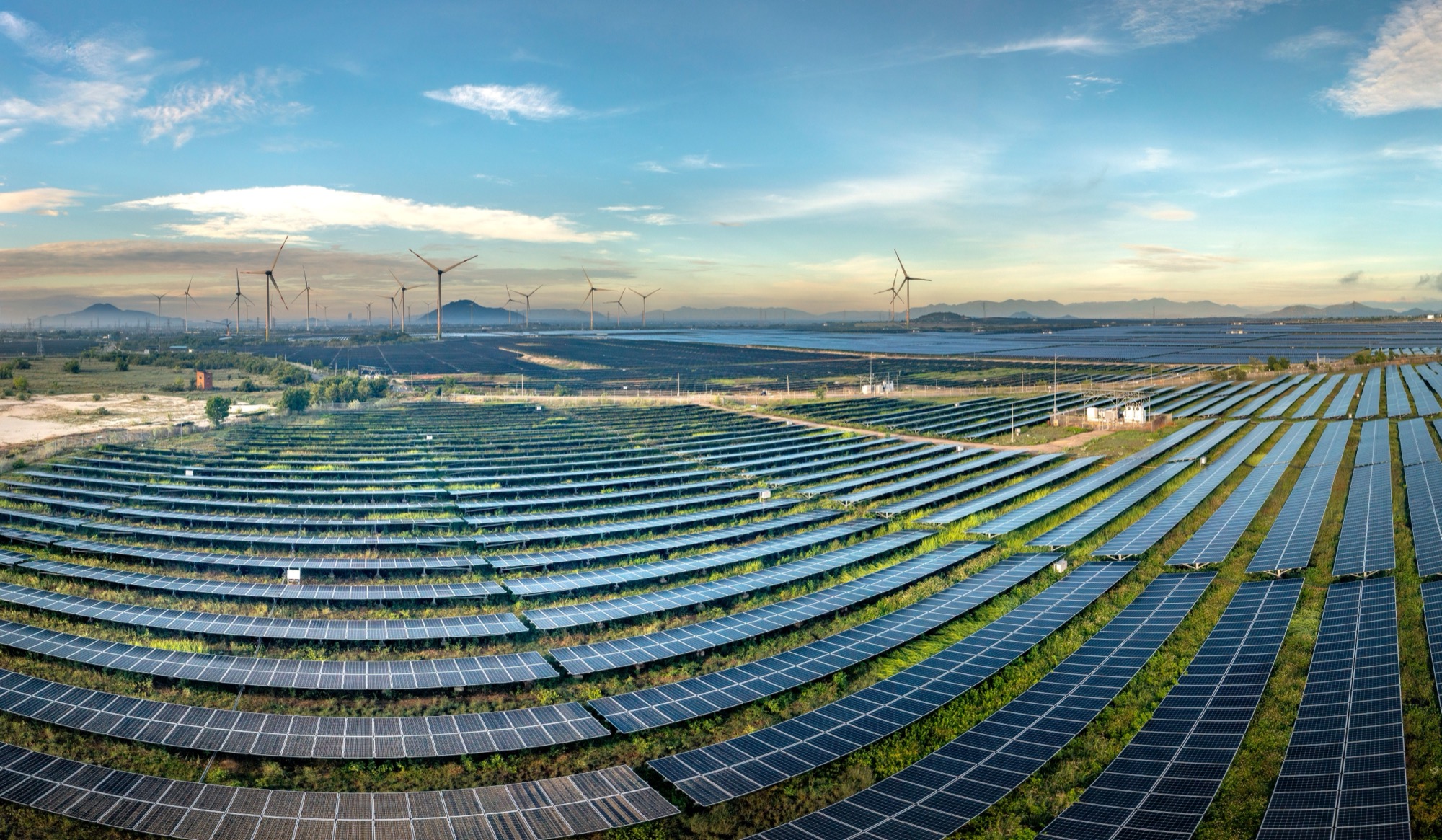
That figure matters for a reason that goes beyond the raw scale of it: India isn’t just adding renewable capacity quickly, it’s ahead of the deadline it set for itself.
Ahead of a Deadline That Sounded Ambitious in 2015
At the 2015 Paris climate conference, India committed under its Nationally Determined Contributions to reach 40% of its installed electricity capacity from non-fossil-fuel sources by 2030 — later revised upward to a target of 500 GW of non-fossil-fuel capacity by 2030. At the time, that felt like a stretch goal for a country whose grid still ran overwhelmingly on coal.
India crossed the 50% non-fossil-fuel capacity mark in June 2025 — five years ahead of the original 2030 schedule. The latest figures suggest that momentum hasn’t slowed since: solar and wind capacity alone added close to 29 GW in just the first half of 2026, with rooftop and distributed solar increasingly doing the heavy lifting alongside utility-scale solar parks. At the current run rate, the 500 GW non-fossil target — once considered ambitious — looks less like a stretch and more like a formality of when, not if.
Solar Did the Heavy Lifting, But Wind Isn’t Far Behind
Solar power accounts for well over half of India’s total renewable capacity today, and that tilt has defined how the country’s energy transition has unfolded. Falling panel costs, aggressive state-level rooftop solar schemes, and large utility-scale solar parks across Rajasthan, Gujarat, and Karnataka have made solar the fastest and cheapest lever available to policymakers.
Wind power, at 57.44 GW, has grown more steadily but less dramatically — India ranked fourth globally in wind energy installations as of December 2025, according to the Global Wind Energy Council’s 2026 report. Wind capacity additions actually accelerated in the most recent financial year: 6,057 MW added in FY 2025-26, compared to 4,151 MW the year before and 3,253 MW the year before that. Power generation from wind projects rose accordingly, from 83 billion units in each of the two prior years to 106 billion units in FY 2025-26 — a sign that new capacity is translating into actual electricity on the grid, not just installed nameplate numbers sitting idle.
What’s Actually Making This Possible
Numbers like these don’t happen by accident, and MNRE’s own reply to Parliament lists out some of the less headline-grabbing machinery behind them: waived inter-state transmission charges for solar and wind power sold across state lines, a Green Energy Corridor Scheme funding the transmission lines and substations needed to actually move renewable power from where it’s generated to where it’s used, 100% foreign direct investment permitted under the automatic route, and a Renewable Purchase Obligation trajectory — soon to be paired with a Renewable Consumption Obligation — that legally requires large power consumers to source a rising share of their electricity from clean sources, with penalties for non-compliance.
There’s also a financing story underneath the megawatts. Since 2014, India’s renewable energy sector has attracted roughly $45.72 billion in foreign direct investment, while domestic financial institutions — a mix of public sector banks, IREDA, PFC, REC, IIFCL, NaBFID, and SIDBI — have collectively deployed ₹12.32 lakh crore toward the sector. That’s the kind of capital scale that turns a policy target into physical infrastructure on the ground.
Why the Milestone Matters Beyond the Number
It’s easy to treat a capacity milestone as a press-release statistic and move on. But 288.58 GW of renewable capacity is the reason coal’s share of India’s electricity generation has been gradually declining even as total electricity demand keeps rising — the two trends that, together, actually bend an emissions curve. It’s also the infrastructure base that everything else in India’s energy transition depends on: without enough clean generation capacity on the grid, ambitions like green hydrogen production, EV charging at scale, and industrial decarbonisation don’t have anywhere to draw their power from.
India still has real ground to cover — coal remains the single largest source of electricity generation by a wide margin, and grid-scale storage to smooth out solar and wind’s intermittency is still catching up to generation capacity. But a country that had less than 80 GW of renewable capacity when the Paris Agreement was signed, now sitting close to 300 GW and running ahead of its own 2030 targets, is a genuinely rare policy success story — one that’s easy to miss amid the day-to-day news cycle, buried as it was this week in a routine written reply to a parliamentary question.
For anyone tracking India’s renewable energy transition, that’s the real headline: not just that the number is big, but that it’s arriving faster than the country’s own roadmap said it would.
Source: Press Information Bureau, Government of India — India’s Renewable Energy Installed Capacity Surges Nearly Fourfold to 288.58 GW Since 2014