
India crossed a milestone five years ahead of schedule. Here is why it matters — and why millions of drivers are asking the right questions.
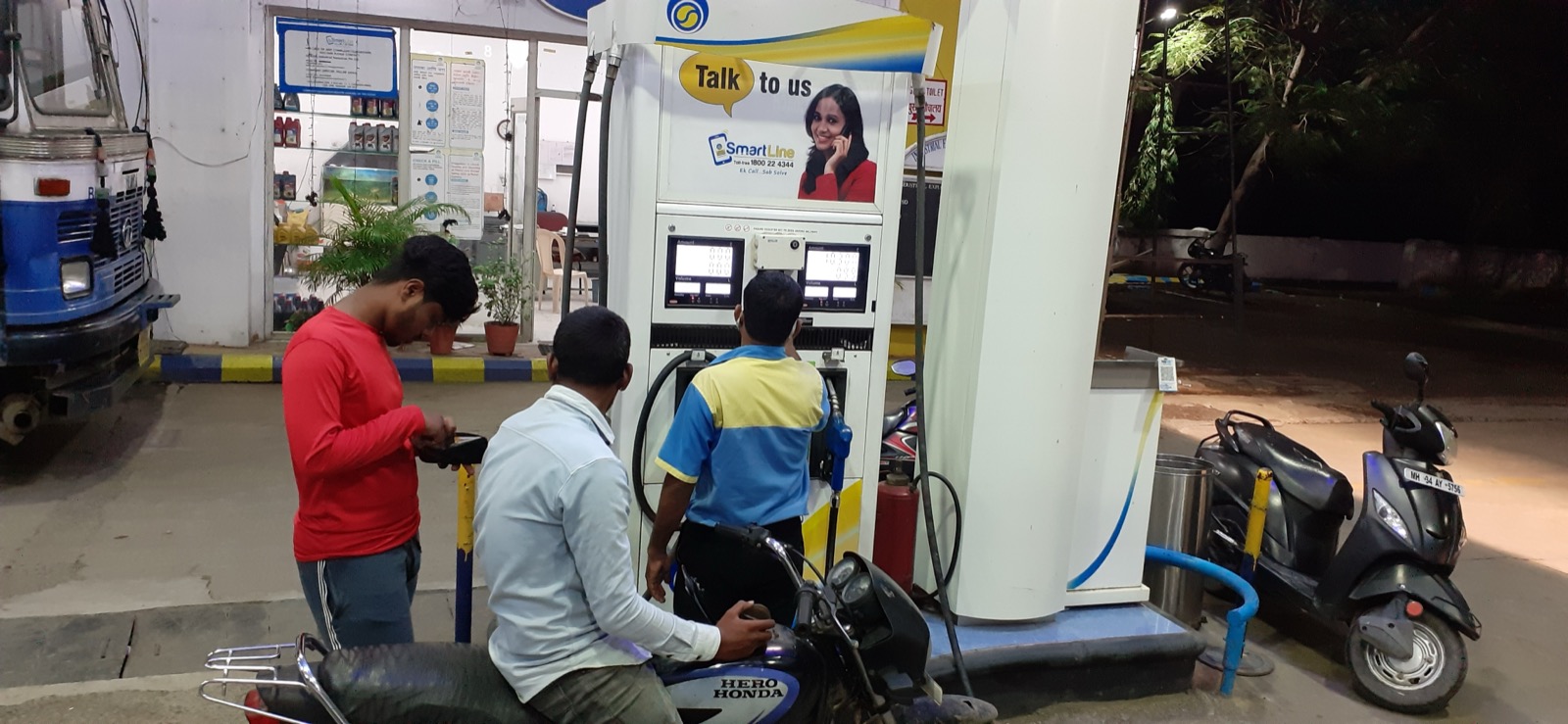
Every time you fill up your vehicle at a petrol pump in India today, something quiet but consequential is happening: roughly one-fifth of what flows into your tank is not petrol at all. It is ethanol — a fuel made from sugarcane, maize, and other farm crops grown right here in India. This is E20, the country’s blend of 80 percent petrol and 20 percent ethanol, and as of 2026 it is available at every retail fuel outlet across the country.
India achieved this 20 percent blending target five months ahead of schedule, a feat that few expected when the National Policy on Biofuels originally set 2030 as the goal line — later brought forward to 2025–26. The milestone has real numbers behind it: the programme has so far kept more than 909 lakh metric tonnes of carbon dioxide out of the atmosphere, saved over ₹1.36 lakh crore in foreign exchange that would have gone toward imported crude oil, and channelled more than ₹1.18 lakh crore directly to farmers — primarily sugarcane and grain growers whose surplus produce now has a guaranteed buyer in distilleries supplying the fuel sector.
For a country that imports about 85 percent of its crude oil and has committed to net-zero emissions by 2070, a domestically produced, lower-carbon fuel is not a small thing. Sugarcane-based ethanol reduces lifecycle greenhouse gas emissions by roughly 65 percent compared to petrol; maize-based ethanol by around 50 percent. These are not marginal gains — they are the kind of shifts that show up in India’s climate accounting in a meaningful way when scaled to hundreds of millions of vehicles.
The Honest Conversation About Mileage
There is a conversation happening in India right now that is worth taking seriously. A survey of over 36,000 vehicle owners found that 66 percent of those with pre-2023 cars and motorcycles reported a fuel efficiency drop of more than 10 percent since E20 became universal. Drivers — especially those on older vehicles designed for E5 or E10 blends — have been reporting lower mileage, rough idling, and clogged filters. Social media threads on the topic have been noisy, and political voices have picked up the noise.
On 4 July, the Ministry of Petroleum and Natural Gas convened a press conference with senior representatives from Maruti Suzuki, Toyota Kirloskar Motor, Hero MotoCorp, TVS Motor Company, Hyundai India, and Bajaj Auto to address these concerns directly — a rare instance of industry and government sitting together in public to confront a consumer backlash rather than issuing statements from behind closed doors.
The message from the panel was measured rather than dismissive. Maruti Suzuki confirmed that ethanol has a calorific value about 3 to 3.5 percent lower than standard petrol — translating to roughly 0.6 km per litre less on a car that previously did 20 km per litre. That is real, and the company said so plainly. What it also said is that of 2.84 crore cars it serviced in FY 2025–26, more than 1.5 crore were older, non-E20-certified vehicles — and not a single E20-related case of corrosion, component damage, or mechanical failure was found in field data. Toyota’s representative noted that India’s testing protocols conform to UNECE international standards, administered by globally accredited, independent agencies — the same agencies that certify cars exported to Europe and other markets.
Hero MotoCorp echoed the finding for two-wheelers, saying extensive service data showed no higher damage in E20-running vehicles. The panel was also candid that the recently launched E85 dispensing stations — which dispense a blend of 85 percent ethanol and 15 percent petrol — are exclusively for flex-fuel vehicles, and that no ordinary petrol vehicle should be using them.
What Happens Next: The E85 Chapter
India’s biofuel story does not stop at E20. In June 2026, the Petroleum Ministry launched E85 — a flex fuel made of 85 percent ethanol — at a pilot set of stations, with plans to expand to 500 outlets by end of 2026 and approximately 5,000 by December 2027. E85, priced around ₹20 per litre below conventional petrol, is designed for a new generation of flex-fuel vehicles that can run on any blend from E20 to E100. Maruti Suzuki and Hero MotoCorp have already announced flex-fuel models.
The lifecycle emissions benefit of E85 is even sharper — around 61 percent lower greenhouse gas emissions compared to petrol. If flex-fuel vehicles scale as planned, India could be looking at a sustainable transport future that draws heavily on its own farms rather than foreign oilfields.
A Transition That Deserves Both Credit and Scrutiny
The honest assessment of E20 is this: it is a genuine sustainability achievement that also involves a real-world trade-off that millions of people are experiencing in their daily commutes. The mileage drop for older vehicles is not imaginary, even if the figure of “10 percent or more” reported by drivers may reflect a combination of E20’s lower energy density and other factors — tyre pressure, driving habits, maintenance cycles — that the fuel shift has made more noticeable.
What the 4 July press conference demonstrated is that the automotive industry is confident enough in its data to say so in public: yes, there is a small efficiency trade-off; no, there is no engine damage at scale; and yes, the broader gains — carbon reduction, farmer income, energy security — are worth it. That is a reasonable case, made more credibly when it comes with real numbers rather than official reassurances alone.
For India’s farmers — particularly the sugarcane growers of Maharashtra, Uttar Pradesh, and Karnataka, and the maize farmers increasingly joining the ethanol supply chain — the programme has created a demand floor that price volatility in commodity markets can no longer easily erase. That is a quiet but durable form of sustainable farming support that rarely makes headlines.
The sustainable energy transition in transport is rarely clean or linear. E20 is a case study in exactly that reality — a policy that is simultaneously ahead of schedule, environmentally significant, genuinely contested, and still in motion. What it is not is reversible. India’s ethanol production capacity, distillery infrastructure, and farm supply chains have been built for this market. The direction is set; the questions are now about pace, communication, and what comes after E20.
Source: Press Information Bureau, Government of India (PRID 2281142)