
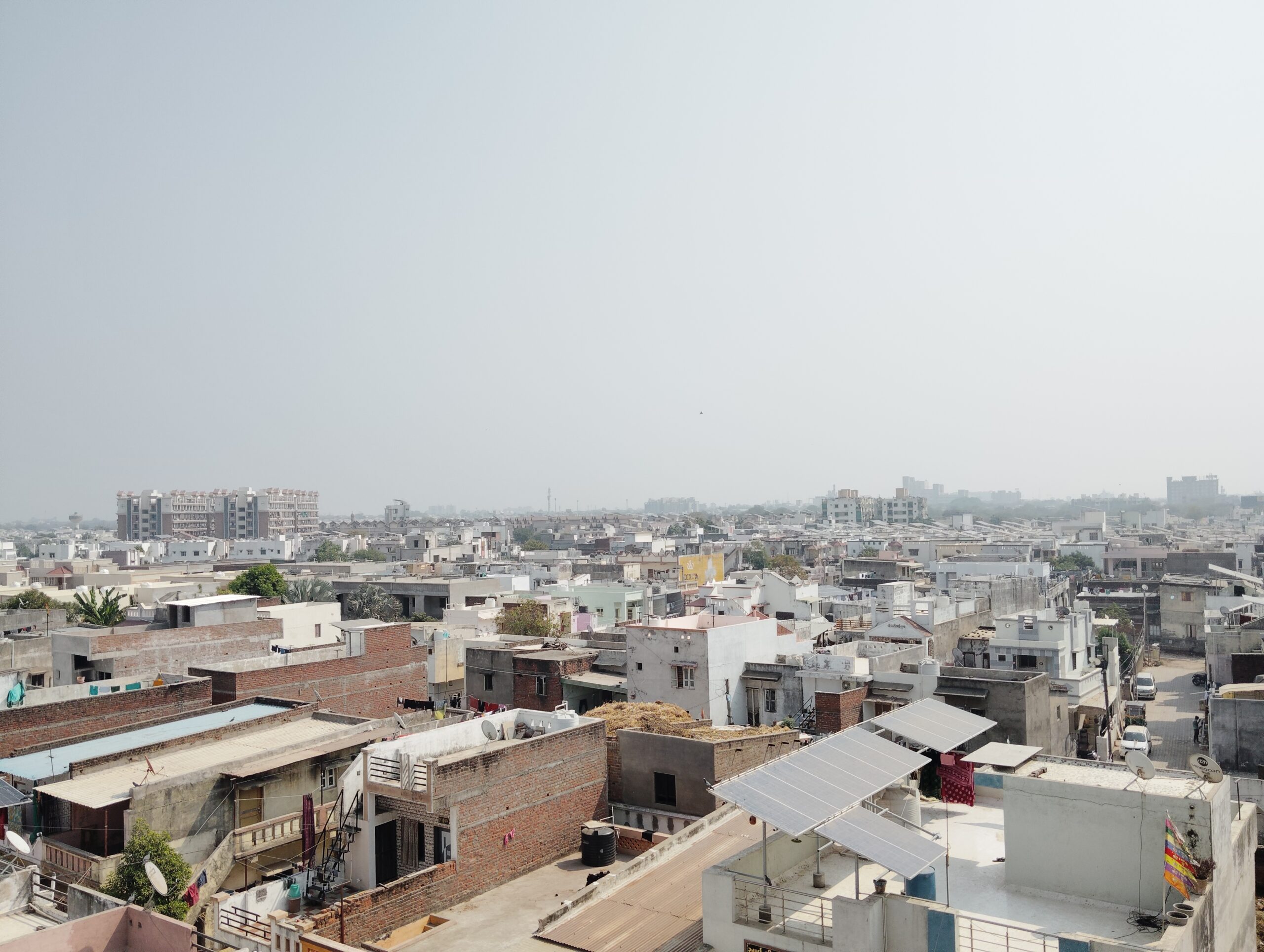
Ten years ago, four Indian cities — Coimbatore, Tiruchirappalli and Tirunelveli in Tamil Nadu, and Rajkot in Gujarat — became the test bed for a question India’s urban planners still haven’t fully answered: how do you actually embed climate action into the daily business of running a city, rather than treating it as a side project? That question has since expanded to cover Ahmedabad, Vadodara, Udaipur and Siliguri, and last week, at the India Habitat Centre in New Delhi, the programme behind it — CapaCITIES, a joint effort between the Indian government, the Swiss government and the global city-network ICLEI — marked ten years of trying to answer it, and used the moment to hand over three concrete tools meant to help the next wave of Indian cities skip a decade of trial and error.
From pilot projects to a toolkit
Launched in 2016 and funded by the Embassy of Switzerland to India and Bhutan, CapaCITIES set out to build the institutional muscle — not just the physical infrastructure — that Indian cities need to plan for lower emissions and greater climate resilience. Its first phase (2016–2019) worked directly with four cities to build local capacity, draft climate action plans, and pilot early adaptation and mitigation projects. Later phases shifted toward working with state governments and the National Institute of Urban Affairs to make those city-level lessons replicable at scale — an implicit acknowledgment that pilot projects in a handful of cities don’t automatically translate into national practice.
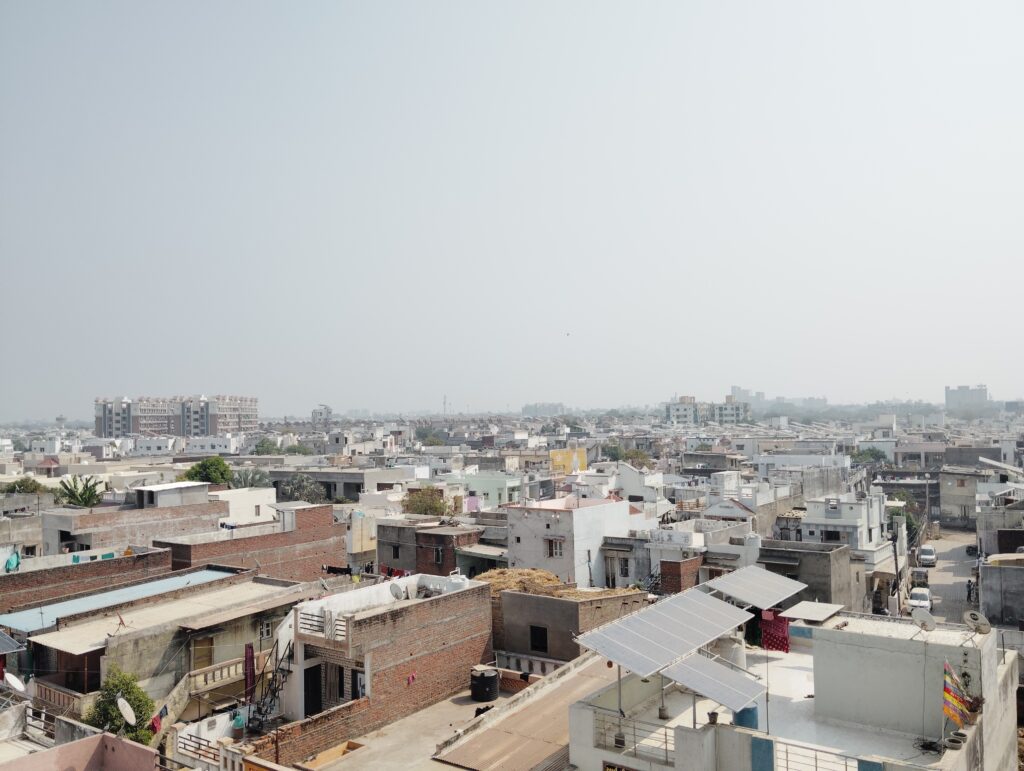
At the tenth-anniversary event, that translation effort took physical form: three new “CapaCITIES Knowledge Products” were released — a Net-Zero Climate Resilient Cities Methodology Toolkit, a practitioner’s guidebook on energy transition for urban local bodies, and a white paper on financing the shift to low-carbon urban infrastructure — alongside a video training series on preparing net-zero city action plans, now hosted on the National Urban Learning Platform. Unlike a one-off pilot report, these are explicitly designed as reusable resources any Indian city can pick up, not just the eight that participated directly in the programme.
Why institutional capacity is the harder half of climate action
India’s urban climate conversation tends to focus on hardware — solar rooftops, EV charging points, sewage treatment plants — because hardware is visible and fundable. CapaCITIES’ central bet, reiterated by multiple speakers at the anniversary event, is that hardware without institutional capacity doesn’t stick: a city can build a rainwater harvesting system or a solar microgrid, but without dedicated staff who understand climate planning, without climate considerations built into how a municipal budget gets drafted, and without the technical know-how to access climate finance, those individual projects tend to remain isolated wins rather than becoming systemic practice.
Gopal Prasad, Economic Adviser at the Ministry of Housing and Urban Affairs, made this explicit at the event, calling for dedicated “climate cells” within urban local bodies — a specific institutional recommendation rather than a general aspiration, and one that speaks to how thin climate expertise still is inside most Indian municipal corporations, which are frequently understaffed even for their core civic functions, let alone specialised climate planning. The National Institute of Urban Affairs’ Debolina Kundu framed the programme’s eight participant cities as potential “lighthouses” for others to learn from — an implicit admission that scaling this kind of institutional change city by city, without shared toolkits, would take far longer than India’s 2070 net-zero timeline allows for.
The financing gap CapaCITIES is trying to close
The white paper released at the event — on “facilitating the transition of cities in India along a low-carbon pathway” through better access to finance — points to what is probably the single biggest bottleneck in Indian urban climate action: municipal corporations, unlike state or central governments, generally cannot issue debt or access climate finance instruments at the scale their infrastructure needs require, and most lack the technical capacity to structure bankable low-carbon projects even when funding is theoretically available. Complementary national programmes like CITIIS 2.0 (City Investments to Innovate, Integrate and Sustain) and the Tamil Nadu Climate Resilient Urban Development Programme, both referenced at the event as parallel scaling mechanisms, are attempts to bridge exactly that gap — but a decade in, the gap between pilot-scale success and nationwide replication in Indian urban climate finance remains substantial.
What a decade of partnership actually produced
Beyond the toolkits, CapaCITIES’ organisers point to less quantifiable outcomes — livelihood generation, community awareness, women’s participation, and ecosystem restoration in the eight partner cities — as evidence that climate action, done well, generates sustainable development benefits well beyond emissions numbers. That framing matters for how climate policy gets sold in a country where per-capita emissions are still low relative to the developed world, and where the more persuasive case for local climate action is often about liveability, jobs and public health rather than global carbon accounting. Whether the toolkits released this month actually get picked up by the hundreds of Indian cities that never had a Swiss-funded decade of institutional hand-holding — and whether “climate cells” become a real budget line in municipal corporations rather than a recommendation left in a report — is the test CapaCITIES has now set for its own legacy.
Source: Press Information Bureau, Government of India — PRID 2284570