
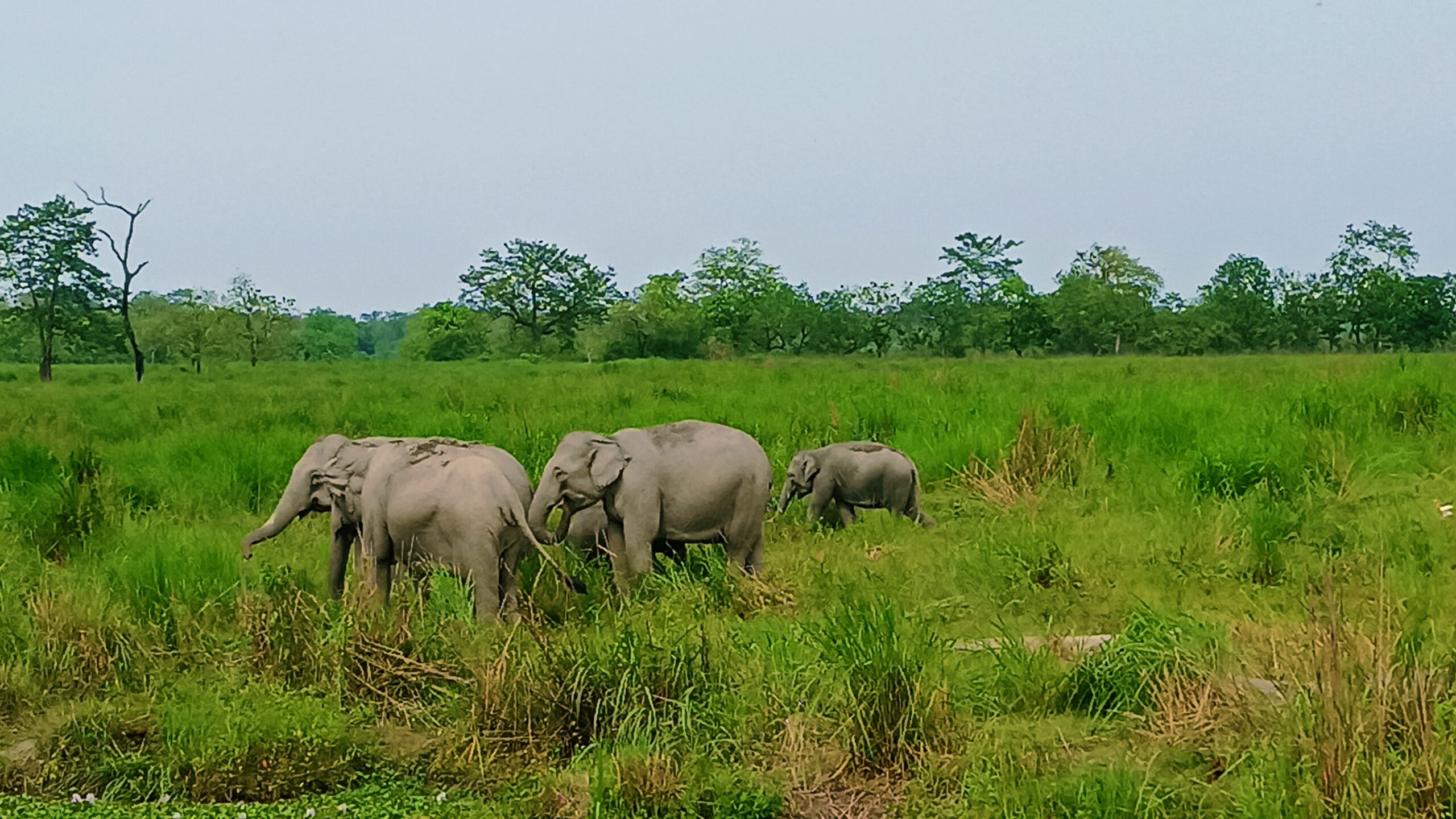
On July 10, officers of the Directorate of Revenue Intelligence intercepted a group near Sujangarh, Rajasthan, and recovered about 11 kilograms of elephant ivory. It was one seizure among more than a dozen carried out in the span of roughly a week, spanning Rajasthan, Karnataka, Maharashtra, West Bengal and India’s international airports — and together they add up to one of the more substantial wildlife conservation enforcement actions reported by Indian agencies this year: over 440 endangered or protected animals rescued, roughly 15 kilograms of ivory articles seized, and 33 people arrested.
The scale and geographic spread are what make this notable. This wasn’t a single raid on a single smuggling ring — it was a coordinated, intelligence-led operation running simultaneously across multiple states and agencies, targeting different points in the trafficking chain: source poaching, interstate transport, and international smuggling through airports.
The ivory seizures were the most immediately eye-catching: alongside the Rajasthan recovery, DRI officers in Howrah intercepted two people carrying idols made of ivory believed to have been smuggled in from Bangladesh, and a separate operation in Mysuru, Karnataka recovered another 4 kilograms of elephant ivory. India has prohibited commercial ivory trade domestically since the 1990s, and both import and export of ivory are barred under the country’s Foreign Trade Policy in line with its obligations under CITES — the Convention on International Trade in Endangered Species of Wild Fauna and Flora. The Indian elephant is listed under Schedule I of the Wildlife (Protection) Act, 1972, the strictest protection category available under Indian law.
What was actually seized
The most striking single operation, though, targeted live animals rather than ivory. In a joint action across Maharashtra and West Bengal on July 7–8 — conducted jointly by DRI Mumbai and the CBI’s Economic Offences Branch, with support from the Wildlife Crime Control Bureau — officers recovered and rescued 15 slow lorises, 2 binturongs, 28 star tortoises, 6 Egyptian vultures and 2 shikra birds, all species listed under Schedule I. Slow lorises, in particular, are among the most heavily trafficked primates globally for the exotic pet trade, prized for their large eyes and slow movements — traits that make them popular on social media and correspondingly devastating for wild populations, since captured lorises are frequently mutilated (their teeth clipped) to make them safer to handle, and rarely survive long in captivity even when rescued.
Separately, officers foiled multiple attempts to smuggle exotic wildlife into India through international airports, intercepting passengers arriving from Bangkok, Kuala Lumpur and Colombo carrying species that read like an exotic pet trade catalogue: albino red-eared turtles, bearded dragons, African spurred tortoises, Borneo pythons, green iguanas, mangrove monitor lizards, tegus, a Goeldi’s marmoset, a yellow-cheeked gibbon, a siamang gibbon, a woolly monkey and more. None of these species are native to India — their presence in the case underscores that India functions not just as a source country for wildlife trafficking, but as a transit and demand point for exotic species from Southeast Asia and beyond.
Why India is a trafficking hotspot — and what’s changing
India’s position as a global wildlife trafficking hub is well documented by conservation researchers: its geography places it on transit routes between Southeast Asia, where much of the illegal exotic pet trade originates, and international demand centres; its own biodiversity makes it a source for pangolin scales, tiger parts and other high-value wildlife products; and its porous land borders with countries like Bangladesh, Nepal and Myanmar create multiple entry and exit points that are difficult to fully secure. Pangolins in particular — not seized in this specific operation, but frequently implicated in similar DRI actions — remain the most trafficked mammal group globally, hunted primarily for scales in demand across parts of East and Southeast Asia.
What this operation demonstrates, more than any single seizure, is the value of cross-agency coordination that has often been a weak point in India’s wildlife enforcement. The DRI’s mandate is customs and revenue intelligence, not wildlife protection specifically — but this release describes close coordination with the CBI, the Wildlife Crime Control Bureau, state Forest Departments, Customs Airport Intelligence Units across Bengaluru, Kolkata, Trichy and Madurai, and local police. That kind of joined-up operation, where intelligence developed by one agency gets handed off for prosecution by another, is precisely the model wildlife crime researchers have long argued India needs more of — since trafficking networks routinely exploit jurisdictional gaps between agencies that don’t talk to each other.
The animals rescued in this operation — the slow lorises, the star tortoises, the vultures — now enter a rehabilitation and, where possible, release pathway managed by Forest Departments. Whether they survive that process, and whether the 33 arrests translate into meaningful prosecutions rather than quick releases on bail, will determine if this crackdown becomes a genuine deterrent or simply a disruption that trafficking networks route around within months. It’s also a reminder of the role ordinary demand plays in sustaining this trade: every exotic pet bought on impulse, every ivory trinket purchased without asking where it came from, feeds directly back into the networks this operation just disrupted — a version of the same sustainable living principle that applies to consumption of every kind.
Source: Press Information Bureau, Government of India — PRID 2284262