
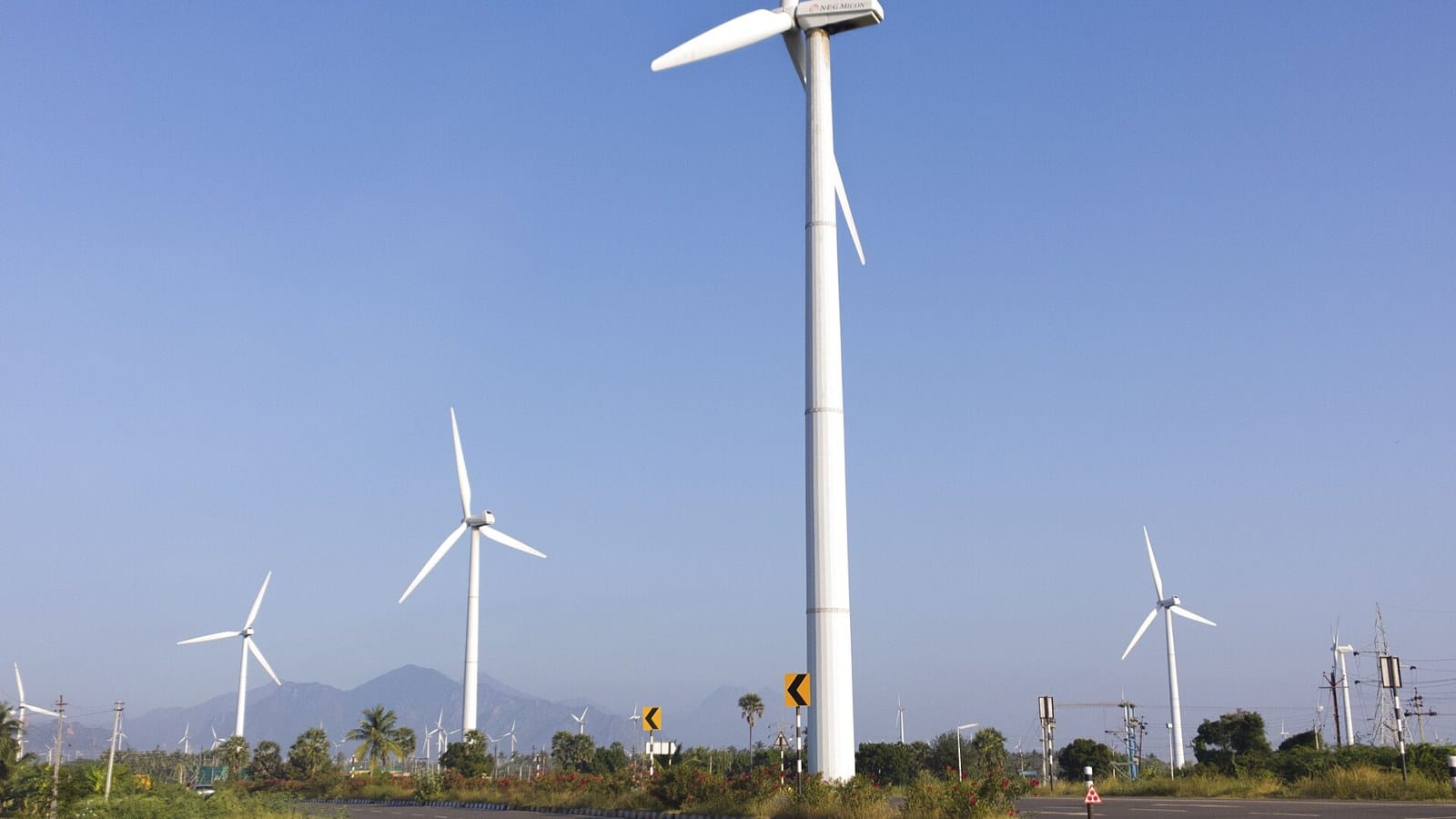
Wind energy in India now supplies a meaningful slice of the country’s clean electricity. As of 30 June 2026, installed wind capacity stood at 57,443 MW, or about 57 GW, according to Ministry of New and Renewable Energy (MNRE) data. That makes India the fourth-largest wind power market in the world. This guide explains how wind turbines work, which states lead, and what the sector must still solve.
How Does Wind Energy Work?
A wind turbine turns moving air into electricity in a few simple steps. First, wind pushes against the blades and makes the rotor spin. Next, a gearbox raises the slow rotation to a speed that suits the generator. Then the generator converts that motion into electricity, and a transformer lifts the voltage so the power can travel on the grid.
Turbines need a wind speed of about 3 to 4 metres per second to start. They reach full output at roughly 12 to 15 metres per second. In very strong winds, above about 25 metres per second, they shut down to protect themselves. Many modern onshore turbines in India are rated between 2 and 3 MW, so one machine can power several thousand homes.
Wind Energy in India: Installed Capacity in 2026
India added a record 6,057 MW of wind capacity in the financial year 2025-26. Total capacity then crossed 57 GW, and wind farms generated about 106 billion units of electricity during the year. Even so, solar has grown faster, as our look at India’s solar growth shows.
The national goal is 500 GW of non-fossil capacity by 2030, with about 100 GW expected from wind. To follow that wider target, read our report on India’s progress towards 300 GW of non-fossil fuel capacity.
Top Wind Energy States in India
Wind power in India is concentrated in a handful of states. Gujarat now leads, followed closely by Tamil Nadu. The five states below hold about 85% of the national total.
| State | Installed wind capacity (30 June 2026) |
|---|---|
| Gujarat | 16,086 MW |
| Tamil Nadu | 12,273 MW |
| Karnataka | 8,896 MW |
| Maharashtra | 6,318 MW |
| Rajasthan | 5,516 MW |
Tamil Nadu: The Wind Pioneer
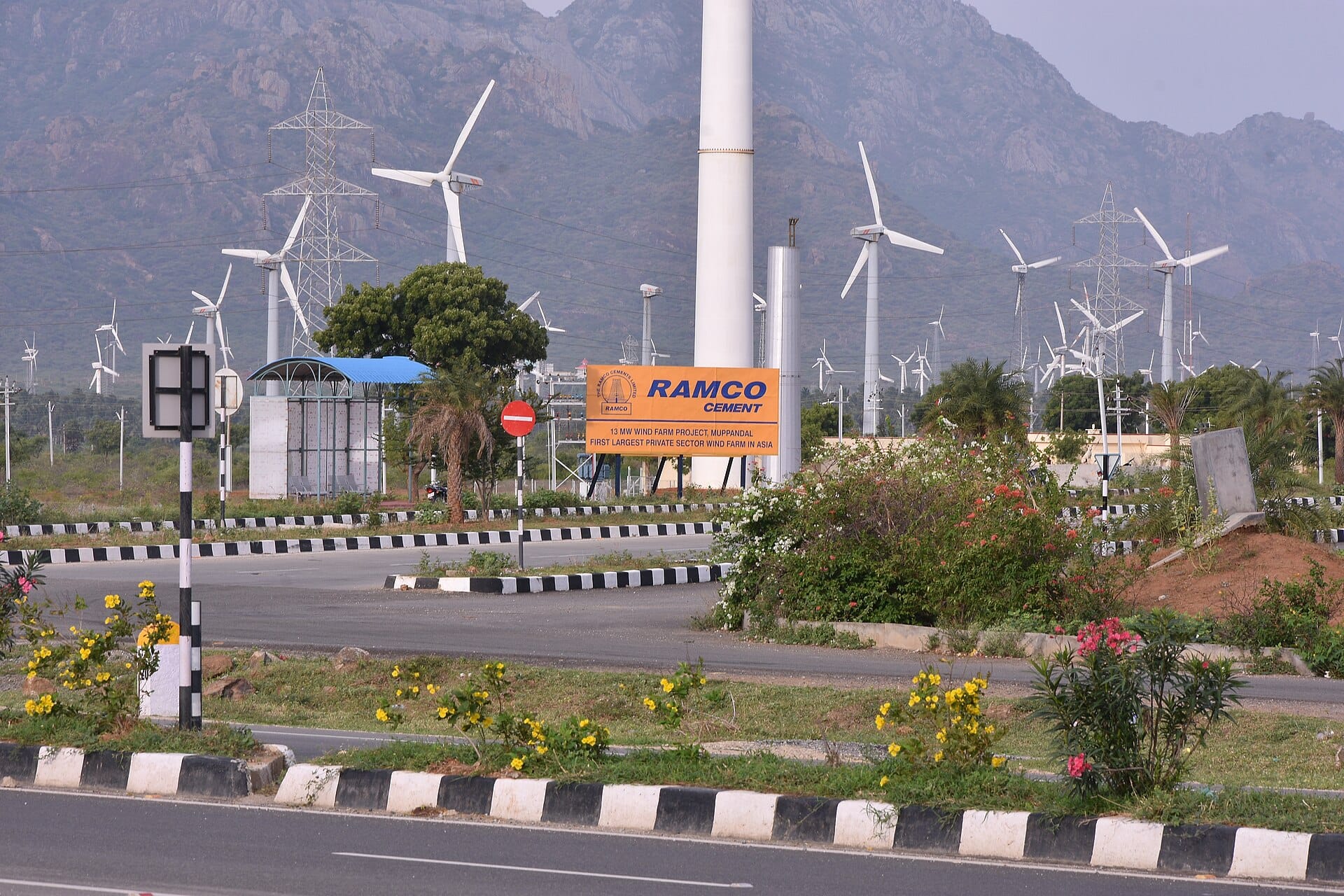
Tamil Nadu pioneered wind power in India. The hills and passes near Muppandal in Kanyakumari district funnel strong monsoon winds across the plains, so the area hosts one of the largest turbine clusters in the country. Most turbines there deliver their peak output between May and September, when the south-west monsoon is strongest.
Gujarat: The New Leader
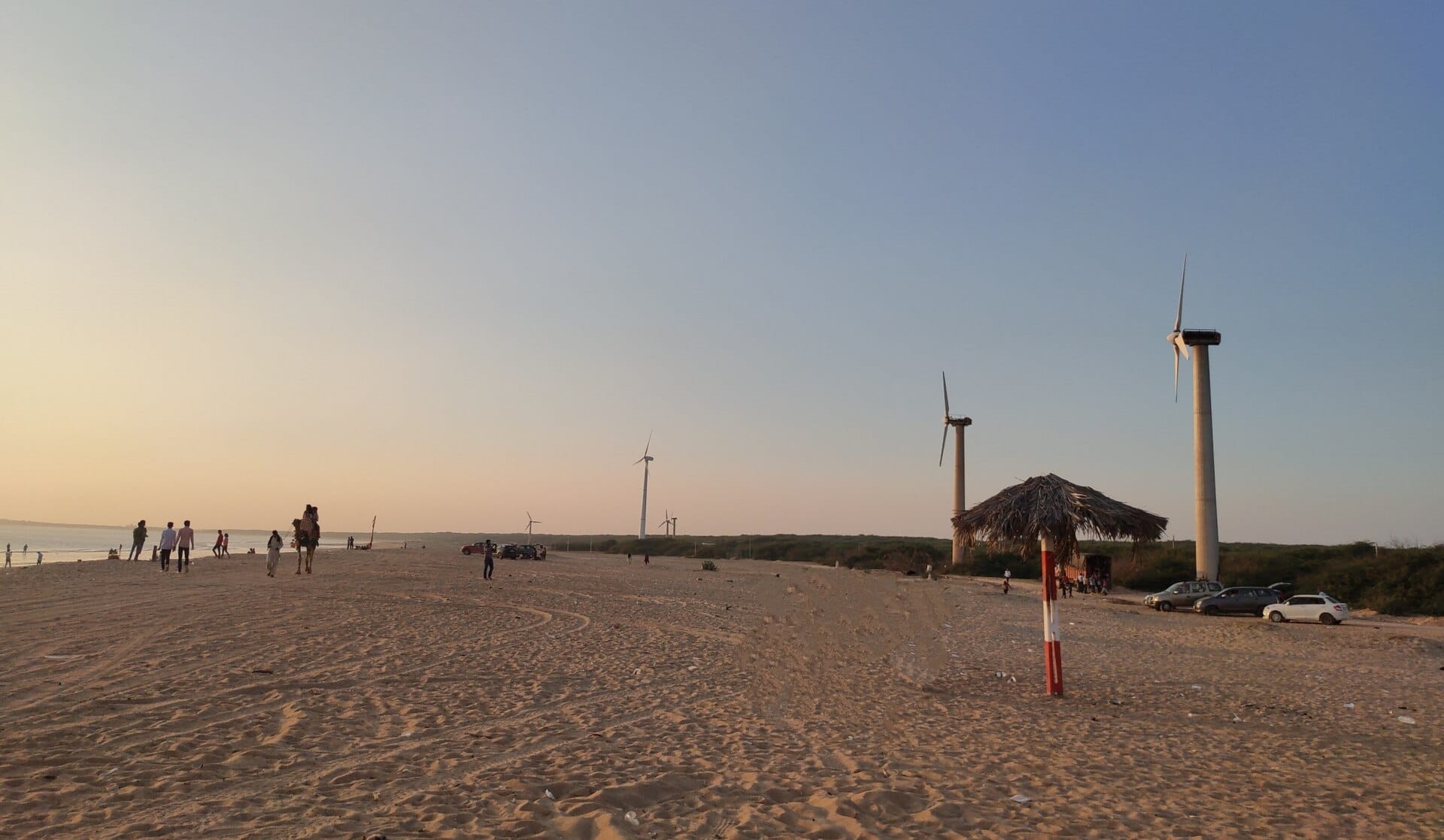
Gujarat leads in total capacity and in new additions. It added 2,965 MW in 2025-26, which is almost half of all new wind capacity in the country that year. Its long Kutch and Saurashtra coastline offers steady winds and plenty of open land. Because of these advantages, developers increasingly build wind-solar hybrid projects on the same sites.
Karnataka, Maharashtra and Rajasthan complete the top five. Together, these states show that wind energy in India is no longer a one-state story.
Benefits of Wind Energy in India
- Low emissions: IPCC lifecycle estimates put onshore wind at around 11 grams of CO2 per unit of electricity, against about 820 grams for coal.
- Almost no water use: Unlike thermal power plants, wind turbines need very little water to run.
- Land stays useful: Each turbine occupies a small footprint, so farmers can keep cultivating the land around it.
- Works well with solar: Wind often peaks during the monsoon and at night, when solar output is low.
Challenges Facing Wind Energy in India
Wind power is promising, but it is not without hurdles. Seasonal output is the first one. Because most generation happens in the monsoon months, supply dips in winter, so the grid needs other sources to fill the gap.
Transmission is the second hurdle. New wind farms often wait for power lines to be built before they can send electricity to cities. In addition, projects must be sited carefully, since turbines can affect birds, bats and local communities.
Ageing turbines are a third issue. Many early machines are small and inefficient. Repowering, which means replacing them with larger modern turbines, can raise output from the same site without using new land. Offshore wind is the next frontier. India has set a target of 30 GW of offshore capacity by 2030, with the Gujarat and Tamil Nadu coasts as priority zones, although projects are still at an early stage.
Can Households Use Wind Energy?
Small rooftop wind turbines exist. However, they rarely suit Indian cities, because urban wind is slow and turbulent. For most homes, rooftop solar is the better choice. Our guide to rooftop solar for homes in India covers costs, subsidies and installation. You can also explore a home biogas plant as another clean option.
Frequently Asked Questions About Wind Energy in India
Which state has the most wind energy in India?
Gujarat has the highest installed wind capacity, at 16,086 MW as of 30 June 2026. Tamil Nadu follows with 12,273 MW, and Karnataka is third with 8,896 MW.
How much wind power does India have?
India had 57,443 MW of installed wind capacity as of 30 June 2026. The country ranks fourth in the world for wind power, after China, the United States and Germany.
Does wind energy work all year in India?
Wind blows throughout the year, but it is strongest during the south-west monsoon from May to September in most wind-rich states. Therefore, wind output is seasonal and works best alongside solar and other sources.
What is the difference between onshore and offshore wind?
Onshore turbines stand on land, while offshore turbines stand in the sea. Offshore sites usually have stronger and steadier winds. However, they cost more to build and maintain.
Small Changes, Big Impact
Wind energy shows how large-scale clean power can grow when policy, geography and technology line up. Explore more in our sustainable energy section, and see how clean power supports the journey to net-zero. For everyday ideas, browse our sustainable living guides.
Photo credits: Wikimedia Commons contributors UY Scuti (CC BY-SA 3.0), Deepa Vasudevan (CC BY-SA 4.0) and Rahultalreja11 (CC BY 4.0).