
The NCAP Compendium of Best Practices 2026 does something India’s air pollution debate rarely does. It shows what cities actually did, with numbers attached. Formally, it is titled the Compendium of Best Management Practices under the National Clean Air Programme (NCAP). The Ministry of Environment, Forest and Climate Change released it on 7 September 2026, Swachh Vayu Diwas. The original PDF sits on the Central Pollution Control Board’s PRANA portal, and you can download a copy below.
What is the NCAP Compendium of Best Practices 2026?
The document catalogues 38 initiatives from cities and state pollution control boards. They span more than a dozen states and Union Territories. Each entry follows one template: what the initiative is, the problem it solves, who is involved, the impact, photographic evidence and recommendations for other cities. As a result, the format makes it easy to borrow from.
The initiatives fall into nine themes. These are road dust, vehicular emissions, industrial pollution, construction and demolition (C&D) waste, municipal solid waste, green spaces, open burning, monitoring technology and public outreach. They sit inside a much larger programme. NCAP covers 130 cities in 24 states and Union Territories, and those cities have received ₹16,425 crore in performance-linked grants. According to the ministry, 108 of them cut PM10 levels in 2025-26 compared with 2017-18. Of these, 72 achieved reductions above 20 per cent. In addition, 14 now meet national ambient air quality standards.
Download the original report below (PDF, 27 MB). Source: Central Pollution Control Board and the Ministry of Environment, Forest and Climate Change, Government of India.
NCAP Compendium of Best Practices 2026: dust, buses and industry
Every figure below is as reported by the cities themselves. Unless stated otherwise, PM10 comparisons run from 2017-18 to 2025-26, in micrograms per cubic metre.
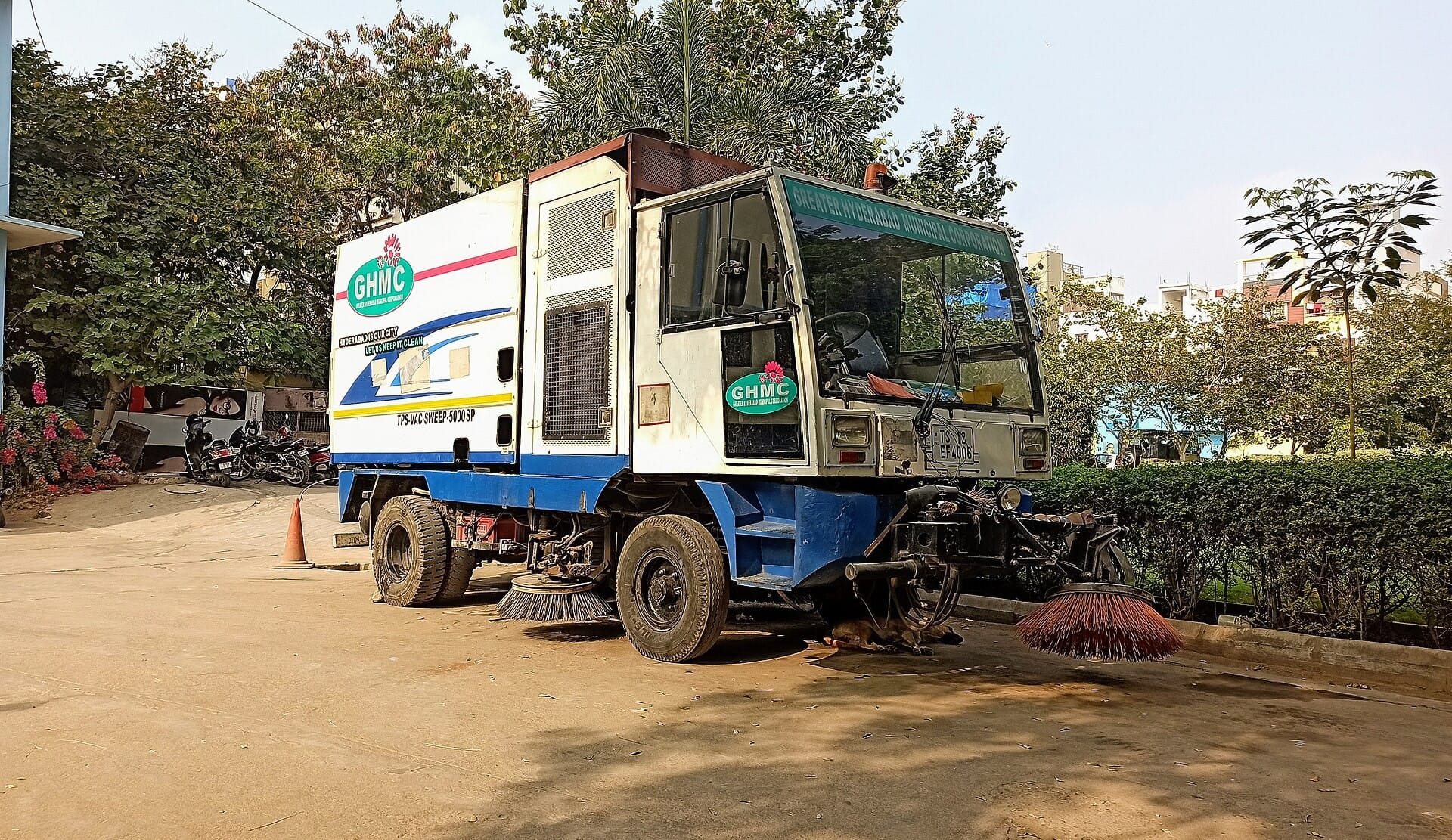
Road dust is the low-hanging fruit. Vadodara’s source apportionment study found that dust accounts for 52 per cent of its PM10. As a result, the city now runs 19 mechanical sweepers, a mix of city-owned, rented and CSR-funded machines. They cover about 300 km of major roads, including at night, and average PM10 fell from 133 to 111. Similarly, Faridabad’s “Pothole Ambulance” repairs reported potholes within about 24 hours. More than 850 have been fixed since launch, and the city reports PM10 down about 20 per cent. Jodhpur, meanwhile, paved 2.1-metre footpaths with kerbs, bollards and green strips. It reports PM10 dropping from 189 to 115.
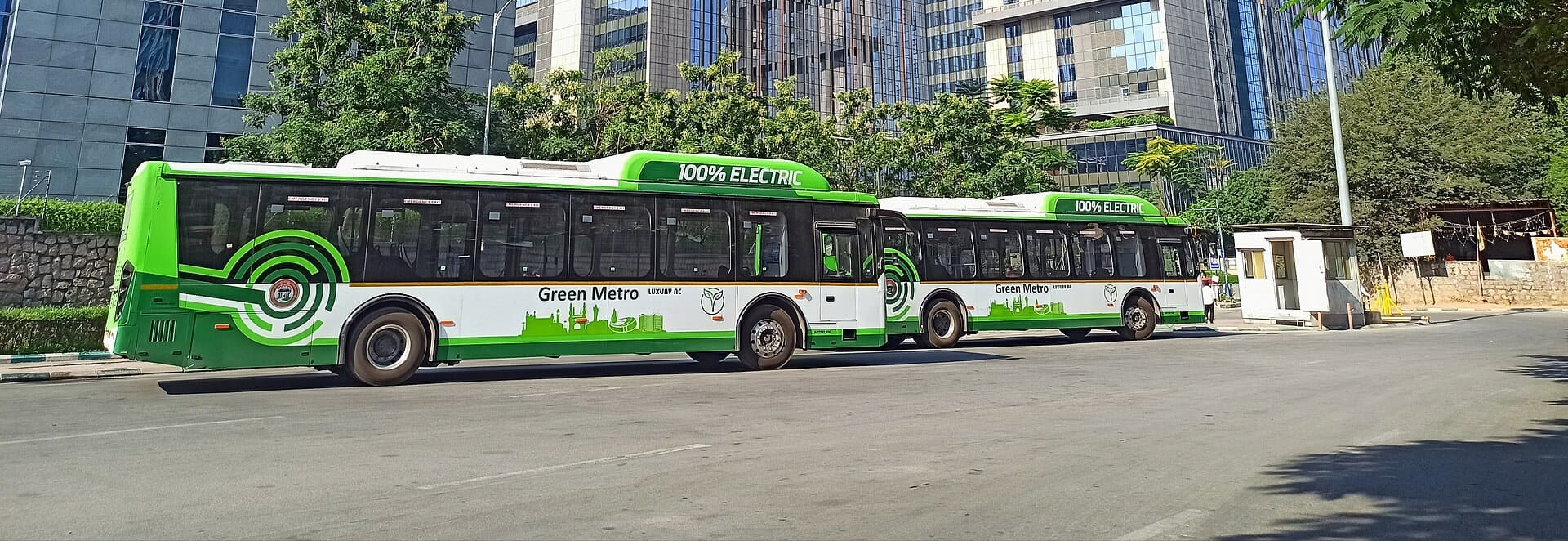
Cleaner buses and smarter traffic. Rajkot has moved its municipal bus fleet off diesel entirely. It runs 125 electric and 100 CNG buses, so more than half the fleet is electric. The city reports PM10 falling from 150 to 94. Hyderabad, for its part, set up 190 public EV charging points and helped install more than 470 private chargers. It estimates over 25,000 tonnes of CO2 avoided each year. Ghaziabad took a different route. It upgraded 41 junctions with adaptive signals and number-plate cameras to cut idling.
Industry and small businesses. Delhi’s pollution control committee reports that all 1,943 industrial units it identified have switched to clean fuel. In addition, 17 red-category units are on continuous online emission monitoring. Mumbai, however, tackled a smaller but smoky source: bakeries. With technical support from WRI India, more than 70 per cent of licensed bakeries have moved from wood and coal to piped gas or electricity. The operators funded the switch themselves, and the city reports PM10 falling from 161 to 81.
NCAP Compendium of Best Practices 2026: waste, biogas and green cover
Construction waste becomes a resource. Chennai’s two C&D plants run under a 20-year public-private contract. Together they can process 800 tonnes a day. They divert about 292,000 tonnes of debris a year from open dumping, and the recovered sand and aggregates are sold to 24 empanelled buyers. Chandigarh’s 150-tonne-per-day plant, backed by a 2022 policy, has processed 1.6 lakh tonnes. Thane, for its part, launched a C&D waste portal on 15 July 2026. The portal ties debris registration to building-plan approval. These entries sit alongside wider waste management efforts across the country.
From wet waste to Bio-CNG. Indore’s 550-tonne-per-day Gobardhan Bio-CNG plant turns segregated wet waste into Bio-CNG and compost. It has operated since February 2022 under a public-private model. The city says it avoids about 1.3 lakh tonnes of CO2 a year, and around 146 city buses run on the fuel. Hyderabad’s waste-to-energy plants, meanwhile, have 62.5 MW of capacity. They process about 3,200 tonnes of combustible waste a day. Hubballi-Dharwad, for example, laid a 1.1 km road with 8 per cent shredded plastic in the bitumen mix.
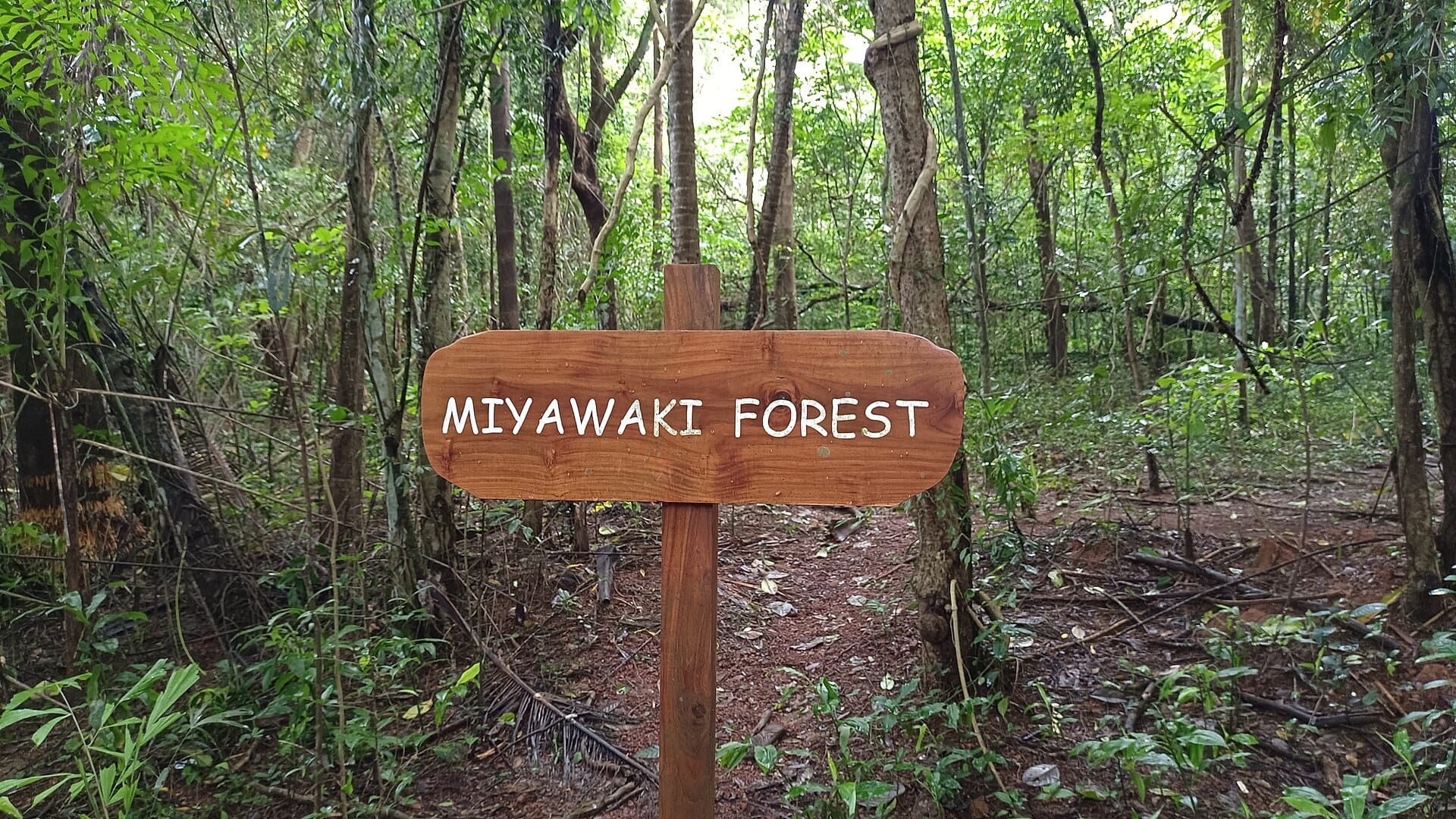
Greening the scars. Several cities turned problem sites into forests. Prayagraj reports about 1.2 lakh trees of 63 species in its Naini industrial area. It planted 27,000 more on the site of its largest garbage dumping yard, and says PM10 is down 51 per cent from the base year. Varanasi greened around 80 hectares with about 2.51 lakh plants and earned a Guinness World Record. Raipur, likewise, processed 641,947 tonnes of legacy waste through biomining. It reclaimed roughly 28 acres and planted about 6,000 saplings.
Open burning and monitoring: the quieter fixes
Ending the burn. Open burning is not only about garbage and crop residue, because cremation is a source too. Ghaziabad built a green crematorium with CNG furnaces and cow-dung logs. Patiala, on the other hand, fitted four open pyres with smoke-capture hoods and a two-stage scrubber. It measured an average 57 per cent particulate removal from the captured flue gas. Nalbari in Assam installed 20 CCTV cameras to deter biomass burning and illegal dumping. It reports PM10 down from 127 to 74 between 2023-24 and 2025-26.
Smarter monitoring and complaints. Delhi expanded its continuous monitoring network from 41 to 47 stations in February 2026. Maharashtra’s pollution board, in addition, built a fleet of 22 mobile monitoring vans. They investigate complaints from places without fixed stations. Bihar’s Clean Air Dashboard has logged 171,867 geo-tagged issues in Patna, Gaya and Muzaffarpur, and 88 per cent have been resolved. Indore’s 311 app has more than 950,000 registered users. It reports resolving 98.5 per cent of complaints within 24 hours.
Swachh Vayu Sarvekshan 2026: the city rankings
The ministry also announced the fifth Swachh Vayu Sarvekshan results on the same day. They rank all 130 NCAP cities in three population groups. Among cities above 10 lakh people, Lucknow led with a score of 198, followed by Indore (197) and Jabalpur (195). In the 3 to 10 lakh group, Rourkela topped the table at 198.5, while Firozabad and Guntur tied for second at 195. Kalinga Nagar led the under-3-lakh group at 198.5, ahead of Angul and Talcher. The complete table is available in our hosted Swachh Vayu Sarvekshan 2026 results (PDF).
What the NCAP Compendium of Best Practices 2026 means for cities
Two caveats matter. First, the impact figures are self-reported by city bodies. They also mix baselines, years and monitoring stations, so treat each percentage as an indicator rather than proof of cause and effect. Second, NCAP tracks PM10, while fine PM2.5 and winter pollution episodes pose the harder health problem.
Some entries also show how small a pilot can be. For instance, Gobindgarh’s gas crematorium handled just 33 of 692 cremations in 2025, about 5 per cent. Cleaner facilities, in other words, still need cultural acceptance before they make a real dent.
Even so, the compendium’s value is practical. It is a menu of low-cost, replicable measures, from pothole repair vans to crematorium scrubbers, that any city can adapt. Many of them are about governance more than gadgets. They include source apportionment to set priorities, public-private contracts that shift risk, and dashboards that link complaints to action. Readers in the capital region will recognise the same logic in the Delhi NCR winter air pollution plan. Likewise, the transport entries connect to India’s wider electric mobility shift.
For residents, the most useful takeaway is a question for your own municipality: which of these 38 measures have we tried? Follow more India sustainability news on Prakati.
Source: Press Information Bureau, Government of India (Ministry of Environment, Forest and Climate Change, 7 September 2026) and the Compendium of Best Management Practices under NCAP published by the Central Pollution Control Board.