
For a resource that touches every single sector of the economy — agriculture, industry, drinking water, sanitation, disaster preparedness — water governance in India has historically been fragmented across an unusually large number of separate schemes, ministries, and state-level authorities, each running its own programme with limited cross-talk. On 1–2 September 2026, the Ministry of Jal Shakti tried something new to address that: India’s first-ever National Departmental Summit on Water, bringing state water ministers and senior officials together in New Delhi for two days of dedicated deliberation, with Prime Minister Narendra Modi chairing the valedictory session.
The framing matters as much as the content here. This wasn’t positioned as a one-off conference — it was explicitly described as the first in a planned series of “Departmental Summits,” a new format intended to deepen what the government calls cooperative federalism: getting the Centre and states working from a shared playbook on a specific sector, rather than the more common pattern of centrally designed schemes rolled out to states with limited two-way input.
The Four Things the Summit Actually Focused On
According to the government’s own account, the two days of deliberation organised around four specific areas: timely completion of water infrastructure projects that have historically suffered from execution delays; Jal Sanchay Jan Bhagidari (“Catch the Rain” through public participation), the flagship rainwater-harvesting and groundwater-recharge citizen movement; the long-term sustainability of drinking-water source systems, as opposed to simply building new supply infrastructure without securing its water source; and the operation and maintenance of rural drinking-water schemes under Jal Jeevan Mission 2.0, addressing a pattern that has plagued rural water infrastructure globally — new systems get built, then fall into disrepair because no one is funded or mandated to maintain them.
That last point is worth dwelling on, because it’s a genuinely important and often-overlooked problem in water infrastructure specifically. India’s original Jal Jeevan Mission made enormous progress getting piped water connections to rural households — reaching well over 12 crore taps by mid-2026, according to earlier PIB reporting. But a tap connection is only as good as the pump, pipe, and treatment infrastructure behind it staying functional for years afterward, and rural water schemes worldwide have a well-documented tendency to fail within a few years of construction once maintenance funding and local operator capacity aren’t built in from the start. Making O&M (operation and maintenance) a named, standalone summit priority — rather than an afterthought bundled into the initial construction budget — signals the government is at least aware of that failure mode.
PM Modi’s Specific Asks
At the valedictory session, PM Modi’s remarks went beyond the usual congratulatory close-out speech and into a set of fairly specific operational suggestions. He called for greater adoption of water-saving technologies, and specifically for dedicated exhibitions and workshops — including exposure to global best practices — to help Indian manufacturers and other stakeholders scale up efficient water-tech solutions domestically, rather than relying purely on public schemes to drive efficiency.
He also pushed for two things that stand out as genuinely forward-looking asks for a government summit: robust water-data governance, with sector-wide data brought together in a uniform, systematically analysed format, and the explicit use of AI in that data collection and analysis pipeline. Water management has traditionally been a notoriously data-poor sector in India — different states, districts, and even individual schemes often collect and report data inconsistently, making it hard to compare performance or spot problems early. A push toward standardised, AI-analysed water data — if it’s actually implemented, which is a real if — would be a meaningful structural upgrade over the status quo.
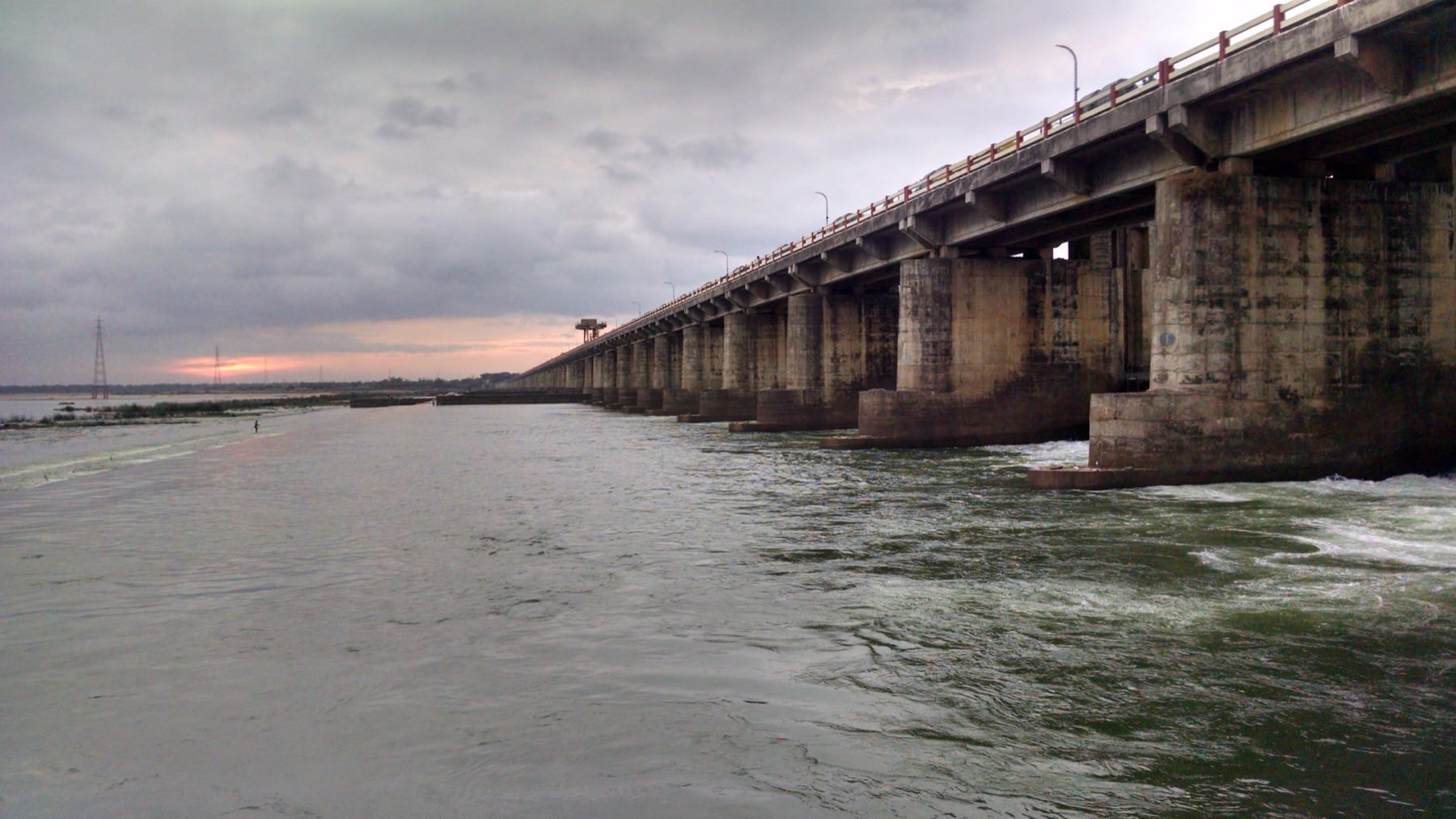
On the more citizen-facing side, Modi called for promoting “Jal Utsav” (Water Festival) events to build public awareness around conservation, alongside making de-silting of water bodies a regular, scheduled programme rather than a reactive response after a body of water has already lost most of its storage capacity to accumulated sediment. He also flagged dam safety specifically, calling for rigorous pre-monsoon preparedness and stronger public — including school-level — awareness of dam-safety protocols, a subject that gets far less public attention in India than it arguably should given how many communities live downstream of ageing dam infrastructure.
The Outcomes, According to the Water Ministry
Union Minister for Jal Shakti C.R. Patil summarised four outcomes from the summit: accelerated completion of water infrastructure projects, water conservation strengthened as a sustained public movement rather than a periodic campaign, long-term sustainability secured for drinking-water sources specifically (not just supply infrastructure), and formal institutionalisation of operation-and-maintenance practices for rural drinking-water schemes.
Those are directional commitments rather than measurable targets with deadlines attached — which is a fair critique of most summit “outcomes” documents generally. The real test of whether this first Departmental Summit changes anything will show up in whether the “series” framing holds: does a second water summit actually happen next year, with a report-back on what got done against these four commitments, or does this remain a one-time exercise despite the stated intent otherwise?
Why the Format Itself Might Matter Most
Setting aside the specific commitments, the more structurally interesting story here may be the summit format itself. Water in India sits at the intersection of state and central jurisdiction in a particularly tangled way — irrigation and most water resources are constitutionally a state subject, while several major water-linked schemes (Jal Jeevan Mission, AMRUT, PMKSY) are centrally funded and designed. That split has historically made coordinated national water policy difficult, with states sometimes implementing central schemes in locally inconsistent ways, or resisting central direction on water allocation and pricing that touches politically sensitive irrigation and drinking-water access.
A summit format that brings state water ministers into direct, sustained deliberation with the Centre — rather than the more typical top-down scheme rollout — is, at minimum, an attempt to build the kind of institutional trust and shared priority-setting that durable water conservation policy in a federal system like India’s genuinely requires. Whether it produces that in practice depends entirely on what happens between now and whenever the next Departmental Summit convenes — but as a template for how India tries to govern a resource this fragmented across jurisdictions, it’s a genuinely new experiment worth watching. It follows closely on the heels of other major water-security developments this same week, including the Bihar-Jharkhand Sone River agreement and the launch of Swachh Sagar, Surakshit Sagar 5.0.
Source: Press Information Bureau, Government of India — PM chairs valedictory session of National Departmental Summit on Water