
For most of modern India’s administrative history, if a piece of land had no trees on it, it was written off. Grasslands, scrublands, ravines, deserts — the open, sun-baked landscapes that don’t fit the postcard idea of “nature” — were bureaucratically filed under a single, damning label: wasteland.
That label had consequences. Land marked “waste” is land that’s available — for plantation drives, industrial corridors, solar parks, urban expansion, anything that counts as “productive use.” Over decades, millions of hectares of India’s grasslands and savannas were converted this way, erased before most people ever registered they were ecosystems worth protecting in the first place.
On 17 August 2026, India took a formal step toward undoing that framing. At the 17th Conference of the Parties (COP17) to the UN Convention to Combat Desertification (UNCCD), held in Ulaanbaatar, Mongolia, the Ministry of Environment, Forest and Climate Change launched the country’s first-ever Guide to Grasslands and Other Open Natural Ecosystems (ONEs) of India.
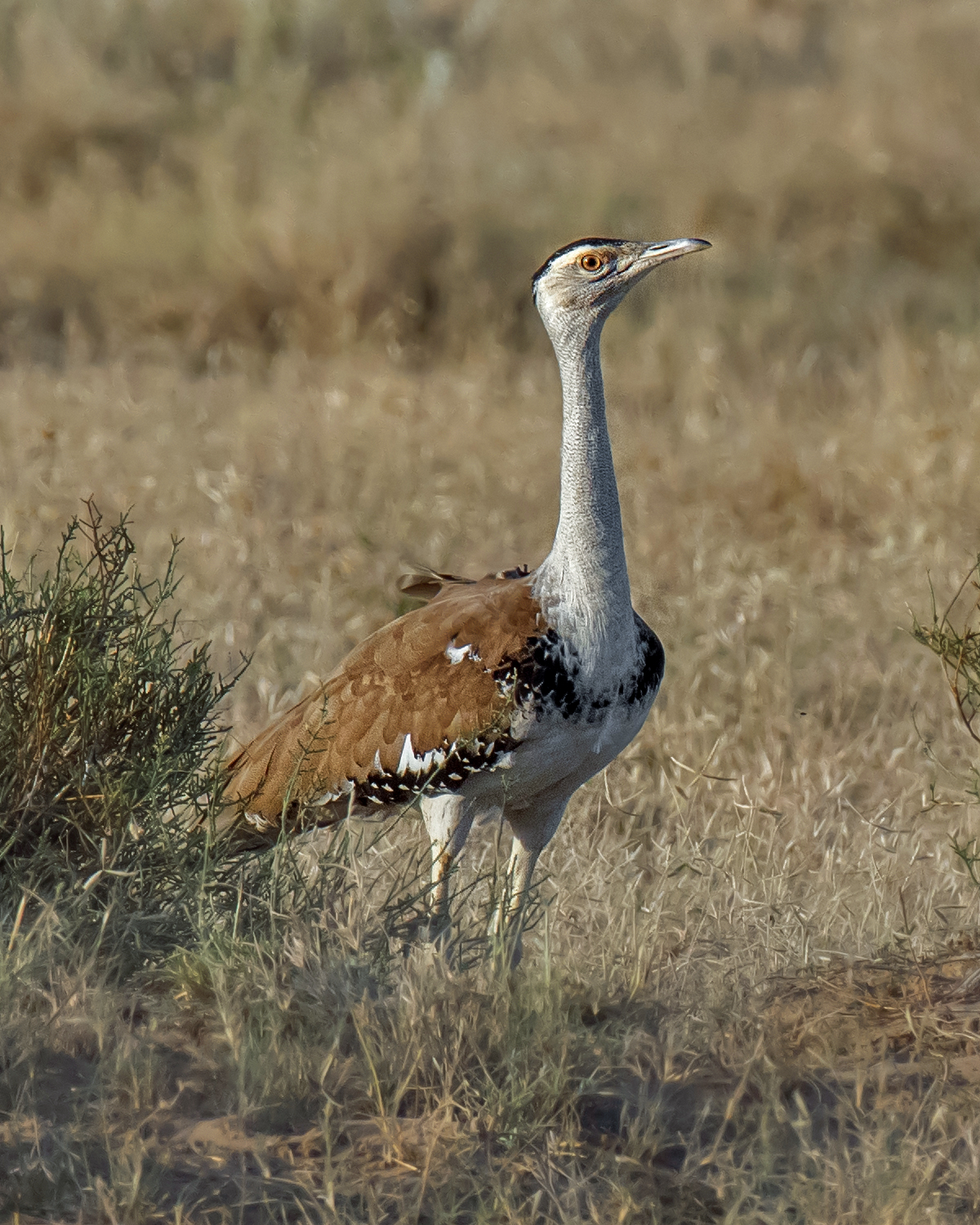
India’s open natural ecosystems are the last stronghold of species found nowhere else — the Great Indian Bustard, now down to roughly 200 individuals in the wild, survives almost entirely in the scrub and grassland pockets of Rajasthan and Gujarat, landscapes long dismissed as having no ecological value at all.
The Guide was launched at a side event under India’s UNCCD delegation, preceded by a video message from Union Environment Minister Bhupender Yadav, who framed the problem in personal terms: growing up in Ajmer, Rajasthan, he recalled the grazing lands and desert scrub around him being routinely called “wasteland” — despite being the same landscapes that sustained entire pastoral communities for generations. “Healthy grasslands are indispensable for biodiversity, livelihoods and climate resilience,” he said, arguing they deserve the same science-based conservation attention as forests, not less.
The document was produced by the Ashoka Trust for Research in Ecology and the Environment (ATREE), working with the International Union for Conservation of Nature (IUCN), the Centre of Excellence on Sustainable Land Management, the Indian Council of Forestry Research and Education (ICFRE), and ISRO’s Space Applications Centre — bringing together ecological science, remote-sensing data, and land-restoration policy expertise in one reference document, aimed at policymakers, researchers, and conservation practitioners who’ve had no single authoritative source to draw on until now.
The “Wasteland” Problem Is Bigger Than a Word
This isn’t just a labelling quirk. India’s Wasteland Atlas — the government’s own land-classification system, with roots going back to colonial-era forest and revenue administration — has historically lumped grasslands, savannas, scrublands, and ravines together with genuinely degraded land. Independent research mapping India’s open natural ecosystems has found that roughly two-thirds of the country’s identified grasslands and savannas fall under some “wasteland” category in official records.
The colonial logic behind this was straightforward: land without a forest canopy was assumed to be unproductive, and grazing on it was often actively restricted or penalised, cutting pastoral communities off from resources they’d managed sustainably for centuries. Post-independence land-use planning largely inherited that framework rather than questioning it — which is how grasslands kept losing ground to plantation schemes, industrial estates, and infrastructure projects that all counted, on paper, as improvements to “unused” land.
The ecological cost of that mislabelling is significant. India’s grasslands and savannas — from the high-altitude meadows of the Himalaya and Terai, to the Banni grasslands of Kutch, the Deccan plateau’s rocky savannas, and the scrub of the Thar desert — sequester carbon in their soils at rates that rival tropical forests, support roughly half the country’s livestock fodder production, and underpin the livelihoods of more than twenty nomadic and pastoral communities. They’re also the last refuge for species that simply cannot survive anywhere else: the Great Indian Bustard, the caracal, the Indian wolf, the chinkara — animals with nowhere to go once their open habitat is converted.
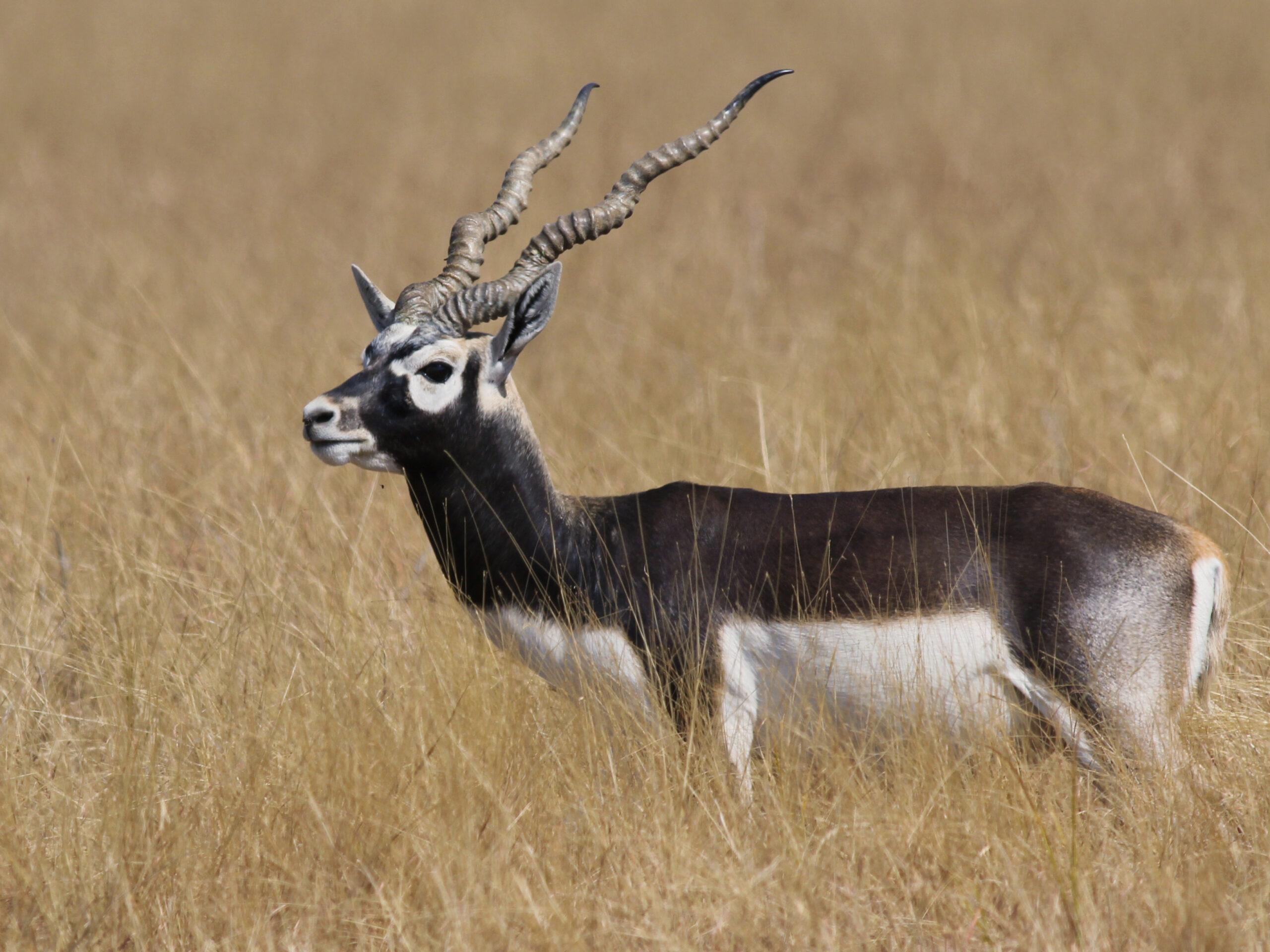
The Guide brings together, for the first time in one document, the geography, biodiversity, and community histories of India’s major open natural ecosystems — from Himalayan grasslands to the Deccan savannas — alongside dedicated sections on pastoralism, fire ecology, and carbon storage in grassland soils.
What the Guide Actually Does
Rather than being a single conservation announcement, the Guide functions as a reference framework — the kind of document that shapes how land gets classified, mapped, and protected for years afterward. Its key contributions:
- Maps India’s major open natural ecosystem types — Himalayan and Terai grasslands, the Thar and Banni landscapes, Deccan savannas, rocky plateaus, ravines, coastal grasslands, and desert scrub — with their geography, ecological character, and associated biodiversity.
- Documents the communities tied to these landscapes, including pastoral and livestock-based groups whose traditional land-use practices (like the Oran or gauchar community-protected grazing commons Yadav referenced) are increasingly recognised as effective, low-cost conservation tools rather than obstacles to it.
- Adds dedicated technical sections on pastoralism, fire ecology, and carbon sequestration — giving policymakers and researchers a shared scientific basis to argue for grassland restoration, rather than treating fire management or grazing as purely nuisance issues to be suppressed.
- Explicitly ties grassland restoration to India’s Land Degradation Neutrality (LDN) commitments under the UNCCD — the same international framework the country is using to track its progress restoring 21.76 million hectares of land under the Bonn Challenge.
Why the UNCCD Stage Matters
Launching the Guide at UNCCD COP17 rather than through a domestic-only announcement was a deliberate choice. The UNCCD is the global convention specifically focused on halting and reversing desertification and land degradation — precisely the process that unfolds when open ecosystems are either misclassified into oblivion or actively converted because nobody recognised their value. Framing India’s grasslands work inside that convention signals the government wants restoration of ONEs counted as core desertification-and-land-degradation action, not treated as a side note to forest policy.
It also comes at a moment when India’s land-restoration ambitions are getting real international scrutiny and comparison. The country has committed to restoring 26 million hectares of degraded land by 2030 as part of its Bonn Challenge pledge — a target that’s only credible if grasslands, scrublands, and savannas are actually counted as ecosystems worth restoring, rather than dismissed as blank space waiting for a plantation.
What It Means for Prakati Readers
This is a slow, unglamorous kind of conservation win — no single species saved overnight, no headline-grabbing sanctuary declared. But reclassification battles like this one are often what determines whether species like the Great Indian Bustard have any habitat left in a decade, and whether pastoral communities keep the grazing commons their livelihoods depend on. It echoes another recent conservation milestone Prakati covered — India’s first DNA-based elephant census — where better science and better classification, not new sanctuaries alone, turned out to be the real lever for protecting a species. The same logic applies to India’s other landmark species-specific effort, the Clouded Leopard Conservation Action Plan: a guidebook or framework won’t stop a bulldozer on its own, but it gives conservationists, courts, and local communities a scientific, government-backed document to point to the next time someone tries to call a living grassland “wasteland” on a land-use form.
It’s also a reminder that sustainability isn’t only about the landscapes that photograph well. Forests get the attention; grasslands, deserts, and scrublands rarely do — despite doing comparable ecological work below the ground that nobody sees. For more on how India is tracking these shifts, explore Prakati’s India sustainability news coverage.
Source: Press Information Bureau, Government of India — Ministry of Environment, Forest and Climate Change, PRID 2300585, 17 August 2026.