
In 2016, India sold roughly 50,000 electric vehicles. In 2025, that number was 2.3 million — a 46-fold jump in under a decade, and growth that has outpaced the global EV market’s own roughly 20x rise over the same period. A new PIB backgrounder pulls together the data behind that curve: sales, exports, charging infrastructure, domestic manufacturing, and the policy scaffolding that has quietly been built underneath it since 2015.
The headline number is eye-catching, but the more interesting story is what’s driving it — a mix of demand incentives, a fast-expanding charging network, and a manufacturing base that’s shifting from assembling imported components to building EVs domestically, battery packs and all.
From e-rickshaws to a mainstream market
India’s EV push formally began in 2015 with the National Electric Mobility Mission Plan (NEMMP 2020) and the FAME India scheme, aimed squarely at two problems: a rising petroleum import bill and worsening urban air pollution. Transport accounts for roughly 9% of India’s total emissions, so getting vehicles off fossil fuel was never purely an environmental play — it was framed as an energy-security one too.
Adoption stayed marginal for years — just 0.08% of vehicle sales in FY15-16. The real inflection point came in the post-COVID period (FY22), when subsidies, better vehicle availability, and improved economics combined to push adoption to 8.26% by FY25-26. The market composition shifted too: early EV adoption (FY20-21) was dominated by e-rickshaws, but electric two-wheelers have since become the largest single segment, signalling a move from informal, shared-mobility use into mainstream private and commercial ownership.
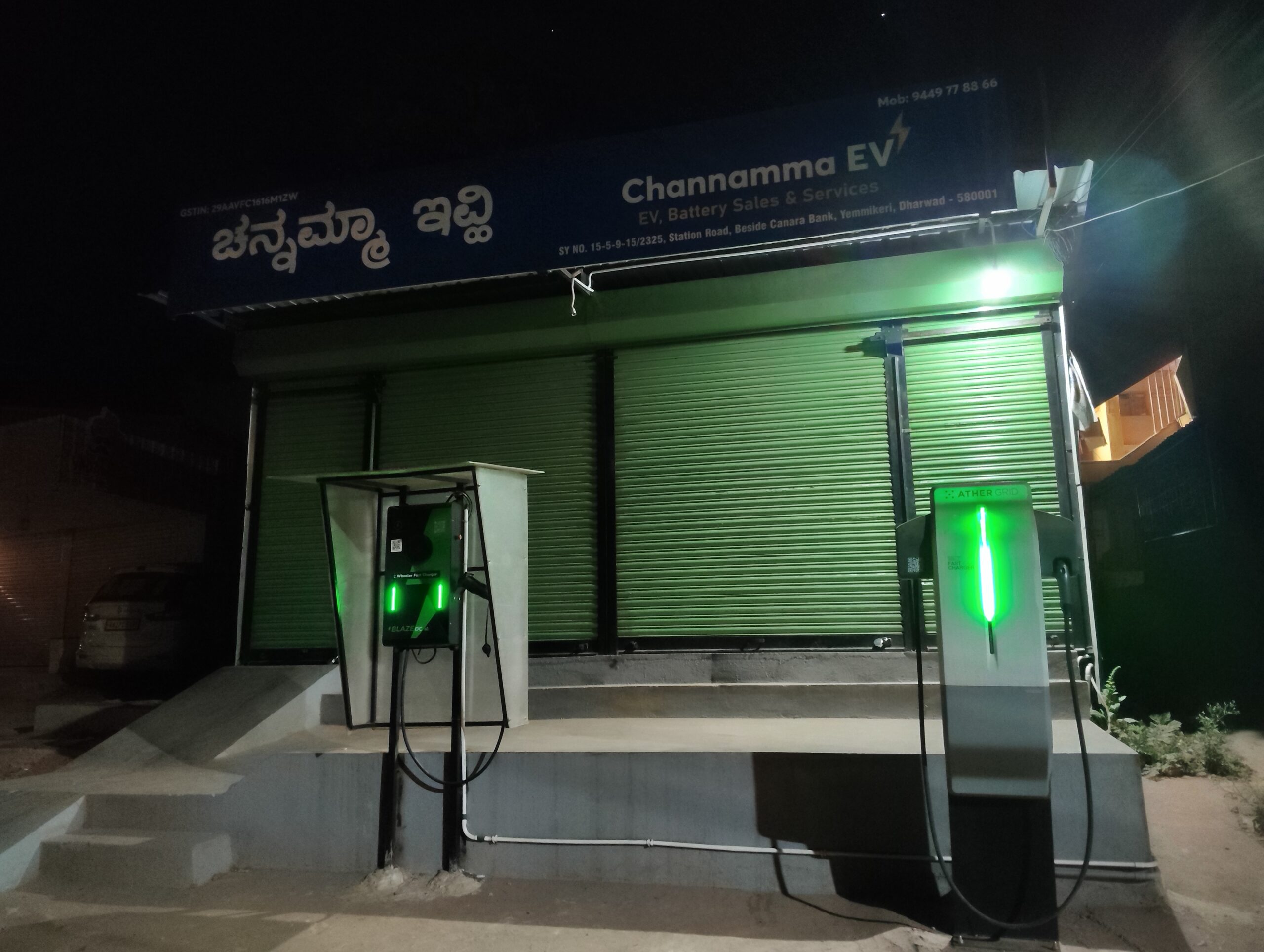
India’s public charging network is expanding fast: as of July 2026 there were 52,718 public charging stations nationwide, of which 16,561 offer fast-charging. Government tools like e-Amrit help drivers locate the nearest one, while automakers such as Hyundai have added their own ultra-fast networks in cities including Mumbai, Pune, Hyderabad, and Bengaluru.
Which states are actually leading?
In 2025, Uttar Pradesh was the single largest EV market in the country, with more than 4 lakh units sold — 18% of national EV sales — followed by Maharashtra (2.66 lakh units, 12%) and Karnataka (2 lakh units, 9%). Two- and three-wheelers did most of the heavy lifting: 12.8 lakh two-wheelers and 8 lakh three-wheelers were sold in 2025 alone, and EV registrations have grown at a compound annual rate of over 62% in the past decade.
To track this unevenly distributed progress, NITI Aayog launched the India Electric Mobility Index (IEMI) in August 2025 — the first framework to score states and Union Territories across 16 indicators spanning transport electrification, charging infrastructure, and EV research. Delhi, Maharashtra, and Chandigarh currently rank as “Frontrunners.” As of December 2025, 29 states and UTs had notified their own EV policies, offering incentives like 15-25% capital subsidies, preferential land allotment, and GST reimbursement of up to 100% to attract manufacturing investment.
Manufacturing is catching up to demand
India is trying to move from an assembly-led EV market to a genuine manufacturing hub — one that produces battery packs, motors, drivetrains, and power electronics domestically rather than importing them. Established players like Tata Motors, Mahindra, TVS, and Bajaj Auto are expanding capacity through dedicated EV platforms and gigafactory investments, while global entrants including VinFast and Tesla are reportedly exploring large-scale manufacturing in the country.
One milestone stands out: in August 2025, Suzuki inaugurated its first global strategic Battery EV, the e VITARA, built in India and intended for export to over 100 countries including Europe and Japan — making India Suzuki’s global manufacturing base for electric vehicles. Around 400 EV startups are now operating in the country, working on everything from charging infrastructure to battery innovation, and the sector raised over USD 1.4 billion in funding in FY 2025, up 27% from the year before, with Delhi emerging as the top city for EV investment.
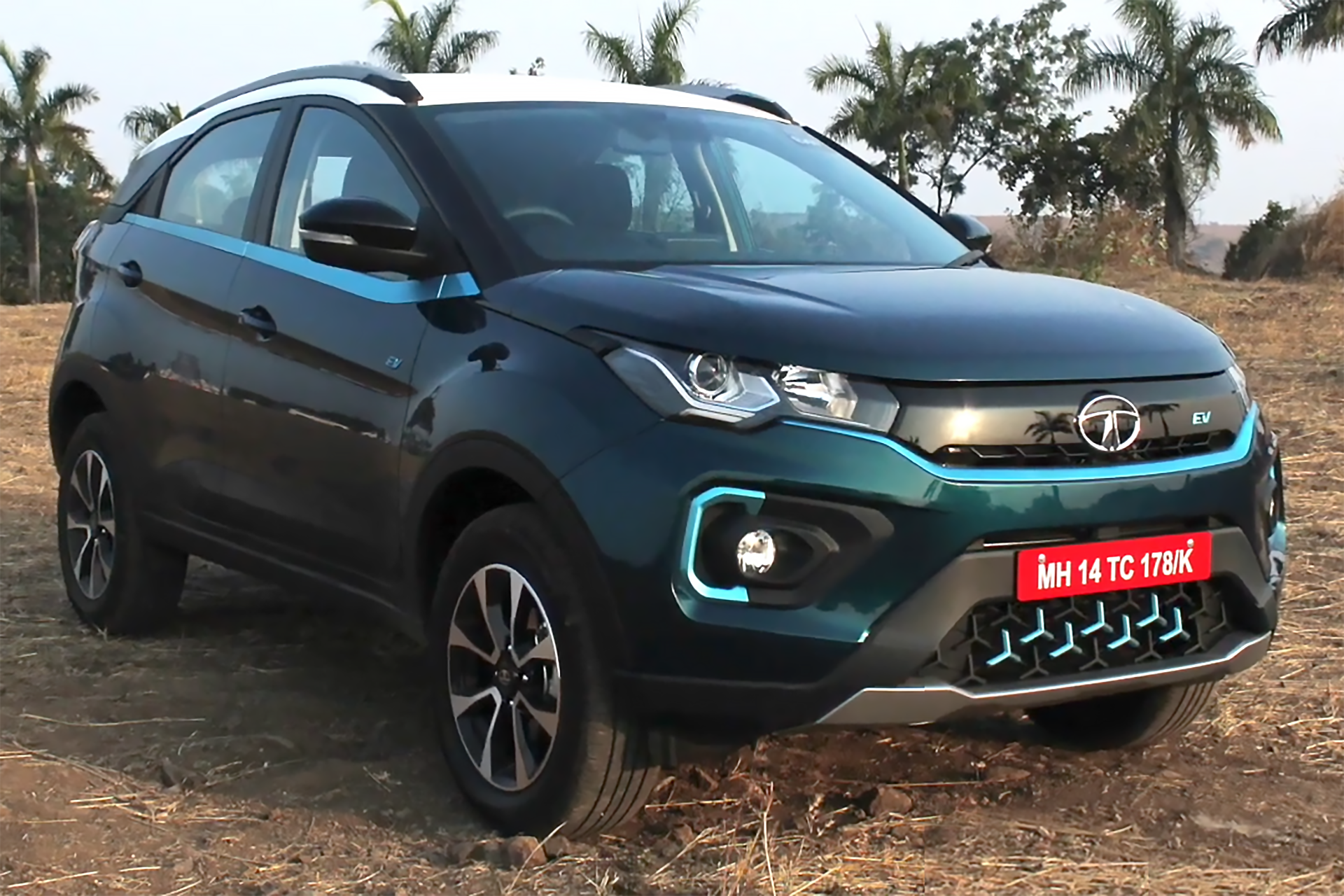
Domestic models like the Tata Nexon EV have anchored India’s shift from imported EVs to homegrown manufacturing — batteries account for 35-40% of an EV’s total cost, which is why scaling up domestic battery-cell production has become a policy priority in its own right, not just a side effect of vehicle manufacturing growth.
The policy stack behind the numbers
None of this growth happened in a vacuum. A cluster of schemes now underpins India’s EV push, each targeting a different bottleneck:
- PM E-DRIVE Scheme (2024, ₹10,900 crore) — demand incentives and charging infrastructure funding across two-wheelers, three-wheelers, e-trucks, e-buses, and e-ambulances. Of a target of 28 lakh EVs, 22.12 lakh had already been sold as of January 2026, with ₹4,391 crore earmarked for 14,028 e-buses in seven major cities.
- PLI Scheme for Automobile & Auto Components (2021) — ₹2,377.56 crore disbursed to date, with the bulk (₹2,319.88 crore) going to EV manufacturers across two-, three-, and four-wheeler and e-bus segments.
- PLI Scheme for Advanced Chemistry Cell (ACC) Battery Storage (2021, ₹18,100 crore outlay) — aims to build 50 GWh of domestic battery-cell manufacturing capacity, now in its five-year performance phase (2025-2029).
- Scheme for Promotion of Manufacturing of Electric Passenger Cars (SPMEPCI) (2024) — requires a minimum ₹4,150 crore investment and rising Domestic Value Addition targets (25% by year three, 50% by year five) from car manufacturers who sign up.
- National Mission on Manufacturing (2025) — a broader industrial mission that names EVs as a “seed” sector, aiming to double manufacturing’s share of GDP to 25% by 2035.
EVs also carry a concessional 5% GST rate — well below what conventional vehicles attract — which has helped narrow the upfront price gap that has historically been the biggest barrier to adoption in a price-sensitive market. Delhi’s own EV policy, one of the more aggressive state-level pushes, is being paired with a ₹9,585 crore scheme approved in June 2026 to replace roughly 2.07 lakh ageing, high-emission trucks and buses across Delhi-NCR — a direct link between EV policy and the region’s chronic air-quality problem.
What India is exporting, and what’s next
Exports are still a small share of the picture in absolute terms, but the trajectory is notable: from USD 1.2 million in 2020 to USD 84 million in 2024, with Nepal, Indonesia, and Japan as the top destinations. India’s EV market itself was valued at USD 3.71 billion in 2025 and is projected — per industry estimates cited in the backgrounder — to reach USD 191.04 billion by 2034. The government’s own target is for EVs to make up 30% of all vehicle sales by 2030, in line with the global EV30@30 initiative, alongside a planned 1.32 million charging stations nationwide by the same year.
The next regulatory lever is fuel-efficiency standards. India’s Corporate Average Fuel Efficiency (CAFE) norms, first introduced in 2017, are moving into a stricter phase — CAFE III (2027-2032) and CAFE IV (2033-2037) — with proposed CO₂ limits of 91.7 g/km and 70 g/km respectively, alongside a super-credit mechanism designed to reward automakers who lean into EV sales rather than conventional vehicles to hit their targets.
Put together, the numbers describe a market still small in global terms but compounding fast, backed by a policy architecture that’s more coordinated than it looks from any single scheme in isolation. Whether India can sustain a 46x-in-a-decade growth curve as the base gets larger is the real test — but the charging stations, the battery gigafactories, and the export order books are the tangible signs that the ecosystem, not just the vehicle count, is what’s actually being built. For more on India’s sustainable transport transition, including deep dives on biodiesel and other alternative fuels, explore Prakati’s ongoing coverage of India’s move toward clean energy and net-zero transport.
Source: PIB Backgrounder, “Roads Reimagined: The Rise of India’s Electric Vehicles Ecosystem,” Ministry of Heavy Industries / PIB Delhi, 5 August 2026.