
On 17 July 2026, a train pulled out of Jind Junction in Haryana carrying something no passenger train anywhere else in the world carries at this scale: its own onboard power plant, running entirely on hydrogen. No overhead wires, no diesel, no tailpipe. Just hydrogen and oxygen combining inside a fuel cell to make electricity, with water vapour as the only thing coming out the other end.
Indian Railways has been building toward this moment quietly for a while — with over 99% of its broad-gauge network now electrified, the diesel-to-electric transition that defined the last decade of Indian rail is largely done. This is meant to be the next chapter: a technology that doesn’t need a single kilometre of overhead line to run clean, adding a new chapter to India’s sustainable transport story.
How It Actually Works
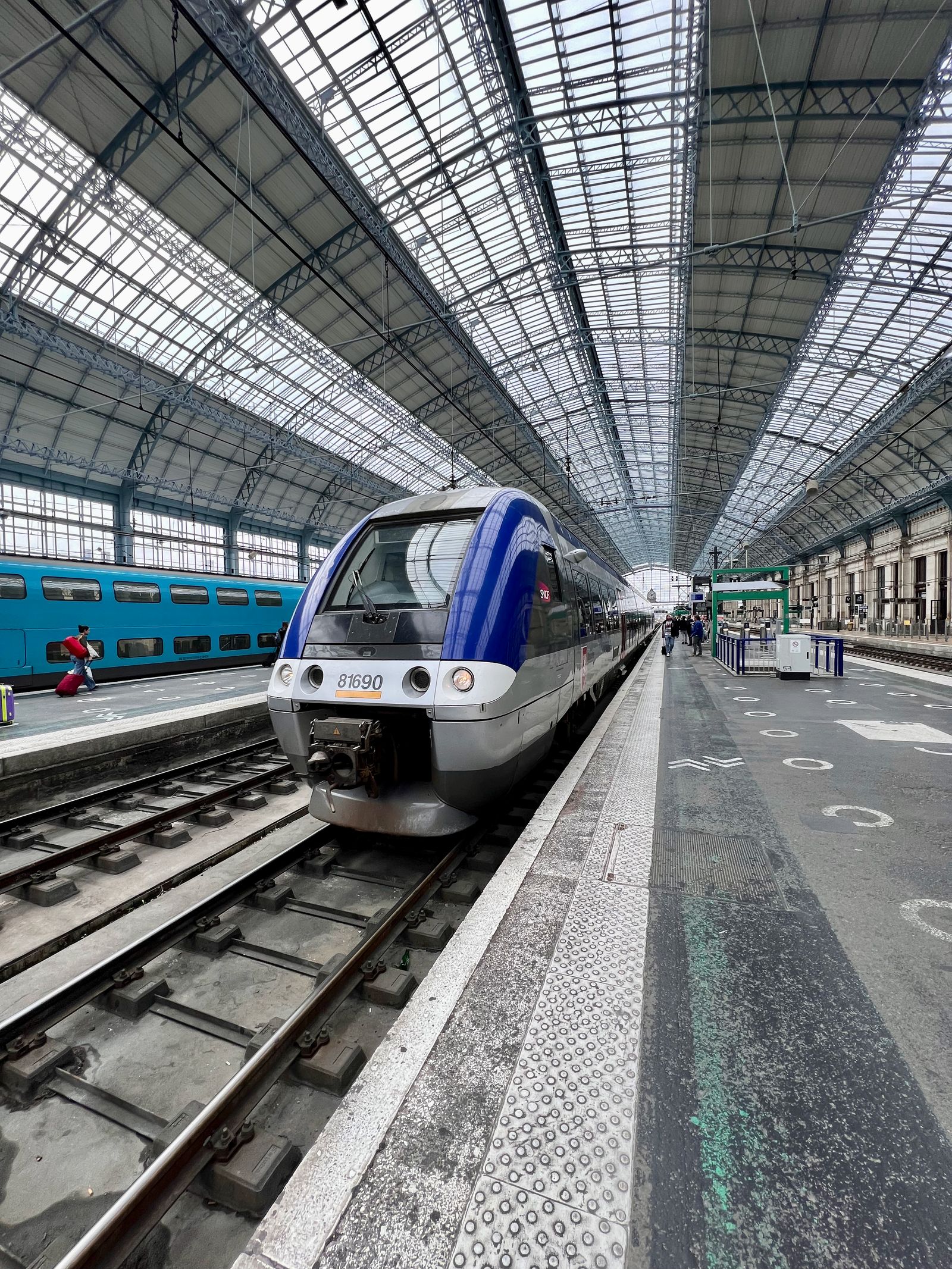
The train itself is a 10-coach set — two Hydrogen Driving Power Cars at either end and eight trailer coaches in between, built to carry around 2,600 passengers. Each power car houses fuel cells, lithium iron phosphate batteries, and hydrogen storage cylinders, together producing 1,200 kW per car — enough combined output to move the entire train at a design speed of 110 km/h, running in regular service at 75 km/h on its initial 89 km route between Jind and Sonipat via Gohana.
The chemistry inside is the same Proton Exchange Membrane (PEM) fuel cell technology used in hydrogen cars and buses elsewhere in the world, just scaled up substantially: hydrogen stored onboard reacts with atmospheric oxygen inside the fuel cell stack, producing electricity to power the traction motors, with water vapour and heat as the only by-products. There’s no combustion involved at any point, which is also why Indian Railways has built in multiple, independent detection systems for hydrogen leaks, heat, flame, and smoke as a safety layer — hydrogen is highly flammable, and public confidence in the technology depends as much on visible safety engineering as it does on the environmental pitch.
A dedicated hydrogen storage, compression, and dispensing facility has been built at Jind to refuel the train — reportedly the largest such railway hydrogen facility in the country, holding close to 3,000 kg of hydrogen at a time. The project was designed and developed domestically, per Research, Design & Standards Organisation specifications, positioning it as an Atmanirbhar Bharat manufacturing story as much as a clean energy one.
Why the Scale Matters
Hydrogen trains aren’t new — Germany’s Coradia iLint became the first hydrogen passenger train in commercial service back in 2018, and Japan and China have both run pilot and demonstration services since. But nearly every one of those has been a short, two- or three-coach set on a limited regional line, and the results have been mixed: Lower Saxony in Germany pulled most of its hydrogen fleet out of service in late 2024, with regional operators there signalling a shift toward battery-electric trains instead for future orders — the economics of hydrogen refuelling infrastructure at small scale simply haven’t stacked up as well as hoped.
India’s approach is different in one specific respect: scale. A 10-coach, 2,600-passenger set is, by a wide margin, the largest hydrogen fuel cell trainset attempted anywhere, on a route long enough (89 km) to be a genuine daily commuter service rather than a demonstration loop. Train numbers 74010 and 74009 are scheduled to run daily between Jind and Sonipat, serving intermediate halts along the way — meaning this isn’t a one-off ceremonial run, but real, farebox-generating passenger service from day one.
That’s also the honest risk in the story: none of the countries further along this road have proven that hydrogen rail is cheaper to run than battery-electric or grid-electric alternatives at scale. India is betting that a large-format trainset, paired with dedicated domestic refuelling infrastructure, can make the economics work where smaller pilots elsewhere haven’t. The Jind–Sonipat route is explicitly framed as a pilot to generate that operating data — a year or more of real-world running will tell us more about maintenance costs, refuelling turnaround, and reliability than any announcement can.
Where This Fits in India’s Bigger Energy Story
The timing isn’t incidental. India’s National Green Hydrogen Mission has spent the last few years building out electrolyser manufacturing capacity, green hydrogen production hubs, and export commitments — most recently a major green hydrogen supply agreement with Japan. A domestically engineered hydrogen train gives that mission something it has mostly lacked so far: a visible, everyday application that ordinary commuters can actually ride, rather than an industrial input most people will never see. It builds on the momentum from India’s first nuclear-powered hydrogen production facility, another recent step in scaling up the country’s clean hydrogen supply. If the pilot succeeds operationally, it also creates a plausible new demand anchor for green hydrogen production within India itself — rail networks that need consistent, contracted volumes are exactly the kind of buyer green hydrogen producers have been looking for to de-risk new plants.
For a country that still relies on diesel traction for the roughly 1% of its broad-gauge network that isn’t yet electrified, plus a meaningful share of shunting and non-electrified freight and branch-line operations, hydrogen offers a way to close that last gap without stringing wire everywhere it’s needed. Whether it ends up being the right tool for that job — or whether India, like Germany, eventually finds battery-electric trains a simpler bet — is exactly what this pilot is designed to find out.
Source: Press Information Bureau, Government of India — India’s First Hydrogen Fuel Cell Train Set to Redefine Sustainable Rail Mobility and PIB Backgrounder: India’s First Hydrogen-Powered Train