
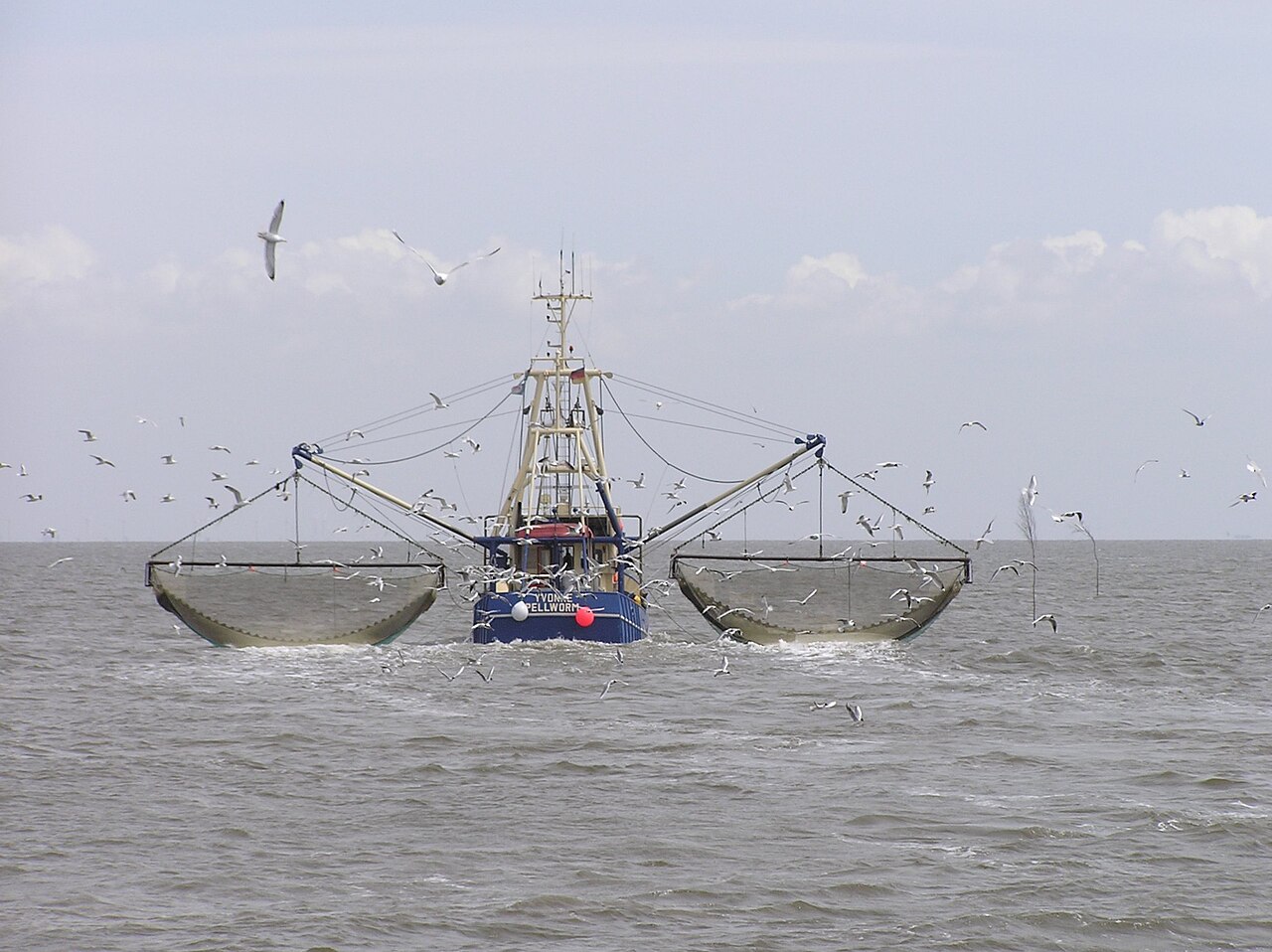
For decades, India’s 50 lakh fishers have worked waters that stretch close to the coast — within 40 to 50 nautical miles of shore. The deeper ocean, rich with tuna and other high-value species, remained largely out of reach: no clear regulatory framework existed for Indian-flagged vessels to operate in international waters in a structured, accountable way.
That changed on 9 July 2026, when Vice President C.P. Radhakrishnan launched India’s national programme for the issuance of Letters of Authorisation (LoA) for Sustainable Harnessing of Fisheries in the High Seas — a framework that, for the first time, gives Indian fishing vessels a formal, traceable pathway into international waters, with sustainability compliance built in as a non-negotiable entry condition.
What the Letter of Authorisation Actually Does
The LoA is not simply a permit. Under the Guidelines for Sustainable Harnessing of Fisheries in the High Seas by Indian-Flagged Fishing Vessels, notified in December 2025, every vessel that wants to fish beyond India’s Exclusive Economic Zone (EEZ) must hold one — and each LoA is vessel-specific and non-transferable, tied to a registration on the ReALCraft portal so that every trip is traceable.
Once issued, the vessel is bound by the conservation and management measures set by the relevant Regional Fisheries Management Organisations (RFMOs) — international bodies that set catch limits, gear specifications, bycatch reduction rules, and Fish Aggregating Device (FAD) management requirements for the world’s shared fisheries. Non-compliance means losing the authorisation. There is no way to fish the high seas under this framework while ignoring international sustainability standards.
The process itself is digital from end to end — applications are filed, tracked, and renewed through the ReALCraft portal, with real-time status updates and minimal procedural friction. Costs are kept low so that cooperatives and small vessel owners are not priced out.
Why This Matters for India’s Oceans
India’s coastline spans 11,099 km and its EEZ covers roughly 24 lakh sq km — one of the largest in the world. The marine fisheries potential within that EEZ is estimated at 58.6 lakh metric tonnes, yet most of the actual harvest today happens in a narrow nearshore band that is increasingly under pressure from overfishing, pollution, and habitat degradation.
Opening the high seas through a regulated framework theoretically redistributes that pressure: vessels that gain LoA status can pursue tuna and other pelagic species in deeper, international waters, reducing the fishing intensity on India’s nearshore ecosystems. The logic mirrors what careful water conservation planners know well — managing what you have sustainably requires spreading use across the full resource base, not concentrating pressure on its most accessible parts.
The event in Bhubaneswar also witnessed the launch of the Odisha Deep Sea Fishing Mission (2026–2036), a ten-year state-level initiative to develop modern deep-sea fishing infrastructure, value chains, and market linkages that could make Odisha a leading marine export hub. The mission is framed as a Blue Economy initiative — integrating scientific fisheries management with livelihood improvement for coastal communities.
Fisheries Cooperatives at the Centre
The launch event saw LoAs distributed to six fisheries cooperative societies, including the Malpe Fishermen’s Primary Co-Operative Society in Karnataka, the South Goa Mechanised Boat Owners Co-op, and the Paradeep Marine Primary Fish Production and Marketing Co-op Society in Odisha — groups representing thousands of individual fishers who would otherwise struggle to navigate international maritime regulations on their own.
This cooperative-first approach matters. High-seas fishing requires investment in larger vessels, satellite communication, and RFMO compliance systems that are typically out of reach for individual artisanal fishers. By channelling the LoA framework through cooperatives and Fisheries Farmer Producer Organisations (FFPOs), the government is attempting to ensure that the economic gains from deeper-ocean fisheries flow to communities rather than accruing only to large commercial operators.
India exported seafood worth approximately Rs 73,890 crore in FY 2025-26. The high-seas framework is partly a move to grow that number — but the structure of the LoA regime suggests the government is conscious that growth without rules is what depleted nearshore stocks in the first place.
The Sustainability Test Will Come in Implementation
Frameworks like the LoA are only as strong as the monitoring and enforcement that backs them. The requirement to comply with RFMO measures is a meaningful constraint — these are internationally binding, not aspirational — but India’s capacity to monitor vessel activity in the open ocean, track catches, and revoke LoAs when violations occur will determine whether the policy achieves its sustainability intent or becomes a paper requirement.
The integration with the ReALCraft digital portal is a positive signal — traceability at the registration level is a prerequisite for credible enforcement. But the real test will come when the fleet expands, catches increase, and short-term pressure to maximise yields conflicts with long-term RFMO limits.
What the December 2025 guidelines and the July 2026 LoA launch have established is a foundational architecture: a legal basis, a digital tracking system, and an international compliance link that did not exist before. That architecture is genuinely new, and it positions India’s fisheries sector to participate in global high-seas governance rather than operating outside it. For sustainable development of coastal livelihoods at scale, that is a necessary starting point.
What to Watch Next
- How many LoAs are issued in the first year and whether cooperative societies or private vessel owners dominate the uptake
- Whether India joins additional RFMOs beyond those it is already a member of, expanding the range of species and regions available to Indian fleets
- How the Odisha Deep Sea Fishing Mission (2026–2036) deploys its investment and whether catch data becomes publicly available
- Whether LoA compliance is audited independently or relies solely on self-reporting by vessel operators
For the latest on India’s environmental and ocean policy, follow our sustainability news coverage.
Source: Press Information Bureau, Government of India. Original release (PRID 2282312), 8 July 2026.