
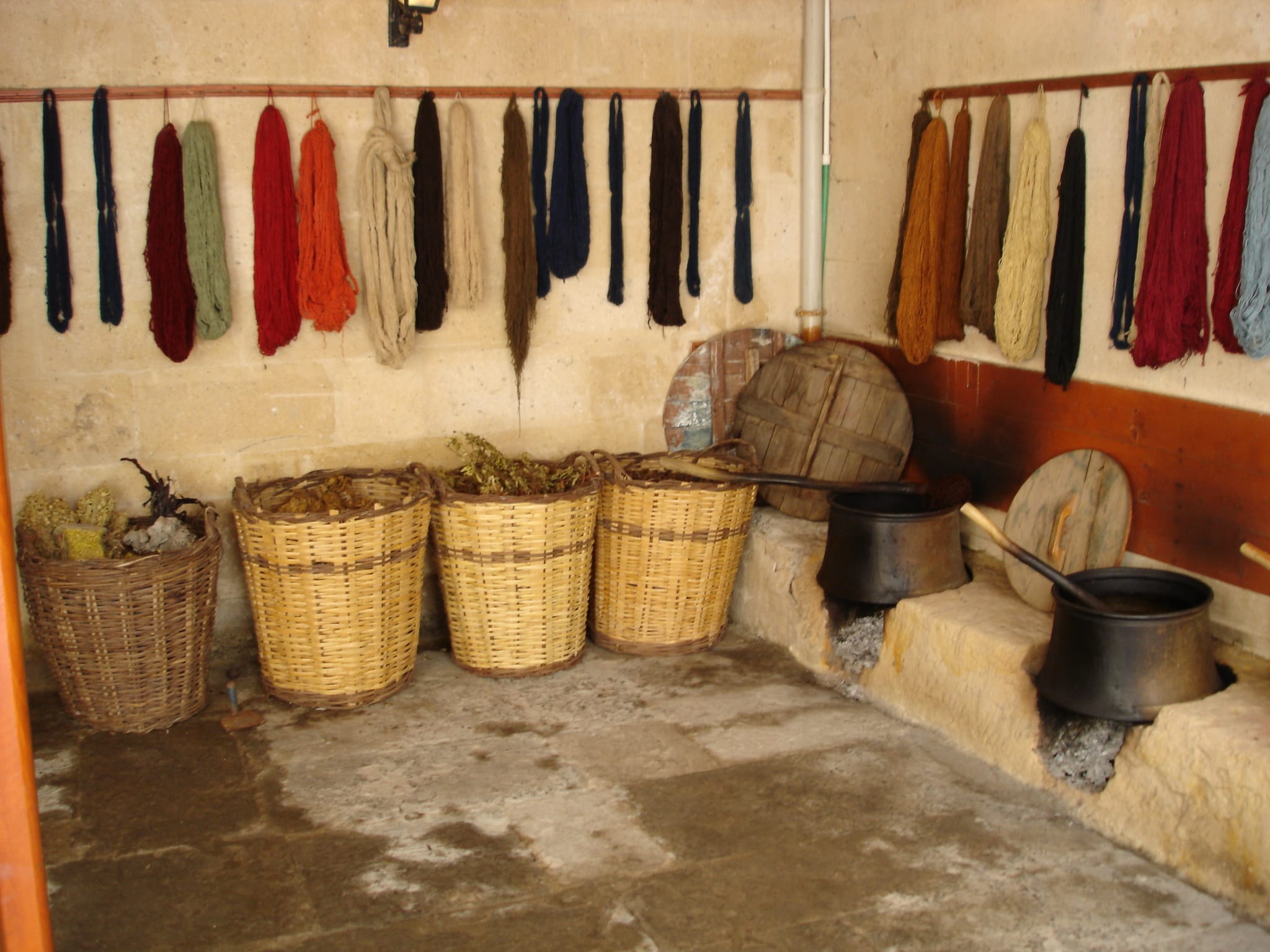
Natural dyes are colours made from plants, roots, flowers, bark and a few insects instead of petroleum chemicals. India has used natural dyes for thousands of years, from indigo blues to madder reds. Today, they are returning because people want cleaner clothes and less polluted rivers. This guide explains the main natural dye sources in India, how the colour is fixed on cloth, and how you can try dyeing at home.
What Are Natural Dyes?
Natural dyes come from living things. Most are plant based, such as leaves, flowers, roots, bark and fruit rinds. A few come from insects, like lac. Mineral pigments such as iron-rich mud also play a role in traditional printing.
Synthetic dyes work differently. Factories make them from petrochemicals, and some, such as certain azo dyes, can release harmful substances into wastewater. As a result, untreated textile effluent has long been a concern for rivers near dyeing clusters. The World Bank has estimated that textile dyeing and finishing contribute roughly 17 to 20 per cent of industrial water pollution. You can read more about this in our water sustainability section.
Natural dyes are not magic, though. Their raw materials are renewable and they usually biodegrade, but the full picture depends on how the plants are grown and which fixing agents are used. We cover that further below.
Common Dye Sources Used in India
India is rich in dye plants. Here are the sources artisans use most often, along with the colours they give.
- Indigo (nil): deep blue, from the leaves of Indigofera tinctoria.
- Madder (manjistha): red to rust, from the roots of Rubia cordifolia.
- Turmeric (haldi): bright yellow, although it fades quickly in sunlight.
- Pomegranate rind: soft yellow to khaki.
- Marigold flowers: yellow to orange, and easy to collect after festivals.
- Palash (kesu) flowers: golden orange, from Butea monosperma.
- Myrobalan (harad): pale yellow and tan, and rich in tannin.
- Katha (cutch): reddish brown, from the Acacia catechu tree.
- Lac: crimson and pink, from a tiny insect that lives on trees.
Madder: The Classic Natural Red
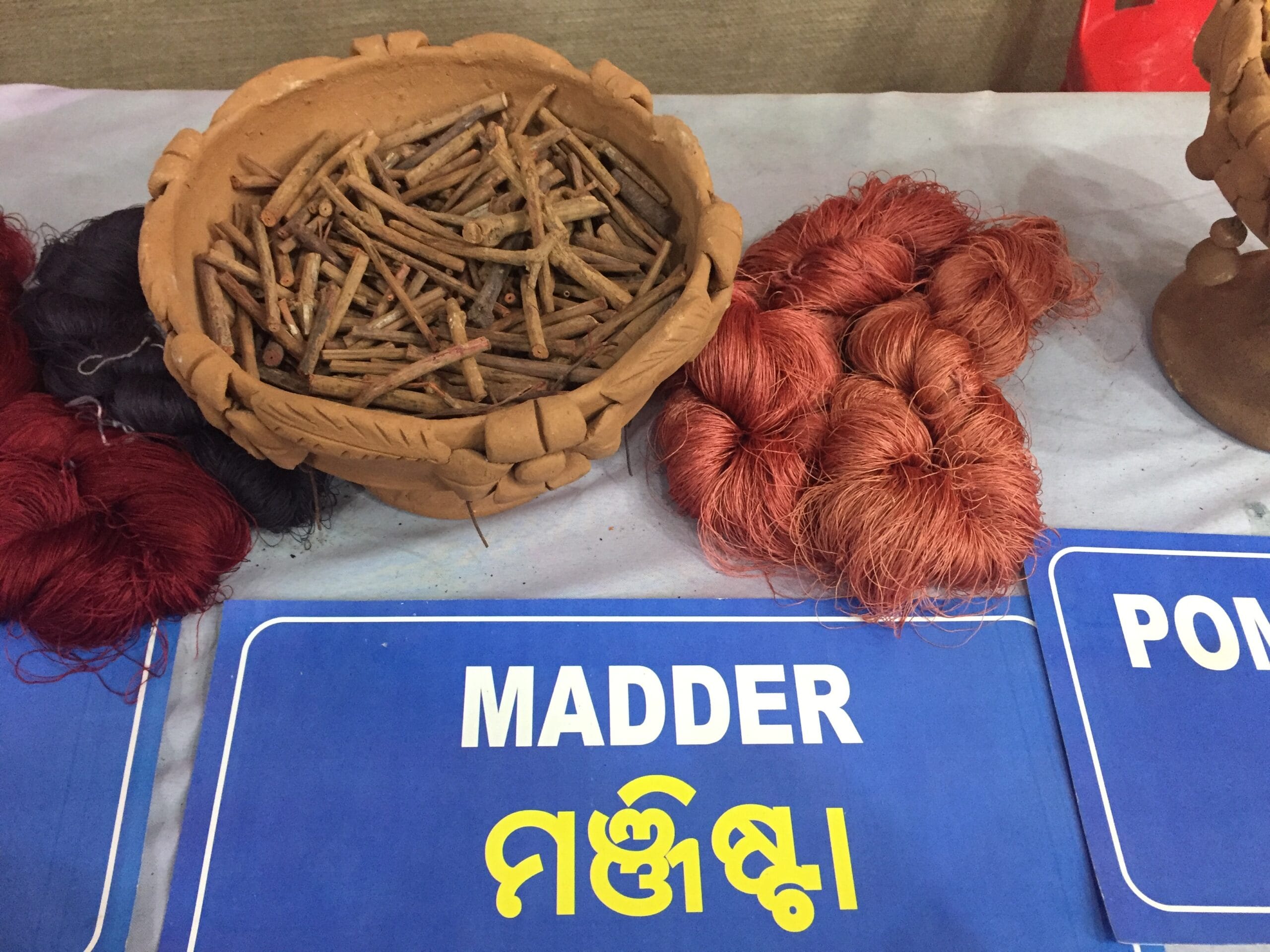
Madder, called manjistha in Hindi, is one of the oldest red dyes in the world. Dyers chop the dried roots, soak them and then simmer the cloth in the bath. The colour changes with the fixing agent, so the same plant can give rust, brick red or deep maroon. Madder is also a traditional Ayurvedic herb, which is why it is easy to find in many Indian markets.
Indigo: India’s Famous Blue
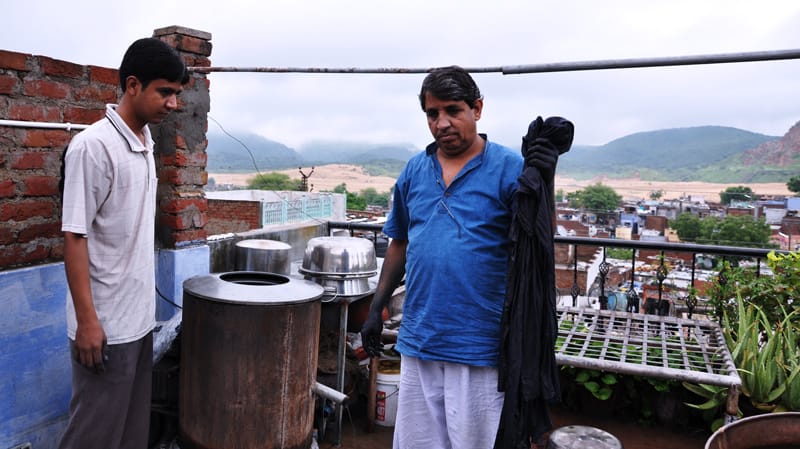
Indigo is different from other natural dyes because it does not dissolve in water. Dyers first ferment the leaves in a vat, which turns the liquid yellow-green. When the cloth comes out and meets the air, it slowly turns blue. Repeated dips give darker shades. Indian indigo travelled the world for centuries, and artisans in Rajasthan, Gujarat and Tamil Nadu still keep the vat tradition alive.
How Natural Dyes Stay on Fabric: Mordants
Most natural dyes need a helper called a mordant. A mordant is a substance that binds the dye to the fibre so the colour lasts through washing. Without it, many plant colours wash out quickly.
Traditional dyers prefer gentle mordants. Alum is the most common, and tannin-rich myrobalan or oak galls are widely used with cotton. Iron water, made by soaking rusty iron in vinegar, darkens colours to grey and black. In contrast, heavy-metal mordants such as chrome, tin and copper are toxic. Therefore, a genuinely eco-friendly dyer avoids them.
Dyes in Indian Textile Traditions
Natural dyes sit at the heart of several Indian craft traditions. Ajrakh printing from Kutch uses indigo and madder with a mud resist. Kalamkari from Andhra Pradesh uses myrobalan, iron and plant extracts to paint stories on cloth. Rajasthan’s dabu printing also uses a mud resist before the cloth goes into the dye bath.
These crafts are also part of the wider slow fashion movement, which values handmade work, fair wages and fewer, longer-lasting clothes. If you want to understand the people behind such crafts, read our story on Indian textiles and sustainable practices.
How to Dye Fabric at Home
You can try natural dyes in an ordinary kitchen. Onion skins, marigold petals, pomegranate rind and turmeric are all easy to find. For best results, start with white or cream fabric made of cotton, linen or silk. Our guide to organic cotton clothing explains why natural fibres take colour so well.
- Wash the fabric well to remove oil and finishes.
- Soak it in an alum solution for about an hour. A common rule is 10 to 15 per cent of the fabric weight.
- Simmer your dye material in water for roughly an hour, then strain out the plant matter.
- Add the damp fabric to the dye bath and simmer gently for 30 to 60 minutes.
- Let the cloth cool in the bath, because a longer soak gives a deeper colour.
- Rinse in cool water, then dry in the shade.
Use a pot that you will not cook in again, wear gloves, and wash the dyed cloth separately for the first few washes. Moreover, expect soft, earthy shades rather than the neon brights of synthetic colour.
Limits of Plant-Based Colour
It helps to be honest about the drawbacks. Natural colours can vary from one batch to the next, and some fade faster than synthetic ones. Dyeing also still uses water and energy. Furthermore, growing dye crops at scale needs land, so the best sources are by-products such as flower waste, fruit rinds and bark.
A label that says natural dyes does not prove a garment is sustainable. Ask about the mordants used, the fabric, and how the water is treated. Brands that answer openly are usually the ones worth supporting, and you can find some in our list of sustainable fashion brands of India.
Frequently Asked Questions
Which natural dyes are best for cotton?
Indigo, madder, myrobalan and katha all work well on cotton when you use a tannin and alum mordant. Cotton is a plant fibre, so it needs more preparation than silk or wool.
Are natural dyes safe for skin?
Plant dyes are generally gentle, and many have long been used in traditional clothing. However, the mordant matters. Avoid fabric fixed with heavy metals, and test a small patch if you have sensitive skin.
Do natural dyes wash out?
Properly mordanted cloth holds its colour well. Even so, natural shades soften over time. Wash in cold water with a mild soap and dry in the shade to keep them longer.
Can I make natural dyes from kitchen waste?
Yes. Onion skins give gold, pomegranate rind gives yellow, and used tea gives soft brown. Using food waste this way fits neatly with a low-waste kitchen.
Small Colours, Big Impact
Choosing natural dyes, whether you make them or buy them, supports craftspeople and cuts chemical load in our water. Explore more ideas in our sustainable fashion section, or browse sustainable fabrics to pick the right cloth for your next dye project.