
A solar cooker is one of the simplest clean-energy devices a household can own. It uses sunlight as its only fuel, so it has no running cost, no smoke and no cylinder to refill. For a country that gets strong sun for most of the year, it is a natural fit for the Indian kitchen. This guide explains how a solar cooker works, compares the main types, and lists realistic 2026 prices so you can decide whether one suits your home.
How Does a Solar Cooker Work?
Every solar cooker follows the same three-step idea. First, reflectors collect sunlight and direct it towards the cooking vessel. Second, a dark surface absorbs that light and turns it into heat. Third, insulation or a glass cover traps the heat so the food keeps cooking. The cooking pot itself is usually painted black because dark surfaces absorb heat far better than shiny ones.
As a result, a solar cooker needs no electricity or gas at all. It only needs a sunny spot, such as a terrace, balcony or courtyard, and a little patience.
Types of Solar Cooker Available in India
Two designs dominate the Indian market: the box-type cooker and the parabolic dish cooker. Each suits a different kind of cooking and budget.
Box-Type Solar Cooker
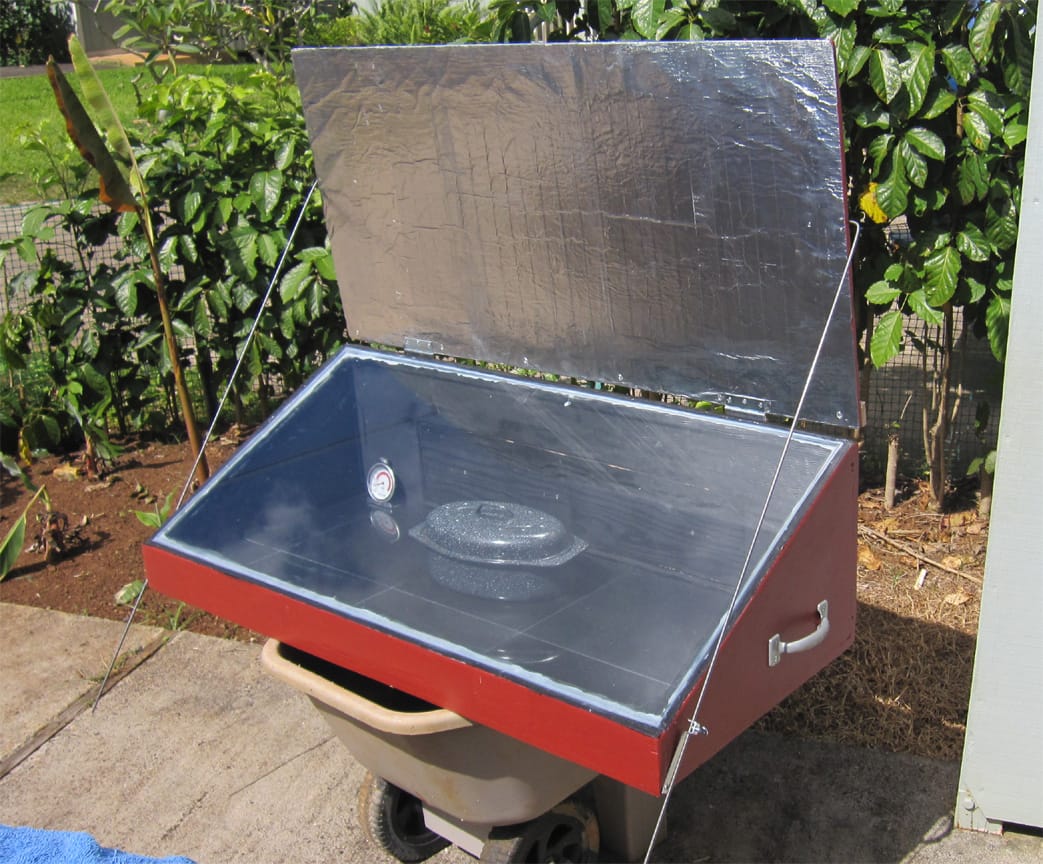
A box-type solar cooker is an insulated box with a glass lid and a reflective flap. It heats up slowly to roughly 100 to 140 degrees Celsius on a clear day, which is enough for rice, dal, vegetables and steamed dishes. Cooking takes about one and a half to two times longer than on a gas flame, so most families start the meal early in the morning and let the sun do the work.
Box cookers are the most beginner-friendly option. You place the pots inside, angle the reflector towards the sun, and leave the food to cook without stirring. However, they are not suited to frying or making chapatis, because the temperatures stay too low.
Parabolic Dish Solar Cooker
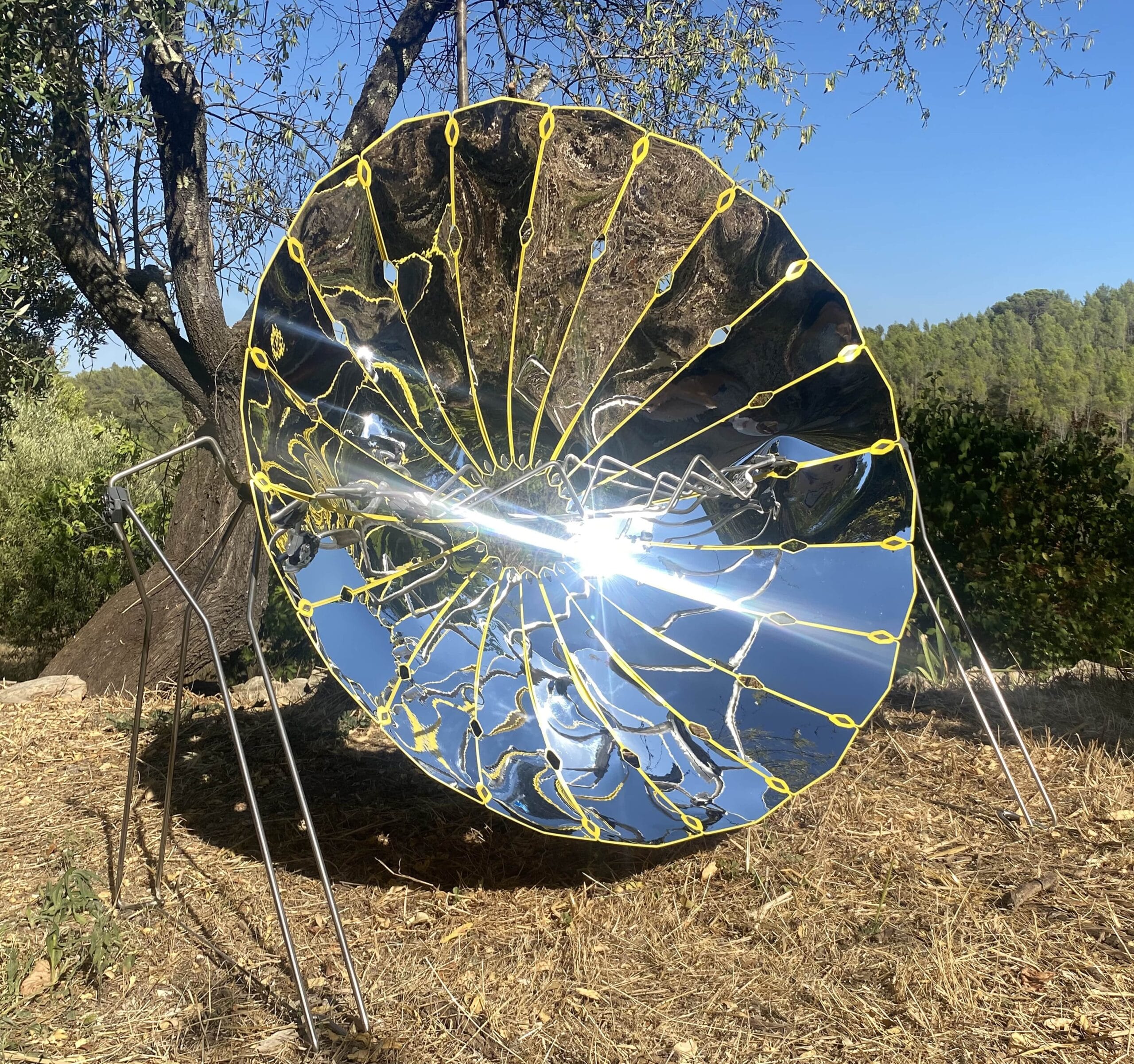
A parabolic dish cooker uses a curved mirror to concentrate sunlight on a single focal point. Temperatures at that point can climb far higher than in a box, so you can boil, stir-fry and even roast. Cooking times are much closer to a conventional stove, often 20 to 30 minutes for a meal. The trade-off is that the dish needs direct sunlight and must be turned every so often to follow the sun.
Large community versions of this design, such as the well-known SK-14 dish, are used in homes, hostels and small canteens. Because the focal point gets extremely hot, you should handle a parabolic cooker with care and keep children away while it is in use.
Solar Induction and Hybrid Cookers
A newer category pairs rooftop solar panels with an induction or DC cooktop. Instead of focusing sunlight directly, it uses solar electricity to cook, which means you can cook indoors and at any hour if you have battery backup. Indian research institutes have worked on this approach too. For example, CSIR-CMERI transferred a solar DC cooking system technology for wider use. Homes that already have a rooftop solar system can often power an induction hob from the same setup.
Solar Cooker Price in India (2026)
Prices vary with size, build quality and brand. In 2026, a standard family-size box-type solar cooker typically costs around Rs 3,500 to Rs 4,200. A parabolic dish cooker of the SK-14 kind usually falls in the Rs 6,000 to Rs 8,000 range. Solar induction setups cost more because they include panels, and their price depends on the size of the solar system.
Direct consumer subsidies are limited today. The central government earlier supported solar cookers through its solar thermal programmes, but the dedicated off-grid cooker scheme has ended. Some schools, hostels and institutions can still buy through government tenders, so it is worth checking with your state renewable energy agency before you buy.
Benefits of Using a Solar Cooker
The biggest benefit is simple: sunlight is free. Over a few years, a solar cooker can cut your LPG or firewood use noticeably, particularly if you cook your main meal on it for most of the year. Larger parabolic cookers are reported to save the equivalent of several LPG cylinders annually in big households, although actual savings depend on how often you use the cooker.
In addition, solar cooking has other advantages that matter for sustainable living:
- Zero smoke, which means cleaner indoor air, especially in homes that still cook on firewood or dung cakes.
- No fuel emissions while cooking, so your kitchen carbon footprint shrinks.
- Slow cooking that keeps more nutrients in food and rarely burns it.
- Almost no maintenance, since there are no moving parts in a box cooker.
If you are already exploring clean cooking at home, a home biogas plant is a useful companion, because it gives you cooking gas on cloudy days when a solar cooker cannot help.
Limitations to Know Before You Buy
A solar cooker is not a full replacement for a stove. It works only in good sunlight, so cloudy days, the monsoon and evening cooking need a backup. Moreover, it demands a little planning, because you must place and adjust it before cooking starts. Parabolic models also need regular turning towards the sun.
Most households therefore use it alongside a conventional stove. That combination still reduces fuel use meaningfully without changing the way you cook every meal.
Tips to Get the Best Results From Your Solar Cooker
- Cook between about 10 am and 3 pm, when the sun is strongest.
- Use thin, dark, lidded pots, which absorb heat quickly.
- Keep reflectors clean and angled directly at the sun.
- Cut vegetables into small pieces so they cook faster.
- Avoid opening the lid of a box cooker too often, as this lets heat escape.
Frequently Asked Questions About the Solar Cooker
Can a solar cooker work on cloudy days?
A box-type solar cooker can still reach roughly 60 to 80 degrees Celsius on an overcast day, which is enough for slow warming and pasteurising. Parabolic cookers need direct sunlight and do not work well under clouds.
Is a solar cooker safe?
Yes, when used sensibly. Box cookers are very safe. Parabolic cookers concentrate intense heat and light, so wear sunglasses and keep children away from the focal point.
Which is better, a box or parabolic solar cooker?
Choose a box cooker if you want a low-cost, low-effort way to slow-cook rice, dal and vegetables. Choose a parabolic cooker if you want faster cooking and the ability to fry or roast, and you do not mind adjusting it during the day.
Do I need a subsidy to afford one?
No. A basic box-type solar cooker costs a few thousand rupees and pays back over time through fuel savings. Check with your state renewable energy agency for any local schemes that may reduce the cost.
Small Changes, Big Impact
A solar cooker will not solve the energy challenge on its own. Even so, it shows how everyday choices add up. Pair it with other clean options from our sustainable energy section, such as a solar water heater, and your home moves a few steps closer to sustainable, need-based living. Explore more practical guides in our sustainable living section.