
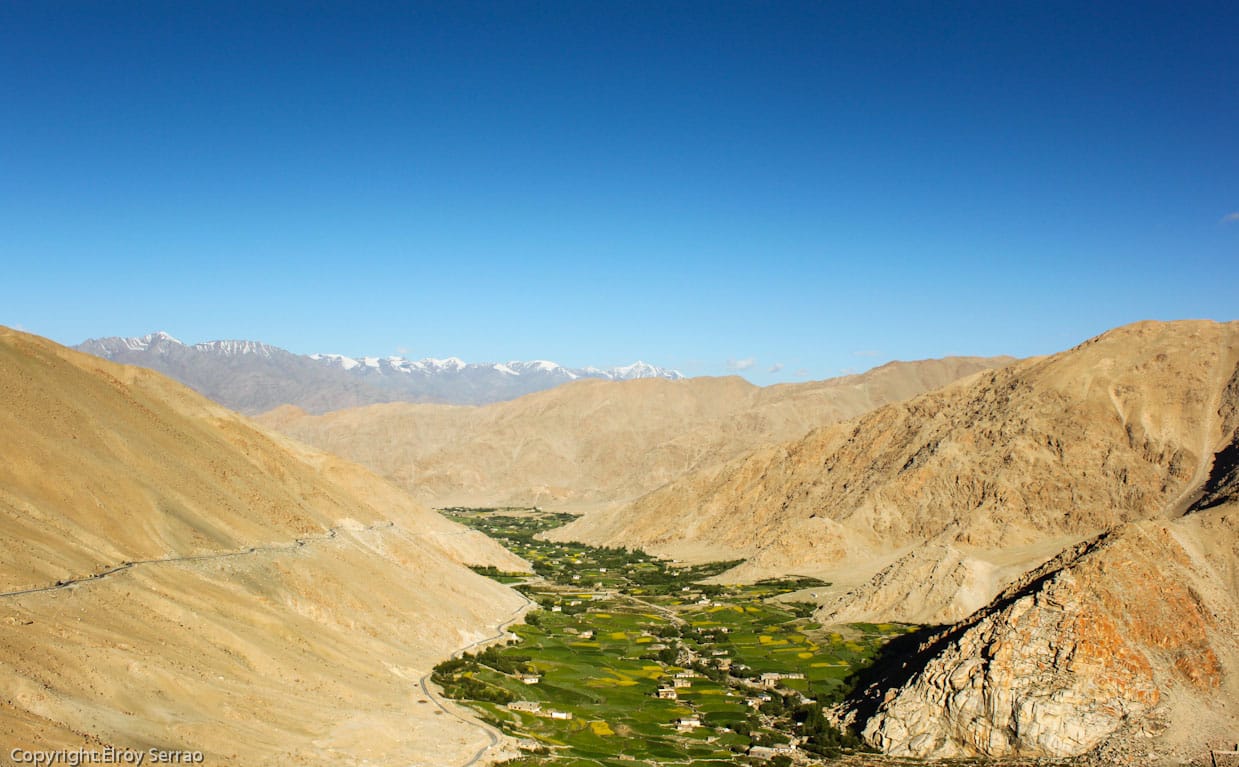
At more than 14,000 feet above sea level, in a remote valley in Ladakh known mostly for its hot springs, India quietly reached a genuine energy-sector first in July 2026: the commissioning of the country’s first two geothermal wells, drilled to a depth of 1,000 metres each. It’s not a headline that travelled far outside specialist energy circles, but a PIB backgrounder published in September lays out why Puga Valley’s two new wells matter well beyond their remote location — as the opening move in what could become an entirely new category in India’s renewable-energy mix.
What Geothermal Energy Actually Is
Deep beneath the Earth’s crust, temperatures climb dramatically — the mantle reaches roughly 3,700°C near the core boundary, driven by a combination of radioactive decay of elements like uranium and thorium, plus residual heat left over from the planet’s formation billions of years ago. In geologically active regions, where faults and fractures let that heat migrate closer to the surface, it creates underground reservoirs of trapped hot water and steam. Tap into one of those reservoirs with a well, and you can bring that heat to the surface to drive a turbine — generating electricity through essentially the same steam-turbine principle as a conventional thermal power plant, just replacing fuel combustion with heat that’s already there, freely supplied by the planet itself.
That’s the core appeal of geothermal power compared to India’s two current renewable-energy workhorses, solar and wind: it doesn’t depend on the sun shining or the wind blowing. A geothermal plant can generate electricity around the clock, in any weather, at any time of year — a genuinely different value proposition in a grid that increasingly needs “always-on” clean generation to complement solar and wind’s inherently variable output.
India’s Resource Base Is Bigger Than Most People Realise
Here’s the part of the geothermal story that rarely makes it into public conversation: India actually has a substantial geothermal resource base. The Geological Survey of India has mapped 381 hot springs and identified 10 distinct geothermal provinces across the country — including the Himalayan Geothermal Province (where Puga Valley sits), the Son-Narmada-Tapi (SONATA) rift zone running through central India, the west coast, the Cambay Graben in Gujarat, and provinces stretching from the Andaman and Nicobar Islands down to the South Indian Cratonic region. Altogether, the country’s theoretical geothermal potential is estimated at nearly 10.6 gigawatts, with 42 specific sites already flagged as promising for either power generation or direct heat use.
For context on the global picture: worldwide installed geothermal capacity reached 15.67 gigawatts by the end of 2025, dominated by five countries — Indonesia, the United States, the Philippines, Türkiye, and New Zealand — which together account for roughly two-thirds of global capacity. India’s 10.6 GW theoretical potential, if even a meaningful fraction of it were developed, would represent a genuinely significant addition to global geothermal capacity, not a marginal niche technology.
The Puga Valley Milestone, in Context
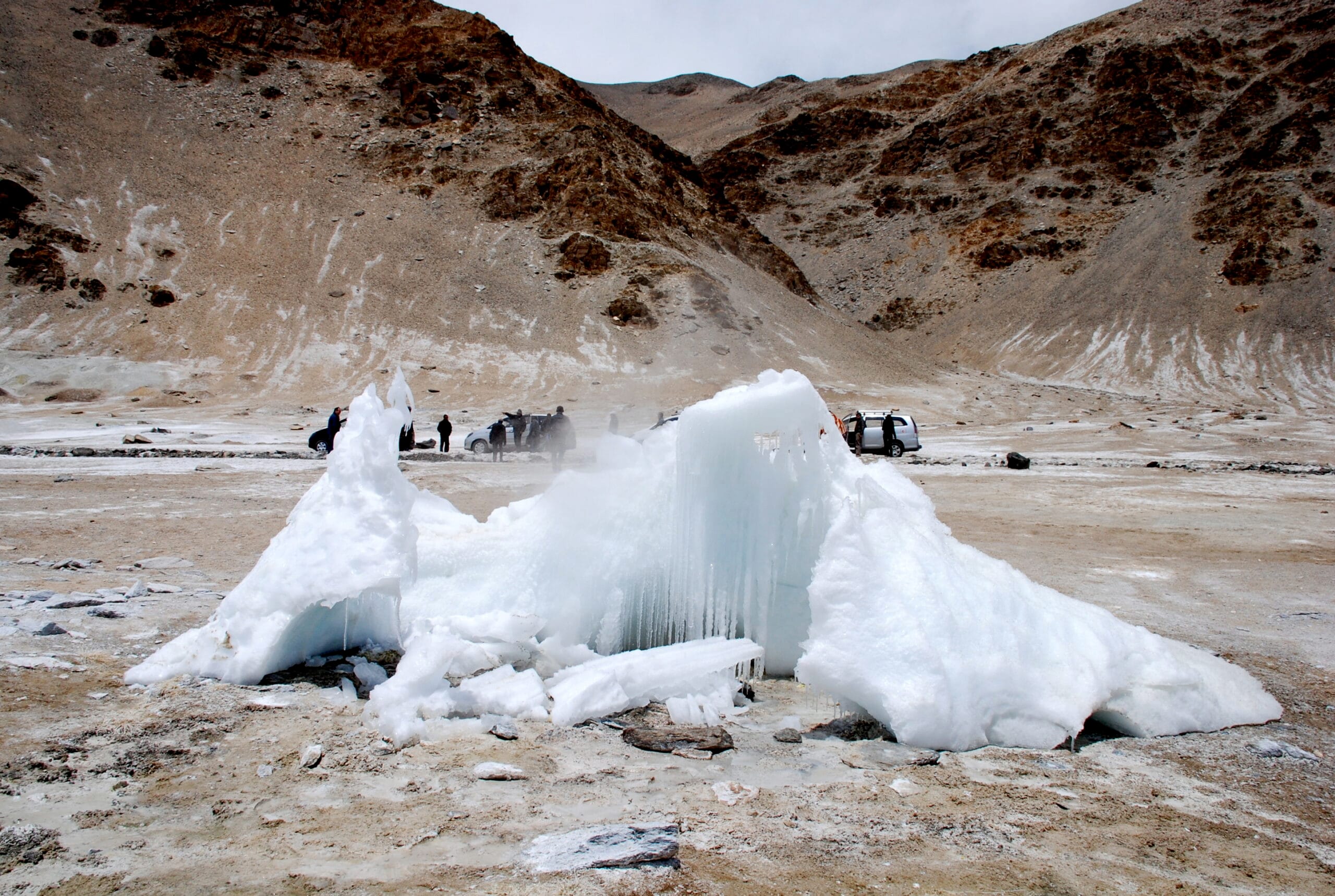
The two new wells at Puga Valley — drilled by the ONGC Energy Centre to a depth of 1,000 metres, making them India’s deepest geothermal wells to date — aren’t yet a working power plant. Their immediate purpose is reservoir evaluation: understanding the temperature, pressure, and flow characteristics of the underground resource well enough to design an actual generation facility around it. But the roadmap beyond that is already defined — the wells are explicitly intended to pave the way for India’s first 1-megawatt demonstration geothermal power project, marking the country’s formal entry into geothermal power generation rather than just geothermal resource mapping.
That demonstration-scale ambition fits a broader pattern visible across several other Indian geothermal projects already underway. In Gandhinagar, Gujarat, a project integrating solar and geothermal energy has drilled three wells producing geothermal fluid at 70–80°C and has already demonstrated electricity generation in the 50–90 kilowatt range. In Ankleshwar, Gujarat — a region with a long history of oil and gas extraction — a pilot project is evaluating whether unproductive, abandoned oil and gas wells can be retrofitted for geothermal electricity generation, a genuinely elegant idea that would let India reuse existing drilling infrastructure and decades of subsurface geological data rather than starting from scratch. Separate projects in Tawang (Arunachal Pradesh) and Hyderabad are exploring geothermal resource assessment and geothermal cooling for air conditioning applications respectively — a reminder that geothermal energy isn’t limited to electricity generation; it also supports direct-use applications like district heating, agricultural drying, aquaculture, and space heating and cooling.
The Policy Foundation Behind the Push
None of this activity happened by accident. The government notified a dedicated National Policy on Geothermal Energy in September 2025, with the Ministry of New and Renewable Energy as the nodal implementing body. The policy’s scope is broader than just power generation — it prioritises systematic exploration, drilling, and reservoir management, supports Ground Source Heat Pumps for heating and cooling applications, explicitly enables the repurposing of abandoned oil and gas wells (directly relevant to the Ankleshwar pilot), and commits to building a national geothermal data repository along with dedicated pilot projects and Centres of Excellence.
The MNRE separately sanctioned five geothermal research and development projects between July and August 2025 under its Renewable Energy Research and Technology Development (RE-RTD) programme — covering resource assessment, indigenous technology development, and field demonstration across electricity generation, heating, and cooling applications. Read together, the policy and the funded R&D pipeline suggest India is treating geothermal less as a speculative long-shot technology and more as a genuine, if early-stage, addition to the country’s renewable-energy portfolio — one explicitly framed as supporting India’s Net Zero by 2070 target.
Why a “New Chapter” Claim Is Fair, With Caveats
It’s worth being honest about scale here: a 1-megawatt demonstration project and a handful of pilot studies producing tens of kilowatts are extremely early-stage compared to India’s solar capacity, which has already crossed 100 gigawatts. Commercial-scale geothermal power generation in India, as the backgrounder itself acknowledges, is “yet to be established.” This is a technology at the resource-assessment-to-pilot stage, not the deployment stage that solar and wind reached years ago.
But that’s also precisely why the Puga Valley wells matter as a marker of progress rather than as a finished achievement. Every mature renewable technology went through exactly this phase — mapped potential, policy framework, funded pilots, first demonstration project — before it scaled into the kind of capacity that shows up meaningfully in a country’s sustainable energy mix. India crossing that threshold with its deepest wells ever drilled, in one of the most challenging environments on Earth to work in, at over 14,000 feet in Ladakh’s cold desert, is a genuinely notable first step — and one worth watching as the country’s clean-energy story continues to diversify well beyond solar panels and wind turbines, alongside the growth already documented in India’s renewable energy capacity and its progress toward 300 GW of non-fossil fuel capacity.
Source: Press Information Bureau, Government of India — Geothermal Energy: A New Chapter in India’s Clean Energy Journey