
For decades, the pattern in India’s biodiversity research has been depressingly familiar: scientists document a plant that tribal communities have used medicinally for generations, a company eventually commercialises a compound derived from it, and the community that held that knowledge for centuries sees little to none of the resulting value. It’s a version of what’s sometimes called biopiracy, and India’s own Biological Diversity Act, 2002 exists specifically to try to prevent it.
A new three-year Memorandum of Understanding, signed on 29 July between the Ministry of Tribal Affairs and the CSIR-National Botanical Research Institute (CSIR-NBRI) in Lucknow, is a test of whether that law’s intent can actually be built into a research programme from day one, rather than litigated after the fact. This Tribal Affairs CSIR-NBRI medicinal plants MoU is one of the more carefully structured attempts yet to get that balance right.
What the partnership actually does
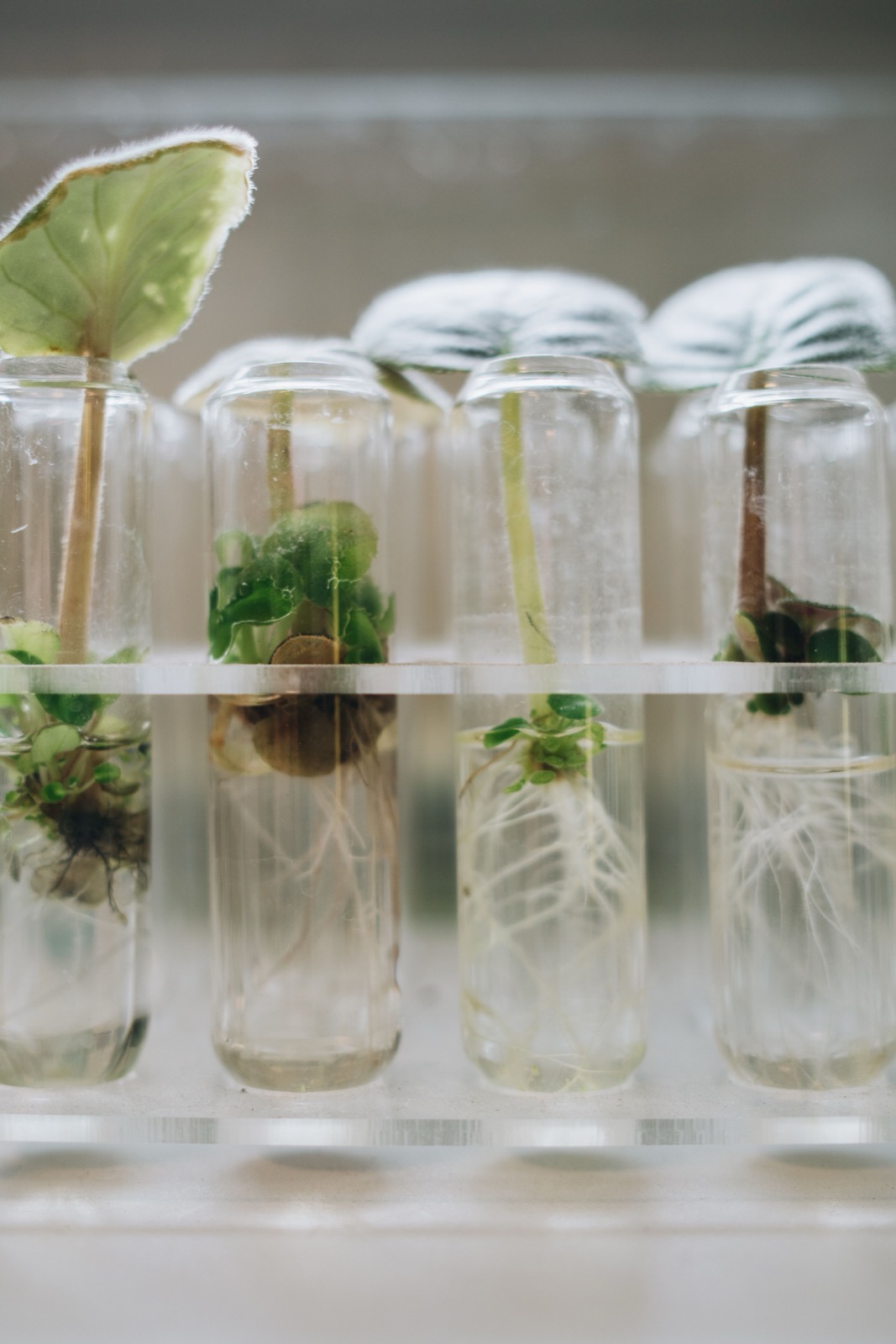
The MoU’s stated purpose is straightforward: conserve Rare, Endangered and Threatened (RET) medicinal plant species found in and around tribal regions across India, through tissue culture facilities and dedicated seed banks that CSIR-NBRI will help establish. Tissue culture — essentially propagating plants from small samples of living cells under lab conditions — is often the only realistic way to rescue a species whose wild population has shrunk too far to breed reliably on its own; seed banks provide a longer-term insurance policy against extinction from disease, habitat loss, or climate stress.
But conservation science is only half of what makes this MoU worth noticing. The other half is procedural — and it’s the part that determines whether this becomes another case study in extraction, or an actual model for equitable research.
Consent first, not compensation later
Under the agreement, no field assessment or research activity can proceed without the Prior Informed Consent of the local Gram Sabhas and tribal communities involved — a legal requirement under the Biological Diversity Act that, in practice, has often been honoured loosely. The MoU goes further than the legal minimum on ownership too: any intellectual property that emerges from the joint research will be jointly held by the Ministry of Tribal Affairs and CSIR-NBRI, in trust for — or shared equitably with — the tribal communities who contributed the underlying knowledge or bioresources. Financial gains are meant to flow back through India’s National and State Biodiversity Funds and dedicated welfare schemes run by the Ministry, rather than disappearing into a private patent portfolio.
Every joint project under this MoU is also required to carry its own budget line for grassroots community development and capacity building — meaning the partnership isn’t just extracting knowledge and returning cheques years later, but is structured to build local scientific capacity as it goes. Tribal youth in the regions involved will receive hands-on training in the same propagation and conservation techniques CSIR-NBRI’s scientists use, turning what could have been a purely extractive research relationship into something closer to a skills-transfer programme.
Why this matters beyond one institute
Traditional ecological knowledge — which plants heal what, which grow where, which need protecting — has historically lived almost entirely with the communities who hold it, transmitted orally across generations rather than written into a patent filing or a peer-reviewed paper. When that knowledge does get formalised by outside institutions, the question of who owns what results has been one of the most contentious in global biodiversity policy, from the Nagoya Protocol’s international Access and Benefit-Sharing framework down to India’s own domestic biodiversity funds.
This MoU doesn’t solve that tension everywhere — it’s one partnership, covering RET medicinal plants specifically, for three years. But as a template, its structure (consent gating every field visit, joint IP ownership, funds explicitly routed back to source communities, and youth training built into the budget from the start) is closer to what biodiversity researchers and tribal-rights advocates have been asking government-industry-academia partnerships to look like for years.
For Prakati’s readers who think about environmental sustainability primarily in terms of solar panels and recycled plastic, this is a useful reminder that biodiversity conservation and social equity aren’t separate problems — protecting a rare medicinal plant species and protecting the community that has safeguarded it for generations are, in this case, explicitly the same project.
Source: Press Information Bureau, Government of India — Ministry of Tribal Affairs Signed MoU with CSIR-NBRI for Conservation of Rare, Endangered & Threatened Medicinal Plant Species, 29 July 2026.