
If you’ve been waiting to install rooftop solar through a net-metering connection, or you run a business trying to buy renewable power through an open-access arrangement, the Ministry of New and Renewable Energy just quietly bought you — and thousands of solar developers like you — six more months of breathing room.
On 18 July 2026, MNRE confirmed that net-metering projects and open-access renewable energy projects can continue to be commissioned without complying with the ALMM List-II requirement for solar PV cells, until 31 December 2026. The earlier version of this relief was due to expire on 31 May 2026. The core policy itself hasn’t changed — India is still moving toward mandating domestically manufactured solar cells across the board — but this particular, narrower category of projects has been given more runway.
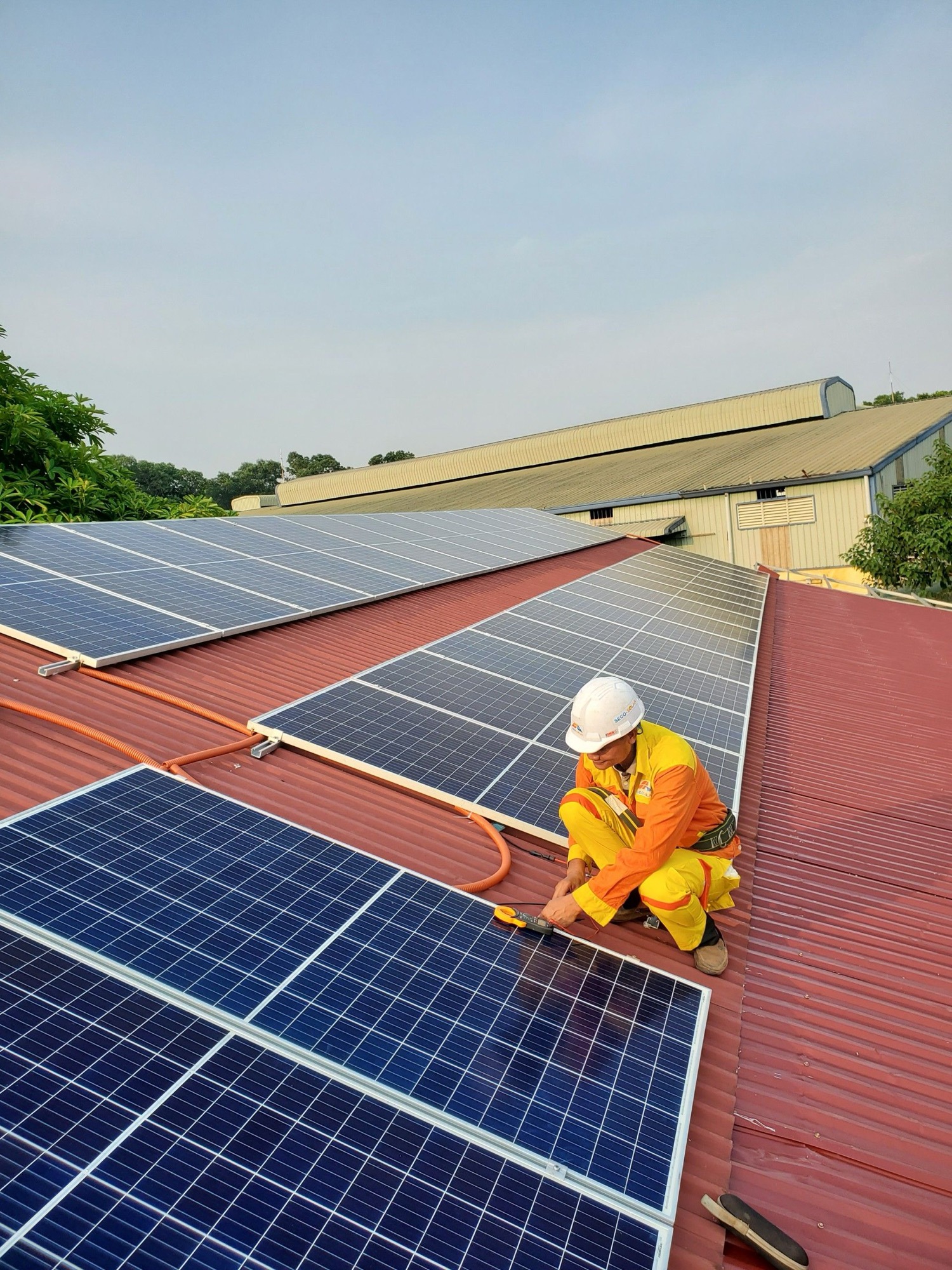
It’s a small, technical-sounding decision. But it sits at the centre of one of the more interesting tensions in India’s clean energy transition: the gap between how fast the country wants to install solar, and how fast it can actually make the components that go into it.
What ALMM Actually Is
The Approved List of Models and Manufacturers (ALMM) is India’s mechanism for ensuring that solar equipment used in government-backed or incentivised projects comes from domestically qualified manufacturers, rather than being imported wholesale. ALMM List-I covers solar modules (the panels themselves); ALMM List-II, introduced more recently, extends that requirement down a level to solar cells — the individual photovoltaic units that get assembled into a module.
The logic behind ALMM List-II is straightforward: India makes a lot of solar panels, but historically it has imported most of the solar cells that go inside those panels, largely from China. If India wants a solar industry that’s actually self-reliant — not just an assembly operation for imported components — cell manufacturing has to scale up domestically too. ALMM List-II is the policy lever meant to force that shift.
The problem is a mismatch in scale. According to industry estimates reported around this decision, India’s approved domestic solar cell manufacturing capacity sits at roughly 31 gigawatts, while approved module manufacturing capacity — the assembly side — is closer to 193 gigawatts. For a specific and increasingly popular cell technology called TOPCon, the gap is even starker: nearly 172 GW of approved module capacity against only about 10 GW of domestic cell capacity. In plain terms, India’s module factories can build far more solar panels than India’s cell factories can currently supply raw cells for.
Why Net Metering and Open Access Needed a Separate Carve-Out
Net-metering projects are typically the rooftop solar installations on homes, small businesses, and institutions that feed surplus power back into the grid in exchange for bill credits. Open-access projects let larger commercial and industrial consumers buy renewable power directly from a generator, bypassing the local utility. Both categories tend to involve smaller developers, tighter margins, and less room to absorb supply-chain disruption than a large utility-scale solar park backed by a long-term power purchase agreement.
If these projects had been forced to comply with ALMM List-II on the original May 2026 deadline — while domestic cell supply was still catching up to demand — the likely outcome wasn’t more domestic manufacturing overnight. It was stalled projects, module manufacturers stuck holding inventory built for cells they couldn’t yet source domestically, and installers unable to complete connections already in the pipeline. MNRE’s own release points to exactly this: the extension is framed partly as protection for “standalone solar PV module manufacturers” who have already invested in inventory, giving them a longer runway to shift their sourcing toward ALMM-listed domestic cell manufacturers as that capacity continues to expand.
Industry estimates suggest this extension could help commission up to 10 GW of pending net-metering and open-access projects that would otherwise have been stuck waiting on a domestic cell supply that isn’t quite there yet.
A Pattern Worth Watching, Not Just a One-Off Waiver
This isn’t the first time MNRE has had to soften a domestic-manufacturing mandate to keep near-term deployment moving — and it likely won’t be the last. India has separately introduced ALMM List-III, extending the same domestic-sourcing logic further upstream to solar ingots and wafers, set to take effect from June 2028. That’s a signal of intent: the government wants to build an entire domestic solar supply chain, from raw silicon through to the finished rooftop panel, not just the assembly step.
The tension this creates is a familiar one in industrial policy — protect long-term self-reliance without choking off short-term climate progress. Push the domestic-manufacturing mandate too hard, too fast, and projects stall, developers lose confidence, and India’s solar installation numbers — which have quadrupled over the past decade — take a hit. Move too slowly, and the country risks building a solar industry that’s permanently dependent on imported cells for its most technically demanding component, no better positioned for energy security than when it started.
The six-month extension announced this week is, in effect, an admission that the timeline needs more calibration. For homeowners with rooftop solar in the pipeline, and for businesses relying on open-access renewable power to hit their own sustainability targets, it means projects that were at risk of stalling can now move forward. For India’s broader solar manufacturing base, it’s a deadline pushed rather than removed — cell manufacturers now have until the end of the year to close the gap between the capacity that’s approved on paper and the capacity that’s actually shipping cells.
Rooftop solar and open-access renewable power are two of the more accessible entry points into clean energy for households and businesses that don’t have the scale to build their own utility-sized solar farm. Keeping that pathway open — even through a policy extension as unglamorous as an ALMM exemption — matters for how quickly ordinary consumers and small businesses can actually participate in India’s energy transition, rather than just read about it happening at grid scale.
Source: Press Information Bureau, Government of India — No Change in ALMM Policy; Centre Provides Extended Relief Window for Select Solar Projects up to December 2026