
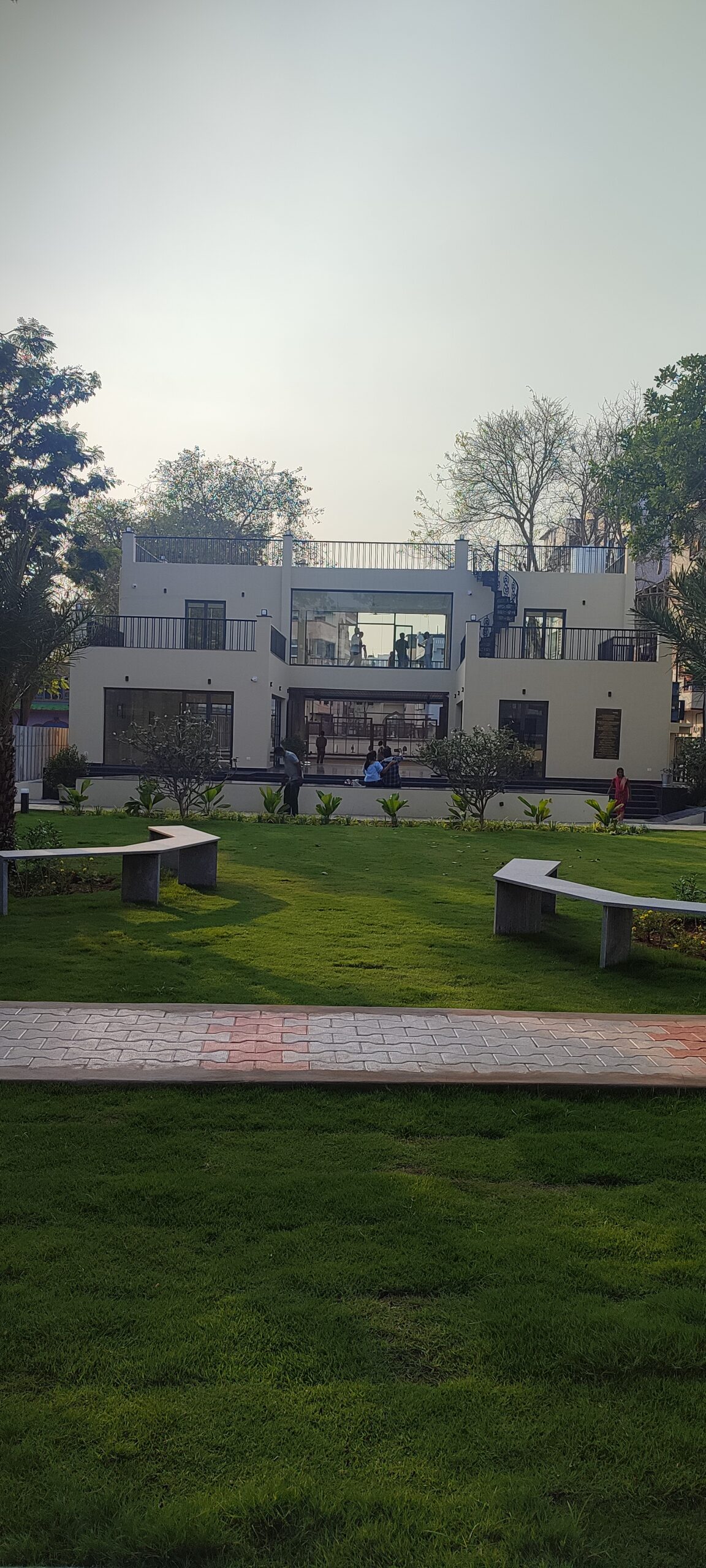
In Itanagar, rooftop rainwater harvesting systems are now feeding storage tanks instead of letting monsoon runoff wash straight into the nearest drain. In Korba and Warangal, recharge structures were built and switched on before this year’s monsoon arrived, timed deliberately so the first rains of the season would actually be captured rather than wasted. In Burdwan and Vizianagaram, recharge pits fitted with injection borewells are pushing rainwater deep into aquifers that cities have been quietly depleting for decades. None of this made national headlines. Collectively, it’s one of the more consequential water conservation efforts underway in urban India right now.
The Ministry of Housing and Urban Affairs says its “Catch the Rain – Where it Falls, When it Falls” push — running under the AMRUT 2.0 mission — has now mobilised close to 900 Urban Local Bodies across 27 states and union territories. The campaign’s premise is almost embarrassingly simple: most of India’s cities receive the bulk of their annual rainfall in a matter of weeks during the monsoon, and most of that water is designed, by decades of drainage infrastructure, to leave as fast as possible. Catching even a fraction of it before it exits the city is often cheaper and faster than building new water supply infrastructure from scratch.
The scale, on paper, is significant. Under a convergence arrangement between MoHUA and the Ministry of Jal Shakti’s Jan Bhagidari 2.0 programme, 1,99,278 groundwater recharge structures have already been built across 79 municipal corporations, with another 73,036 structures under construction across 738 more urban local bodies. A dedicated Shallow Aquifer Management programme is layering scientific aquifer mapping onto this — identifying exactly where recharge structures will do the most good rather than placing them by guesswork, and its city-level pilots (Burdwan, Vizianagaram, Itanagar, Korba, Warangal) are meant to function as replicable models rather than one-off projects.
What’s actually being built
Beyond groundwater, the campaign’s Water Body Rejuvenation component is restoring close to 1.21 lakh acres of urban water bodies nationally — ponds, lakes and wetlands that had silted up, been encroached on, or simply stopped functioning as flood buffers and recharge zones. The work involves desilting, fixing inlet and outlet channels, shoreline protection and, notably, biodiversity enhancement rather than pure engineering fixes. Alongside that, more than 1,800 acres of urban parks and green space are being developed, explicitly framed in the release as serving groundwater recharge and urban heat mitigation, not just recreation — part of a broader push toward environmental sustainability in how Indian cities manage their natural resources.
Why urban water security is a harder problem than it sounds
India’s water stress story usually gets told through the lens of agriculture and rural groundwater depletion, but its cities face a distinct version of the same crisis. Urban surfaces — concrete, asphalt, rooftops — are largely impermeable, so rainfall that would once have slowly recharged an aquifer instead becomes stormwater runoff, frequently overwhelming drainage systems and causing the urban flooding that’s become an almost routine monsoon feature in Indian metros. At the same time, groundwater extraction for drinking water and construction continues largely unchecked in most cities, drawing down aquifers faster than natural recharge can replace them. Rainwater harvesting and water body rejuvenation attack both problems simultaneously: capturing runoff reduces flood risk in the short term, while directing that same water into recharge structures rebuilds the aquifer buffer cities will need in the dry months.
The campaign traces its political mandate to the Prime Minister’s Mann Ki Baat appeal on 28 June 2026, and the parallel push by the Ministry of Jal Shakti — which convened an All India Water Secretaries’ Conference the following day to review, among other things, the same Catch the Rain campaign, dam safety evaluations, and a national irrigation census — suggests coordination between the urban and rural/agricultural water bureaucracies that has often been missing in India’s sustainable development planning.
The test is what happens in October
Water conservation campaigns tied to a single monsoon season live or die by what remains functional once the rain stops. A recharge pit that silts up in year two, or a rejuvenated pond that gets encroached on again within a few years, delivers none of the long-term water security the numbers above promise. What’s encouraging in this round is the emphasis on structures with built-in monitoring — MoHUA explicitly states these interventions are meant to be tracked and reported, not simply announced — and the pairing of hard infrastructure (recharge pits, desilted ponds) with softer, harder-to-fake outcomes like biodiversity enhancement at rejuvenated water bodies. Whether 900 Urban Local Bodies sustain this into next year’s monsoon, or whether the momentum fades once the immediate rains pass, will be the real measure of whether India’s cities are becoming water-secure or simply getting better at announcing that they will be. It is, in the end, the same lesson behind every sustainable living habit: small, consistent changes compound, but only if they are kept up long after the attention has moved on.
Source: Press Information Bureau, Government of India — PRID 2284244