Khadi is more than a fabric. It is a philosophy woven into thread — one that connects the hands of a rural artisan to the conscience of a modern consumer. Hand-spun and hand-woven on the centuries-old charkha, Khadi (also called khaddar) is India’s most storied textile. Born in defiance of colonial exploitation and revived today as a symbol of conscious consumption, Khadi stands at a unique intersection: heritage craft, rural livelihood, and sustainable fashion — all in a single piece of cloth.

“There is an art that kills and an art that gives life. The fine fabric that we import from the west or the Far East has literally killed millions of our brothers and sisters, and delivered thousands of our dear sisters to a life of shame. True art must be evidence of happiness, contentment and purity of its authors. And if you will have such art revived in our midst, the use of khadi is obligatory on the best of you at the present moment..”
— Mahatma Gandhi
What is Khadi? The Charkha Story
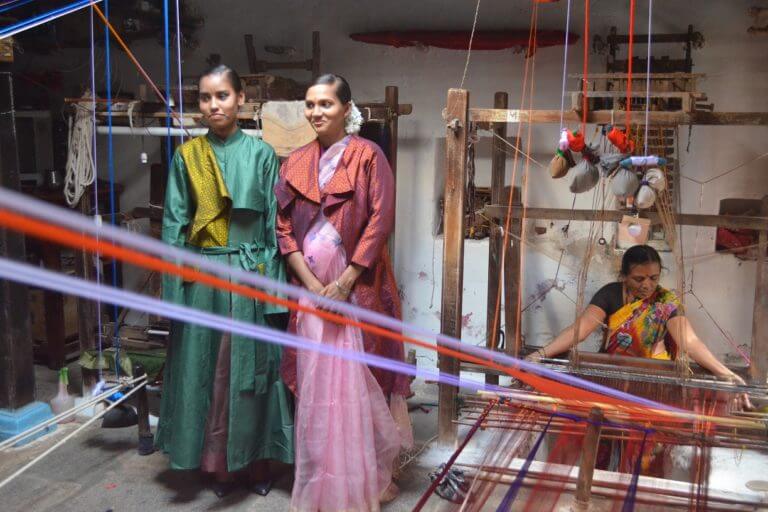
Khadi is a hand-spun, hand-woven natural fibre fabric produced on a charkha — a hand-driven spinning wheel that requires no electricity, no machinery, and no factory. Raw cotton, silk, or wool is first cleaned and carded, then spun into yarn on the charkha, and finally woven into cloth on a handloom. Every metre of Khadi represents hours of skilled human effort, which is precisely what makes it irreplaceable.
The most common form is cotton Khadi — breathable, versatile, cool in summer and surprisingly warm in winter due to the uneven texture that traps air. Silk Khadi carries a natural lustre and is woven for sarees, dupattas, and occasion wear. Woollen Khadi comes from the hill regions of Himachal Pradesh, Uttarakhand, and Ladakh, where artisans spin local wool into warm shawls and blankets. A fourth variant, Khadi Polyvastra, blends Khadi yarn with polyester for greater durability in everyday garments — though purists prefer the all-natural variants.
Khadi and the Freedom Movement
Khadi’s modern identity was forged in the crucible of India’s independence struggle. When Mahatma Gandhi launched the Swadeshi movement, he chose the charkha as its symbol — not as a sentimental gesture, but as a precise economic intervention. Colonial India was exporting raw cotton to British mills and reimporting finished cloth at a markup that impoverished Indian weavers and drained the country’s wealth. Gandhi’s answer was radical in its simplicity: spin your own cloth, wear your own cloth, and the economic chain that sustains colonial dependency breaks.
The charkha appeared on the Indian National Congress flag. Spinning became a daily practice for freedom fighters across every class. Khadi became a uniform of dignity, self-reliance, and resistance. Today, that political heritage is embedded in every thread — when you wear Khadi, you are wearing a piece of a movement that believed economic justice and environmental responsibility were inseparable.
Why Khadi is the Most Sustainable Fabric You Can Wear
In a global fashion industry responsible for 10% of carbon emissions, 20% of industrial water pollution, and billions of garments in landfills annually, Khadi offers an almost complete rebuttal to every environmental criticism of textile production.
- Zero electricity in production. The entire spinning and weaving process is human-powered. No electric looms, no industrial machines, no factory emissions — the carbon footprint of Khadi production is among the lowest of any textile on earth.
- Natural, biodegradable fibres. Cotton, silk, and wool Khadi are fully biodegradable at end of life. They do not shed microplastics into waterways as synthetics do, and they return to the earth without leaving a toxic legacy.
- No synthetic chemicals in traditional production. Traditionally spun and woven Khadi does not require the pesticide-heavy cultivation associated with conventional cotton. Organic Khadi, increasingly available through certified producers, goes further: no synthetic inputs at any stage.
- Durability as a sustainability principle. Khadi’s hand-woven structure makes it extraordinarily durable. A well-kept Khadi kurta or saree can last decades. This directly counters the slow fashion movement’s primary concern — the throwaway culture of fast fashion.
- Water efficiency. Hand-spinning and handloom weaving consume a fraction of the water used in mechanised textile production, which can use thousands of litres per kilogram of fabric.
- Social sustainability. Over 4 million artisans in India depend on Khadi and village industries for their livelihoods. Every Khadi purchase directly supports rural employment, women’s economic participation, and the preservation of generational craft knowledge.

Khadi in Modern Fashion: The Revival
For decades after Independence, Khadi carried a reputation as the fabric of politicians and the elderly. That perception has shifted dramatically. The Khadi and Village Industries Commission (KVIC) — the government body that regulates and promotes Khadi production — recorded sales exceeding ₹1.5 lakh crore in recent years, driven by a younger, urban consumer base that sees Khadi as both identity and statement.
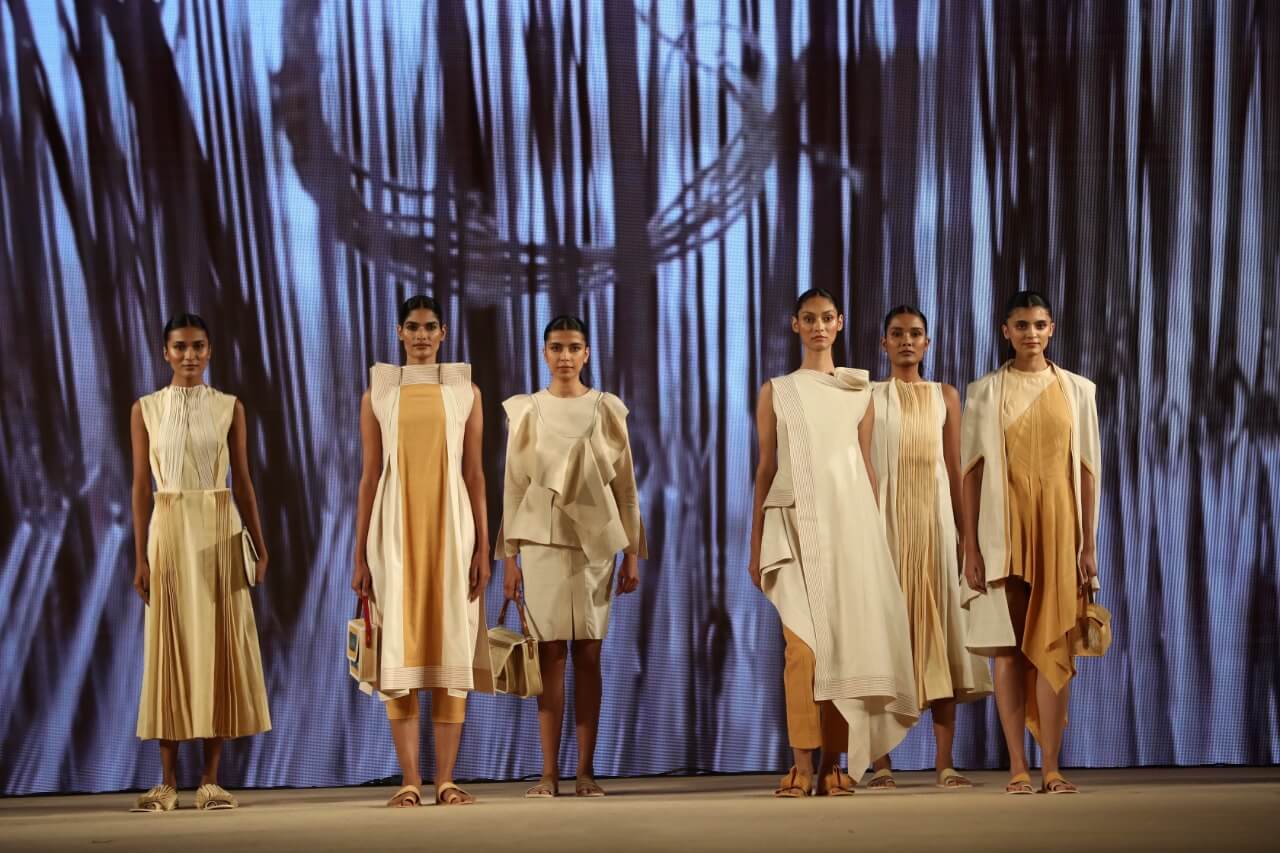
Indian fashion designers have rediscovered Khadi as a premium fabric. Annual Khadi Fashion Shows organised by KVIC bring leading designers to showcase collections that use Khadi as their primary textile. International fashion houses have taken notice too — the rough linen-like texture, natural irregularities, and earthy palette of Khadi translate beautifully into the global appetite for artisanal, slow-fashion aesthetics.
The ‘Vocal for Local’ movement accelerated post-COVID, bringing Khadi to a new generation of conscious consumers who want to know the provenance of what they wear. Khadi export figures have grown year-on-year as demand from the US, Europe, and Japan reflects a global market ready to pay a premium for fabric with a verifiable human and environmental story.
The Economic and Social Impact of Choosing Khadi
Choosing Khadi is not merely a personal fashion choice — it is a vote cast in a larger economic system. When you buy a Khadi kurta or saree from a KVIC outlet, a cooperative, or a verified artisan brand, the money flows directly to weavers and spinners — most of them women in rural India — rather than to fast-fashion supply chains dominated by extractive middlemen and offshore manufacturing. The KVIC model ensures that artisans receive a fair wage and that profits are reinvested in training, infrastructure, and community development.
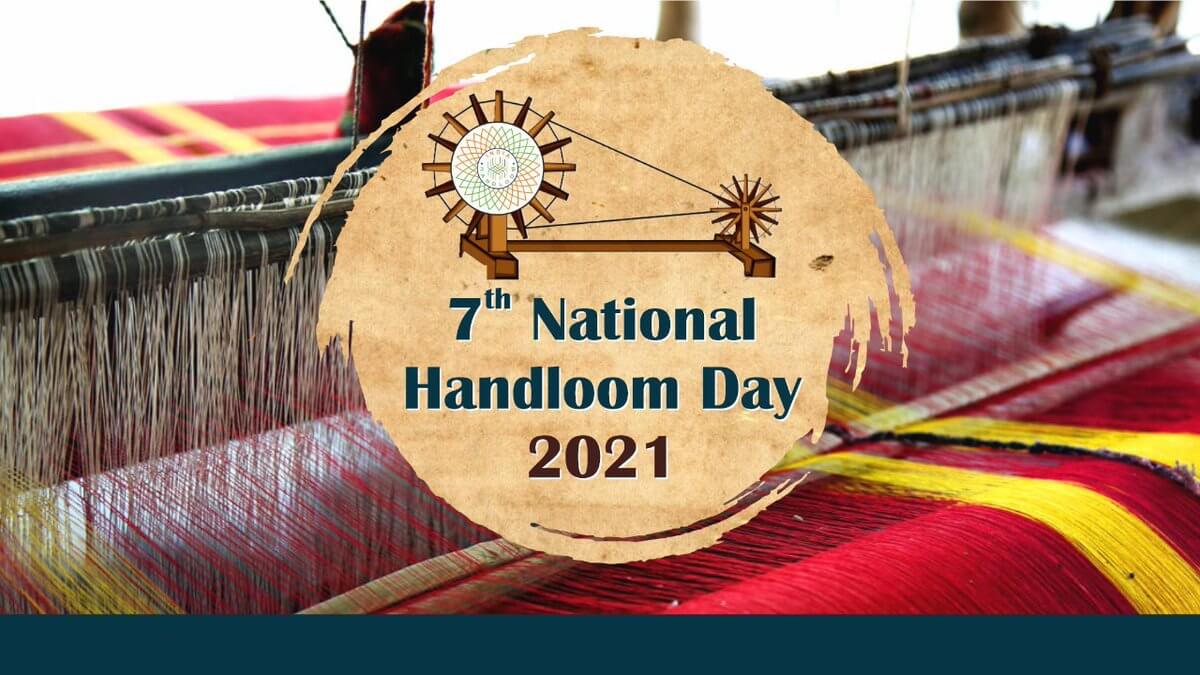
National Handloom Day (celebrated on 7th August) and Khadi Utsav events across India have become platforms for this story — not just celebrations of craft, but arguments for an economy where production is local, labour is dignified, and consumption is intentional. In the framework of sustainable fabrics, Khadi is uniquely complete: environmentally responsible, socially equitable, and culturally rooted.
How to Care for Khadi
Khadi is durable but benefits from mindful care to retain its texture and longevity:
- Hand wash in cold or lukewarm water with mild detergent, or machine wash on a gentle/delicate cycle.
- Do not wring or twist; gently press out water and dry flat or on a hanger in shade.
- Iron on medium heat while slightly damp for best results. Khadi’s natural creases are part of its character — over-ironing flattens the texture.
- Store folded (not on hangers for heavy garments) to avoid distortion.
- The fabric softens and improves with every wash — a good Khadi garment genuinely gets better over time.
Wearing Khadi is a Choice That Counts
In a world overwhelmed by disposable fashion, Khadi is a quiet but powerful alternative. It asks more of the wearer — a willingness to embrace natural texture over synthetic sheen, and to value the story behind the fabric over the speed of its production. In return, it offers something no fast-fashion garment can: the knowledge that the cloth on your back supported a weaver’s livelihood, left no microplastics in a river, and carries forward a craft tradition that has survived centuries. That is not nostalgia. That is the future of sustainable fashion.
Khadi Products
Explore Khadi products available to buy — from everyday essentials to handcrafted clothing: