
Global shipping carries roughly 80% of world trade by volume, and it also happens to be one of the hardest sectors on the planet to decarbonise — ships run for decades, refuelling infrastructure is expensive and slow to build, and switching an entire vessel’s fuel system isn’t something you do overnight in a dry dock. On 3 September 2026, India’s Ports, Shipping and Waterways Minister Sarbananda Sonowal visited TERI’s Gurugram campus to review where the country’s answer to that problem currently stands — and the picture that emerged is one of a maritime decarbonisation push moving from policy paper to actual port-level construction.
The Shift From Announcement to Infrastructure
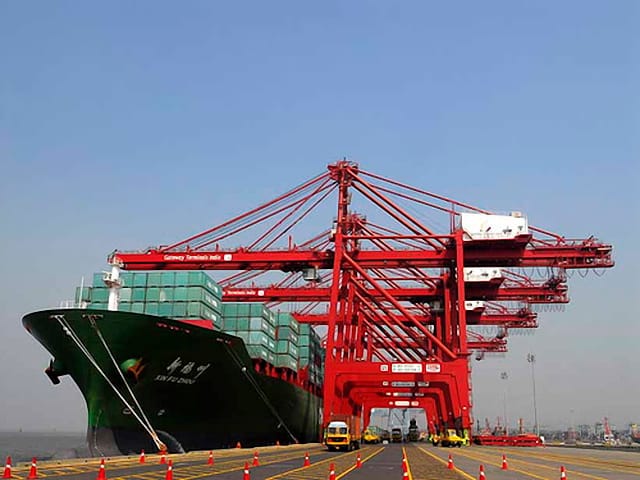
It’s worth being clear about what makes this update different from the usual green-shipping press release. India’s Harit Sagar (Green Port) Guidelines, first issued in 2023, set an ambitious mandate: every major Indian port must establish green ammonia bunkering and refuelling facilities by 2035. That’s the kind of long-horizon policy target that’s easy to announce and much harder to actually build toward — which is exactly why this update matters. Three major ports — the Deendayal Port Authority, Paradip Port Authority, and V.O. Chidambaranar Port Authority — presented concrete progress on Green Fuel Bunkering Hubs at the review, detailing specific infrastructure steps rather than aspirational targets.
Deendayal Port, for instance, has already commissioned a 1-megawatt green hydrogen plant and built a 3.5 million-tonnes-per-annum jetty compatible with green ammonia handling — genuinely operational infrastructure, not a plan on paper. V.O. Chidambaranar Port became the first Indian port to actually produce green hydrogen, running a 10 Nm³/hour pilot project and nearing completion on two 750-cubic-metre green methanol storage facilities. Separately, Kamarajar Port reported that its coal terminals are now equipped with shore power facilities — letting ships draw electricity from the local grid while berthed, instead of running diesel generators to keep systems powered during loading and unloading, a change that cuts both emissions and underwater noise pollution at port.
Why “Green Shipping Corridors” Is the Right Framing
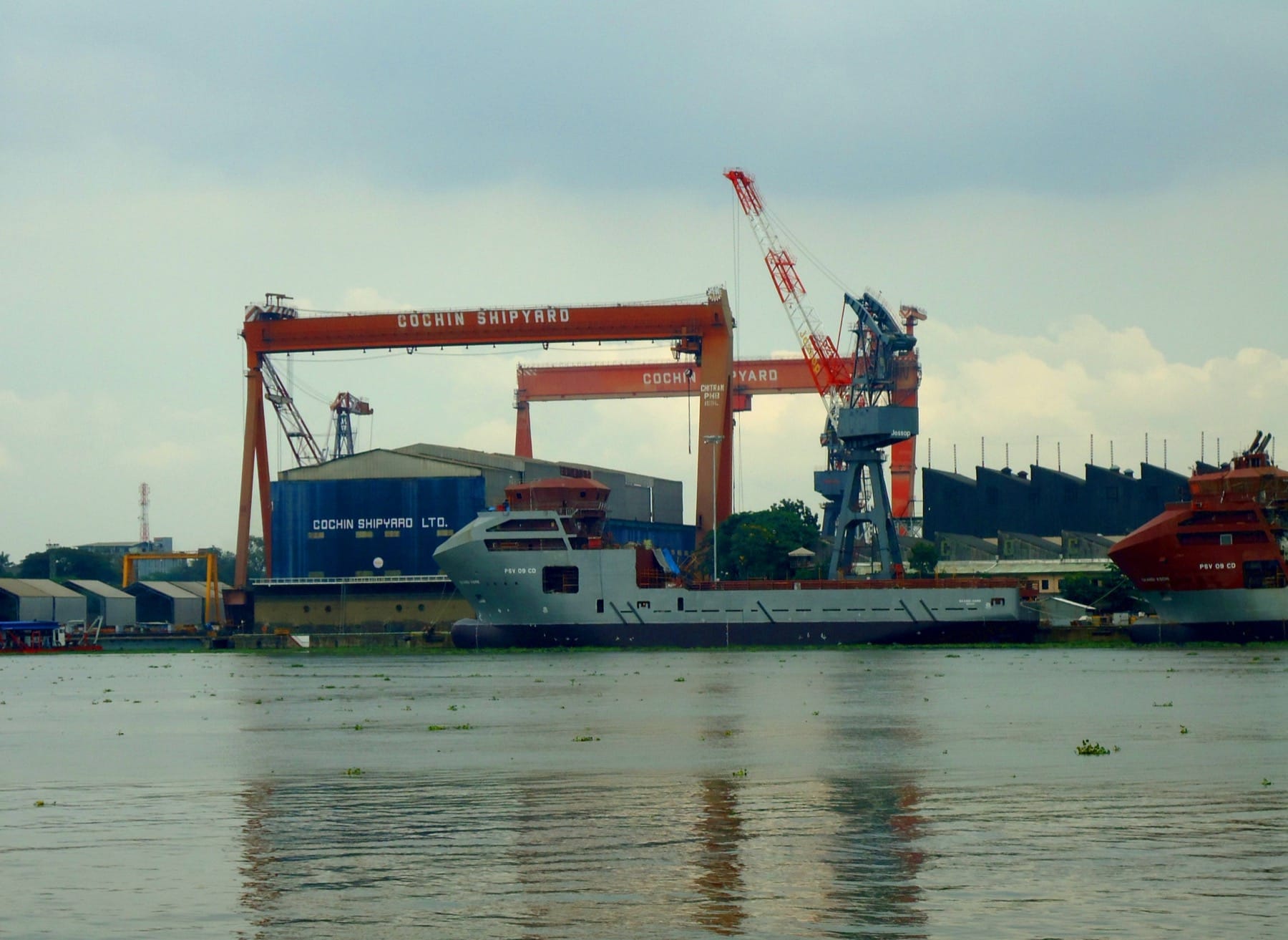
The term “green shipping corridor” — a specific trade route where ports at both ends, plus the ships travelling between them, are equipped to run on low- or zero-emission fuel — matters because it captures something ship decarbonisation genuinely requires: coordination across the entire route, not just a single port going green in isolation. A ship that can bunker green ammonia at an Indian port but has nowhere to refuel with the same fuel at its destination isn’t a commercially viable proposition, no matter how green the origin port’s infrastructure looks.
That’s the specific gap the Rocky Mountain Institute (RMI) — an independent energy research organisation involved in this review — has been working on with Indian stakeholders: developing the low- and zero-emission corridor concept into something ports and shipping lines can actually plan investment around, rather than a purely domestic infrastructure build-out that assumes the rest of the world will eventually catch up.
India’s geographic position gives it a genuine structural advantage here. Sitting on the East-West maritime trade route between Europe, the Middle East, and East Asia, India has leverage to negotiate corridor partnerships with trading partners on both sides — and the country’s cost advantage in producing green hydrogen and ammonia domestically (driven by abundant, increasingly cheap solar and wind capacity) makes it a plausible fuel-supply hub for other countries’ shipping fleets, not just its own.
The Fuel Question: Why Ammonia and Hydrogen
Conventional marine fuel — heavy fuel oil, mostly — is cheap and energy-dense, which is precisely why shipping has been slow to move away from it. Green hydrogen and green ammonia (ammonia produced using renewable-powered hydrogen rather than fossil natural gas) are the two fuels currently seen as the most viable large-scale alternatives for ocean-going vessels, because unlike battery-electric propulsion, they can carry enough energy density for long transoceanic voyages without impractically large fuel tanks eating into cargo space.
Green ammonia in particular has become the leading contender for large container and bulk vessels specifically because it can be produced, stored, and transported using infrastructure that’s a closer cousin to existing fossil-fuel bunkering systems than hydrogen’s cryogenic storage requirements. That’s part of why India’s Green Port Guidelines specifically target ammonia bunkering as the 2035 milestone, and why companies like ReNew (building a 300,000-tonnes-per-annum green ammonia facility in Andhra Pradesh) and AM Green (a 1.5 million-tonnes-per-annum plant under construction in Kakinada) are already scaling up domestic green ammonia production capacity well ahead of the shipping demand that’s supposed to eventually consume it.
The Honest Gap Between Pilot and Scale
It’s worth being clear-eyed about where this actually stands. A 1-megawatt hydrogen plant and a 10 Nm³/hour pilot project are demonstration-scale infrastructure — genuinely important as proof of concept and as the foundation for larger builds, but many orders of magnitude smaller than what would be needed to bunker even a modest fraction of the vessel traffic passing through India’s major ports each year. The 2035 mandate for ammonia bunkering at every major port is less than a decade away, and the infrastructure gap between today’s pilot projects and that mandate’s full scale is still substantial.
That gap is precisely why sustained ministerial attention — visits like this one, reviewing specific port-level progress rather than announcing new policy — matters more than it might appear. Green shipping corridors don’t get built through a single announcement; they get built through years of incremental infrastructure investment across dozens of individual ports, backed by consistent policy signalling that gives shipping lines and fuel producers enough confidence to invest years ahead of when the mandate actually bites.
Why This Belongs in the Broader Sustainable Transport Story
Shipping rarely gets the same public attention as sustainable transport conversations focused on electric cars and public transit, largely because most people never see a cargo ship up close — but it’s responsible for roughly 3% of global greenhouse gas emissions, a share comparable to aviation, and one that’s expected to grow as global trade volumes keep rising. A country that becomes a genuine hub for green marine fuel production and bunkering — rather than simply cleaning up its own domestic shipping fleet — has a chance to influence decarbonisation well beyond its own coastline, by making cleaner fuel the more convenient and cost-competitive choice for ships passing through some of the world’s busiest trade routes.
Whether India actually becomes that hub, as Minister Sonowal’s own framing suggests it’s aiming to, will depend on whether pilot-scale projects like the ones reviewed at Gurugram scale up fast enough to matter before 2035 — but for a sector this hard to decarbonise, having ports already producing green hydrogen and running shore power today is a meaningfully further starting point than most countries can currently claim. It complements India’s other renewable-energy pushes covered on this site, from the growth of solar power capacity to progress on India’s wider EV ecosystem.
Source: Press Information Bureau, Government of India — Sarbananda Sonowal Charts Course for Zero-Emission Shipping Corridors, Pushes Ports to Fast-Track Green Fuel Readiness