
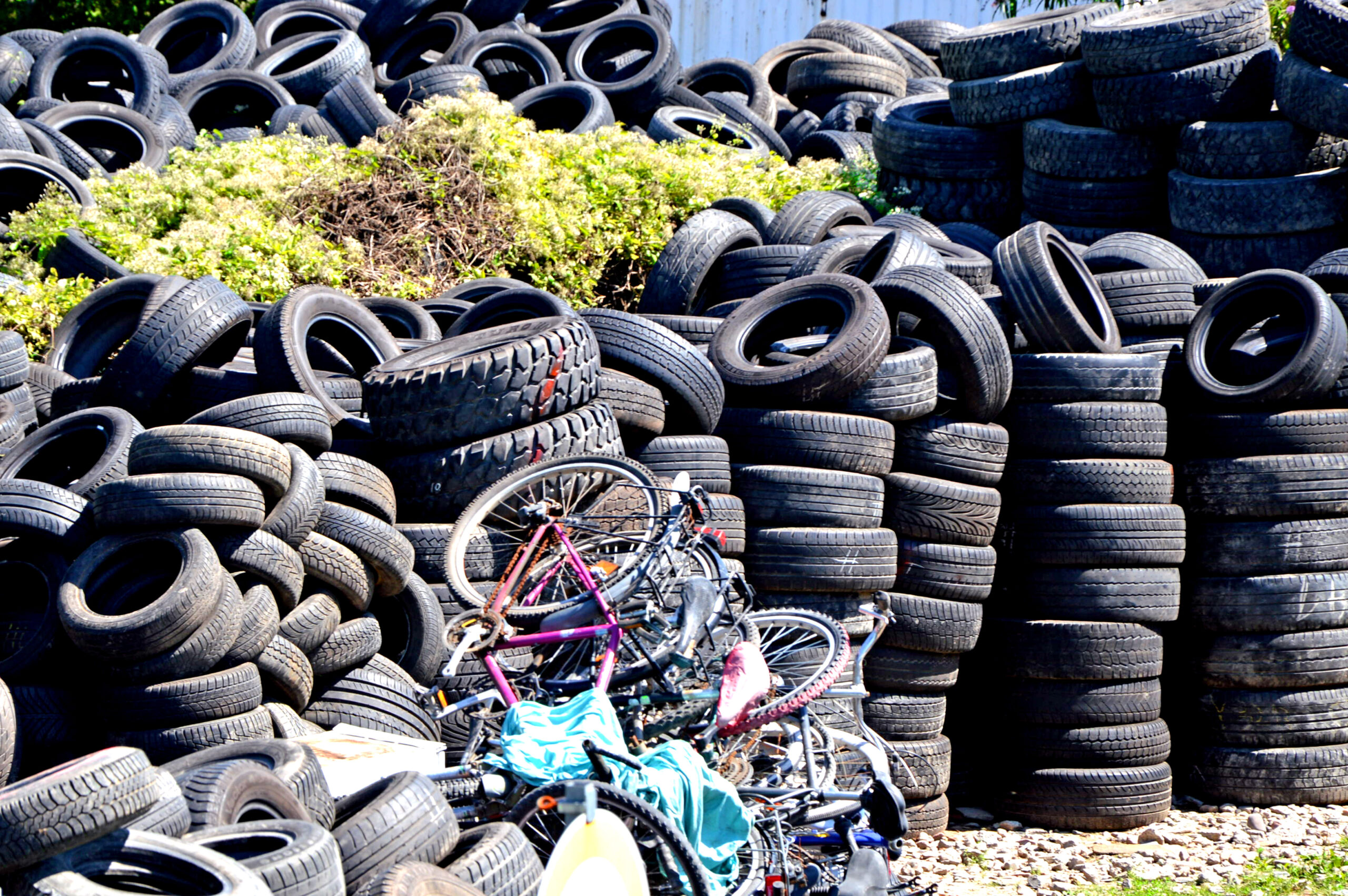
India throws away somewhere between 1.5 and 2 million tonnes of tyres every year. Most of that volume still moves through an informal recycling economy. Small operators burn tyres in the open, or run crude pyrolysis units. Both release toxic fumes and offer little in the way of traceability or environmental safeguards. It’s one of the country’s less-discussed waste streams, but a genuinely difficult one. Tyres are bulky, don’t biodegrade, and are expensive to transport and process properly.
Against that backdrop, a press release from the Ministry of Social Justice & Empowerment this week highlighted a different kind of tyre-recycling story. This one is built around formal, industrial-scale processing rather than informal burning.
Swarnalatha Nethipudi is a first-generation entrepreneur from a Scheduled Caste background. She founded Swarnakaruna Princeton Rubber Industries Private Limited in Visakhapatnam, Andhra Pradesh. The company runs an automated rubber recycling plant that converts scrap tyres into crumb rubber powder. It’s a granulated material, graded from 10 mesh to 40 mesh in fineness, with an installed capacity of around 6,000 metric tonnes a year.
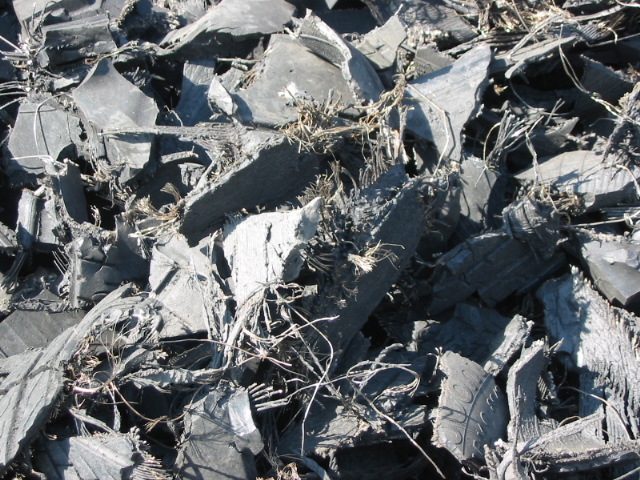
Crumb rubber has more genuinely useful downstream applications than most people realise. It’s used as a modifier in bituminised roads, where it improves durability and heat resistance. India has been experimenting more seriously with this road-building technique in recent years, as a way to absorb scrap tyre volumes at scale. Crumb rubber also finds its way into running tracks, playground flooring, and industrial rubber products, displacing demand for virgin rubber.
The plant’s growth was backed by the Venture Capital Fund for Scheduled Castes (VCF-SC). It extended ₹5 crore in financial assistance in 2023, through a mix of equity and optionally convertible debentures. That early institutional backing was enough to help the company secure a second round of funding from SIDBI, the Small Industries Development Bank of India. It gave the company the capital to scale up processing capacity.
Why the policy backdrop matters here
Formal recyclers like this one operate inside a regulatory framework that has only existed since 2022. The Extended Producer Responsibility (EPR) rules for waste tyres require tyre manufacturers and importers to meet recycling targets through a tradeable digital-credit system. In principle, EPR credits give organised recyclers a genuine revenue stream on top of selling the crumb rubber itself. These credits have traded in the ₹15,000–35,000-per-tonne range in recent years, often accounting for 20-40% of an organised plant’s total income.
In practice, industry analysts have flagged that enforcement of these EPR rules is still uneven. A large share of scrap tyres continues to leak into unstructured, informal channels. Those channels operate outside any credit system or environmental oversight. That’s precisely why formal, well-capitalised operations matter disproportionately here. Every tonne processed through a licensed plant, with proper occupational and environmental safeguards, is a tonne that isn’t being burned in the open on the outskirts of a city.
A story that’s really about who gets access to capital
What makes this particular release notable isn’t the recycling technology itself. Automated tyre shredding and granulation is well-established globally. What matters more is who was able to access the capital needed to build it. VCF-SC exists specifically because Scheduled Caste entrepreneurs have historically had a harder time securing early-stage equity financing from conventional venture capital, which tends to concentrate around already well-networked founders.
A ₹5 crore equity infusion helped a first-generation entrepreneur build a 6,000-tonne-per-year processing plant. She then leveraged that into further institutional funding from SIDBI. It’s as much a story about financial inclusion widening India’s industrial base as it is about recycling. It places Nethipudi among a growing list of heroes of sustainability building formal, well-capitalised businesses out of India’s waste streams.
For a circular economy to actually scale nationally, India needs many more plants like this one. They need to be distributed across its tyre-generating regions, not concentrated in a few larger facilities. Stories like Swarnakaruna Princeton Rubber Industries are a useful reminder of that gap. Closing it is as much about who can access growth capital as it is about the underlying technology. View their full profile on the Prakati Green Directory.
Source: Press Information Bureau, Government of India — Transforming Waste into Wealth: How VCF-SC Enabled a Scheduled Caste Woman Entrepreneur to Build a Sustainable Rubber Recycling Enterprise