
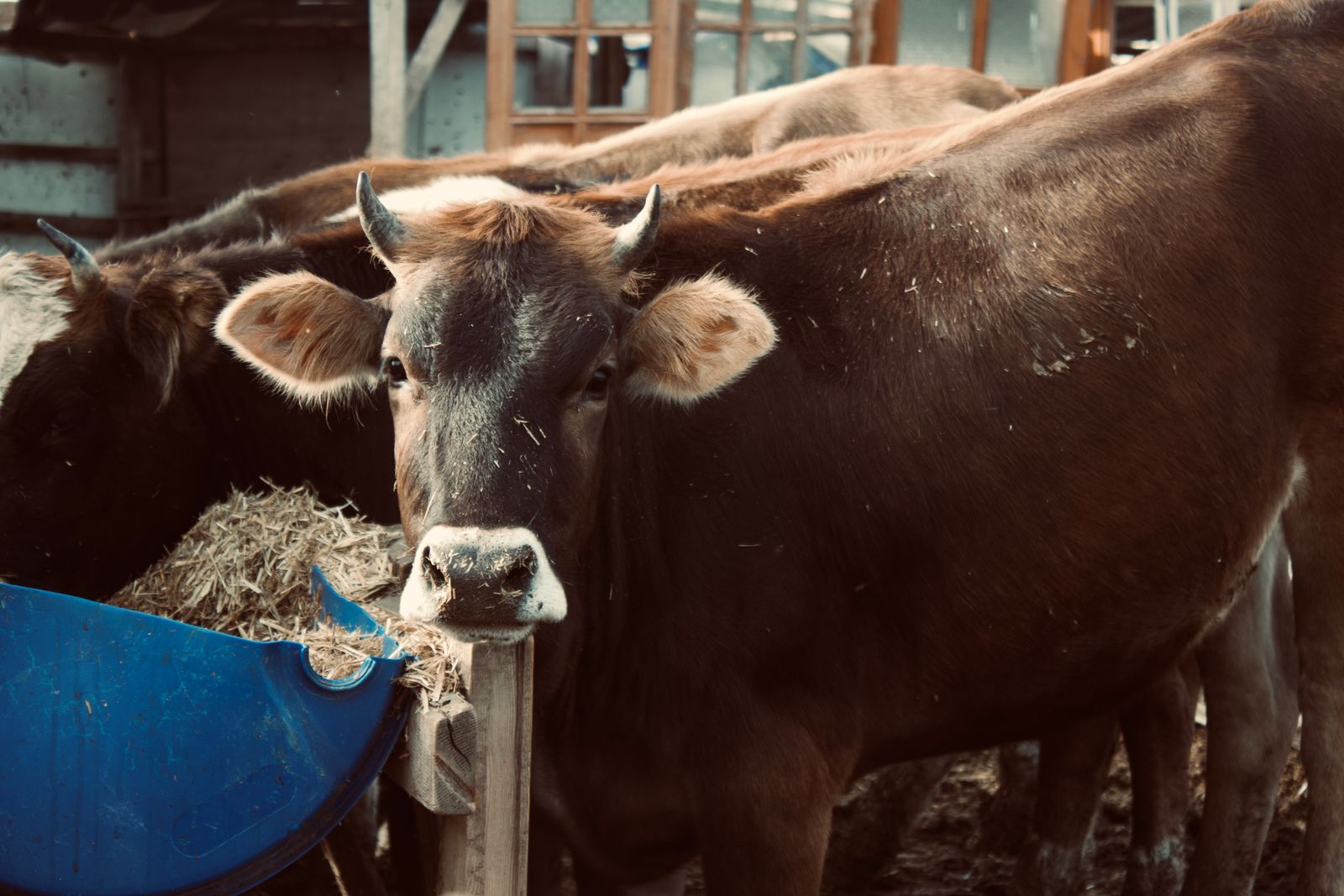
For years, one of the quieter contributors to the Yamuna’s pollution problem has had nothing to do with factories or sewage pipes — it’s come from the roughly 1.25 lakh cattle housed in dairies and gaushalas along the river’s banks in Delhi. Untreated dung and dairy wash-water routinely find their way into stormwater drains that empty straight into the river, adding to a load the Yamuna is already struggling to carry.
This week, Delhi took a concrete step toward closing that gap. The Municipal Corporation of Delhi (MCD) and the National Dairy Development Board (NDDB) signed a Memorandum of Understanding to set up a network of Compressed Bio-Gas (CBG) plants across the city, designed specifically to intercept cattle dung before it reaches the river and convert it into fuel and fertiliser instead.
Under the agreement, dung from dairies and gaushalas will be collected and transported directly to dedicated processing plants rather than being allowed to wash into drains. The first of these — a facility at Goyla Dairy — is slated to begin operations by mid-September, designed to process around 200 tonnes of cattle dung a day alongside municipal solid waste. Two more sites, at Nangli and Ghazipur, are also part of the plan.
What’s Actually Being Built
The economics are meant to make the switch worthwhile for the people who’d otherwise have little incentive to change how they dispose of waste: livestock farmers will be paid roughly ₹1 per kilogram of dung supplied to the plants, turning what was previously a disposal problem into a modest new income stream. Officials speaking at the signing said the government’s target is to eliminate untreated discharge into the Yamuna entirely by December 2028, alongside roughly 80 sewage and industrial-effluent treatment plants already under construction across the city.
CBG isn’t a new technology in India — it’s the same fuel behind the government’s SATAT scheme, launched in 2018 to build an ecosystem of biogas plants processing agricultural residue, municipal waste, and cattle dung into a purified, pipeline-quality gas that can substitute directly for CNG in vehicles and cooking, a key part of India’s push toward sustainable energy. Of all the feedstocks India could use for CBG, cattle dung has the single largest theoretical potential — an estimated 25 million tonnes of production capacity a year, more than agricultural residue, sewage sludge, or municipal solid waste individually.
Why Compressed Bio-Gas, Specifically
In practice, that potential has been slow to convert into working plants: as of mid-2025, only around 108 CBG plants had actually been commissioned nationally against a stated target of 5,000. What makes the Delhi announcement notable isn’t the technology itself, then, but the framing — this is one of the first times CBG has been positioned explicitly as river-cleaning infrastructure rather than purely an energy or waste management play, tying it directly to the decades-long, politically visible effort to rehabilitate the Yamuna. It builds on other recent river rejuvenation work by the National Mission for Clean Ganga, which has increasingly leaned on nature-based and source-diversion solutions rather than treatment plants alone.
The Bigger Picture
The byproduct question matters here too. CBG production leaves behind fermented organic manure (FOM) — the same kind of input organic and natural farming systems depend on but often struggle to source at scale. If the Delhi plants deliver on that front, it links three separate sustainability goals through a single waste stream: cleaner urban water, distributed renewable fuel, and better soil health for farms practising organic farming in the region — all without asking anyone to change their diet, transport, or lifestyle. It’s a reminder that some of India’s most useful climate infrastructure won’t look like a solar farm or an EV charger — it’ll look like a dung collection route.
Delhi’s deadline — December 2028 — is an ambitious one for a river this large and this polluted, and past Yamuna clean-up promises in India have a mixed track record of meeting their own timelines. But diverting a defined, measurable waste stream at its source, and giving the people generating that waste a financial reason to cooperate, is a more tractable problem than most of what stands between the Yamuna and the “zero polluted water” goal officials have set for it.
Source: Press Information Bureau, Government of India — MCD and NDDB sign MoU for establishment of Compressed Bio-Gas plants in Delhi