
Tucked in the Sonitpur district of Assam, along the banks and wetlands where wild rice grows naturally in the landscape, is a site called Borjuli. As of this week, it has a new, formal status: Biodiversity Heritage Site, notified by the National Biodiversity Authority of India. It is the first such recognition for a wild rice habitat in the country — and the milestone arrived through a project that has been quietly doing the essential, unglamorous work of in-situ conservation since 2022.
The project, titled “In-situ Conservation and Management of Wild Rice (Oryza rufipogon) in Sonitpur District of Assam,” is funded by the National Rainfed Area Authority (NRAA) under the Ministry of Agriculture & Farmers Welfare, and implemented by ICAR–National Bureau of Plant Genetic Resources (ICAR-NBPGR) in collaboration with the Assam State Biodiversity Board. The Borjuli site’s formal heritage notification is its most concrete outcome so far — but the project’s significance runs deeper than the paperwork.
Why wild rice matters more than most people realise
Oryza rufipogon — Asian wild rice — is the wild relative of the cultivated rice varieties that feed more than half the world. It carries genetic traits that domesticated rice has lost over millennia of selective breeding: natural resistance to pests, tolerance for drought and flooding, adaptability to temperature extremes. These are precisely the traits that plant breeders need most urgently right now, as climate change pushes temperatures up and weather patterns increasingly off-script from what cultivated varieties were bred to handle.
Dr. Chandra Shekhar Kumar, CEO of NRAA, put it plainly: wild rice species are “an invaluable source of genes for developing climate-resilient, high-yielding and nutritionally superior rice varieties.” He also called for replicating similar conservation initiatives for other crop wild relatives across the country. That’s the broader vision: what Borjuli has established as a model for wild rice, India needs for dozens of other crops whose wild ancestors are under pressure from agricultural expansion, habitat loss, and climate itself.
In-situ conservation — and why it’s different from a seed bank
Most people think of genetic resource conservation as something that happens in freezers — seed banks and gene vaults. Those are essential, but they capture a snapshot in time. In-situ conservation means protecting wild plants in the living ecosystems where they evolved, allowing them to continue adapting to local conditions, interacting with pollinators, evolving resistance to local pathogens. A seed bank cannot do that. Borjuli’s designation as a Biodiversity Heritage Site means it will now receive formal legal protection against land conversion and habitat degradation, preserving not just the plants but the ecological context that makes them valuable.
The food security and climate connection
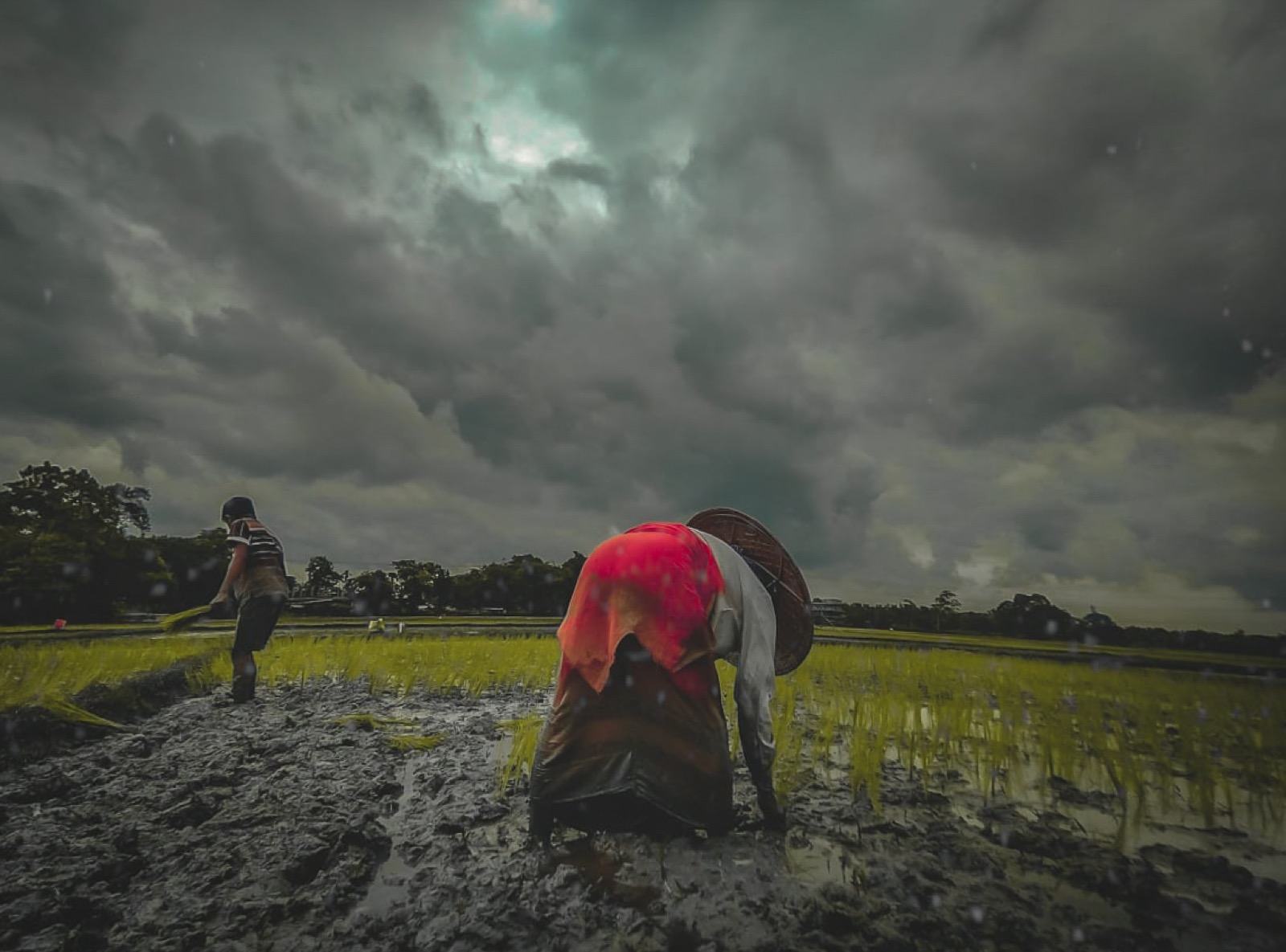
India’s rice production feeds hundreds of millions of people and forms the backbone of rural livelihoods across Assam, West Bengal, Odisha, Chhattisgarh, and the south. The varieties grown today were developed over decades from crosses that, in many cases, drew on wild rice germplasm. Future varieties — the ones that will need to perform under 2040 and 2050 climate conditions — will need that wild gene pool even more. Losing Oryza rufipogon populations to habitat destruction doesn’t just mean losing a plant. It means losing the raw material for sustainable farming that doesn’t yet exist but will need to.
Conservation efforts like this are also directly connected to India’s commitments under the Convention on Biological Diversity and the Kunming-Montreal Global Biodiversity Framework, which sets targets for protecting 30% of land and water areas by 2030 and ensuring genetic resources remain available for food and agriculture. The Borjuli notification is a small but real piece of that larger commitment — a single site formally protected, a model established, and an argument made in practice for the value of crop wild relative conservation in a country where biodiversity policy has historically been stronger in principle than in implementation.
Source: Press Information Bureau, Government of India (PRID 2280202)