
Green hydrogen gets most of the attention in India’s clean-energy conversation — the electrolysers, the export ambitions, the headline targets. But hydrogen on its own doesn’t grow food. The harder, less photogenic problem is what happens when you try to turn that hydrogen into something a farmer actually uses: fertiliser. This week, the Department of Fertilizers brought together NTPC, the Solar Energy Corporation of India (SECI), ammonia-technology suppliers, and major fertiliser manufacturers at a Pre-Expression of Interest meeting in Noida — the first real attempt to design a market, not just a technology, for Green Urea in India.
The distinction matters. Green ammonia — made by combining green hydrogen with nitrogen drawn from air — is now a reasonably well-understood process, with giga-scale projects already under construction globally. Green urea is a harder problem on top of that: it needs ammonia plus carbon dioxide, and that CO2 has to come from somewhere. India’s plan is to capture it from thermal power, cement, and steel plants — turning what is currently an emissions liability for those industries into a feedstock for sustainable farming.
Why the government is building a pricing mechanism, not just a subsidy
The meeting’s most concrete output wasn’t a target — it was a pricing structure designed to solve the actual problem holding green ammonia back: it currently costs noticeably more to produce than fossil-based “grey” ammonia. SECI has already floated tenders to buy green ammonia from producers and resell it to fertiliser companies at standard market-linked grey-ammonia prices, with the price gap absorbed elsewhere rather than passed to manufacturers or farmers. A similar mechanism is now being explored for green urea itself.
On the producer side, a tapering incentive scheme under the National Green Hydrogen Mission’s Green Ammonia track has set a 7.24 lakh tonne-per-year procurement target through a competitive e-reverse auction, with support running from a project’s construction phase through ten years of operation, locked in through binding agreements that give developers the kind of long-term price certainty needed to commit capital. The Ministry of New & Renewable Energy has allocated ₹19,744 crore toward the broader green-hydrogen infrastructure this depends on.
The proof of concept already exists
The technical anchor for all of this is a 150-tonne-per-day Green Urea pilot plant at Pudimadaka, Andhra Pradesh, built by NETRA, NTPC’s R&D arm, which integrates carbon capture with water electrolysis. It’s a modest facility next to India’s daily urea demand, but it isn’t standing alone — NTPC Green Energy is simultaneously building a much larger Green Hydrogen Hub at the same Pudimadaka site, with Prime Minister Modi laying the foundation stone in January 2025 for an eventual ₹1.85 lakh crore, 7-gigawatt renewable-energy-backed facility designed to produce green methanol, sustainable aviation fuel, and green urea at real commercial scale.
Why this matters beyond the chemistry
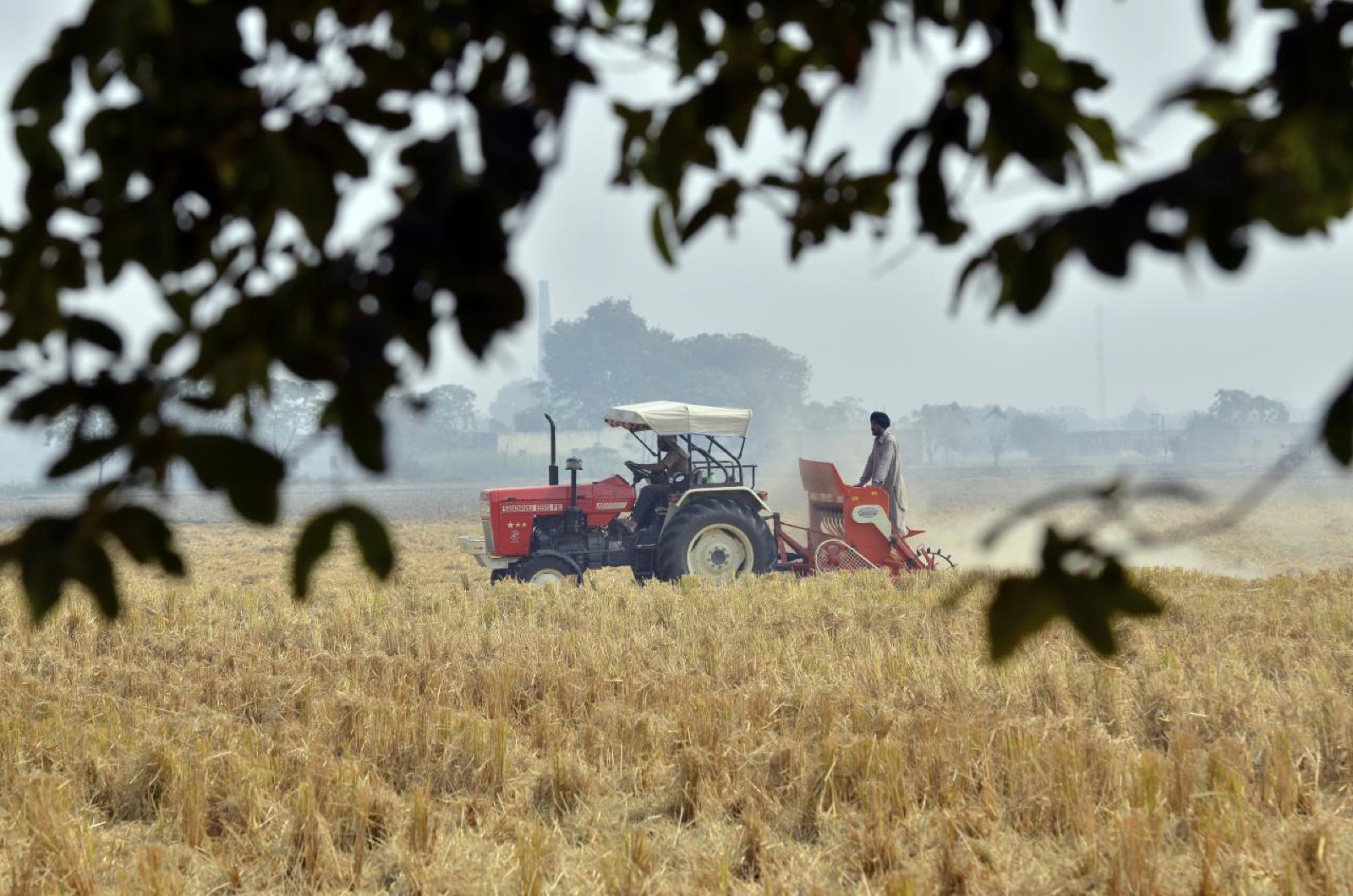
India imports roughly a crore tonnes of urea every year and spends well over ₹1 lakh crore annually subsidising domestic production to keep fertiliser affordable for farmers — a dependency that ties Indian agriculture to volatile international gas markets. Many of the plants producing that urea today are over three decades old. A credible path to net-zero green urea doesn’t just cut emissions from one of agriculture’s most carbon-intensive inputs — it’s also a hedge against the kind of import-price shocks that have repeatedly strained India’s fertiliser subsidy bill. That combination of climate logic and economic self-interest is usually what actually gets new industrial technology built at scale in India, and this week’s meeting in Noida was the government starting to put that machinery together.
Source: Press Information Bureau, Government of India (PRID 2278167)