
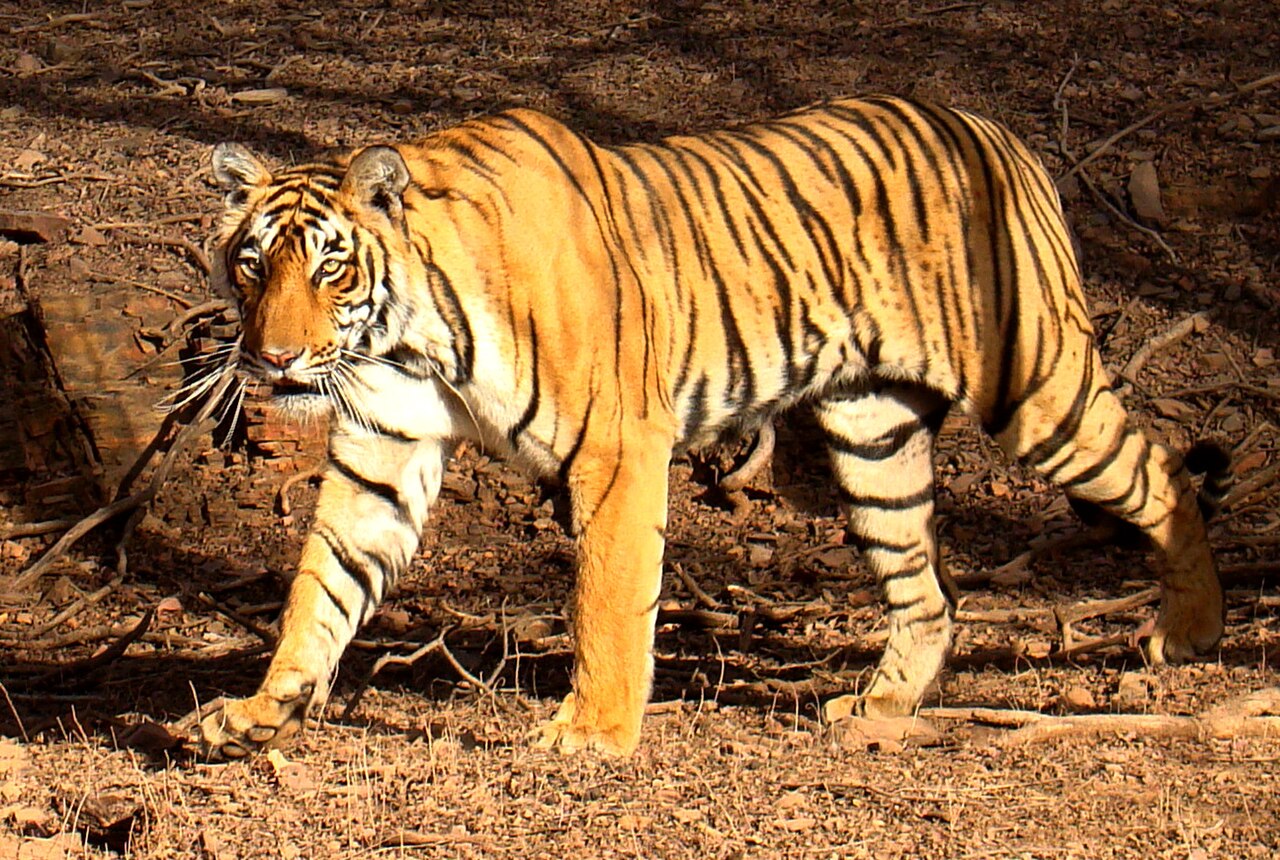
Between 2014 and 2024, over 6,000 people died in India as a result of encounters with wild animals. Elephants alone were responsible for nearly 3,000 of those deaths. Across the same period, hundreds of thousands of rural households faced repeated crop destruction from elephants, wild boars, nilgai, and other species — losses that translate directly into food insecurity and debt for families already living on thin margins.
Human-wildlife conflict is not a new problem in India. But as tiger and elephant populations recover — a genuine conservation success — the geographic overlap between wildlife and human communities is increasing. More animals, in a landscape where habitat fragmentation pushes them closer to fields and villages, means more encounters. The question of how India manages that collision is one of the defining challenges of its conservation future.
On 10 July 2026, Union Environment Minister Bhupender Yadav inaugurated the Centre of Excellence (CoE) on Human-Wildlife Conflict at the Wildlife Institute of India–Sálim Ali Centre for Ornithology and Natural History (WII-SACON) campus in Coimbatore, and launched the National Human-Wildlife Conflict Portal — the first unified digital platform for conflict data management and decision support across the country.
What the Centre of Excellence Is Designed to Do
The CoE is not an emergency response unit. It is a long-term institutional investment in the research and knowledge infrastructure that India currently lacks for evidence-based conflict management. Its mandate, as described at the inauguration, covers five functions: research and innovation, policy support, capacity building for forest department personnel, dissemination of best practices, and — critically — the development of species-specific and area-specific strategies.
The species-specific focus matters because the dynamics of human-elephant conflict in the forests of Jharkhand are very different from human-leopard conflict in the villages bordering Maharashtra’s forests, which are in turn different from human-tiger conflict in the Sundarbans. Solutions that work for one situation may be useless or even counterproductive for another. India’s forest departments have historically lacked the institutional knowledge infrastructure to codify what works in different contexts and share it systematically. The CoE is intended to fill that gap.
The minister was specific about priority species: tigers outside tiger reserves, leopards, and elephants — the three animals responsible for the overwhelming majority of both human casualties and compensation claims. Managing tigers within reserve boundaries is a problem India has become relatively good at. Managing tigers in the buffer zones, degraded forests, and agricultural landscapes that surround those reserves is a much harder, less studied challenge.
The National Portal: Data First
Alongside the CoE, Minister Yadav launched the National Human-Wildlife Conflict Portal — a digital platform designed to standardise how conflict incidents are recorded, reported, and shared across state forest departments. Currently, conflict data is scattered across state-level systems (where it exists at all), making it difficult to identify spatial patterns, evaluate which interventions reduce incidents, or even accurately count how many people and animals are affected nationally.
The portal’s design — built around data management, knowledge sharing, and decision support — signals an intent to make conflict management more evidence-driven. If state forest departments use it consistently and the data becomes accessible to researchers, it could fundamentally change the quality of analysis available for conflict policy in India.
A companion publication, “Current Status of Human-Wildlife Conflict in India: An Overview,” was also released at the event — the first in what is described as a series of periodic assessments. A credible, regularly updated national picture of conflict trends is itself a significant contribution; India has not had one before.
Coexistence Is the Goal — But What Does That Actually Require?
Minister Yadav’s framing at the inauguration — “coexistence and harmony, instead of conflict, should be the mantra of ecological sustainability” — is the right aspiration. But coexistence is not a natural state in landscapes where wildlife and farming communities compete for the same space. It requires active management: compensation systems that actually pay quickly enough to matter, early warning systems that give communities time to protect crops and themselves, physical deterrents that work at scale without harming animals, and community engagement that builds tolerance rather than resentment toward wildlife.
The national workshop that followed the inauguration, bringing together forest managers, researchers, technology experts, and policy practitioners, produced recommendations across these areas — but the harder work is translating those recommendations into state-level implementation. India’s forest departments are stretched, and the communities most affected by conflict are often the least politically powerful.
The Centre of Excellence and the portal represent an important upgrade in India’s institutional capacity for conflict management. They are necessary but not sufficient. The test will be whether the research they generate reaches forest department personnel on the ground quickly enough to change outcomes for the families in Wayanad, Jharkhand, or the Brahmaputra valley who wake up to find their fields destroyed or their neighbours injured.
India’s environment sustainability ambitions — which include maintaining some of the world’s largest wild tiger and elephant populations — cannot be realised without the goodwill of the communities that live alongside those animals. That goodwill is earned through effective conflict management, not just conservation law. The CoE’s success will ultimately be measured not by publications or portal registrations, but by whether the number of families harmed by wildlife goes down.
Stay updated on India’s conservation efforts through our India sustainability news.
Source: Press Information Bureau, Government of India. Original release (PRID 2283188), 10 July 2026.