
Hydrogen has been called the “Swiss Army knife” of clean energy — useful for everything from steel-making to long-haul transport to grid storage — but only if it can be produced without emitting the very carbon it’s meant to help eliminate. Most of the hydrogen made in the world today, often called “grey hydrogen,” is produced from natural gas and comes with a substantial carbon footprint of its own. The much-discussed alternative, “green hydrogen,” uses renewable electricity to split water via electrolysis — but it’s energy-intensive and still expensive at scale.
India’s Department of Atomic Energy has now opened a third path. At the Indira Gandhi Centre for Atomic Research (IGCAR) in Kalpakkam, Tamil Nadu, the DAE has commissioned what it describes as the world’s first hydrogen production facility based on the copper-chlorine (Cu-Cl) thermochemical cycle, powered entirely by nuclear process heat from the Fast Breeder Test Reactor.
What makes this different
Instead of using electricity to split water molecules (the electrolysis approach), the Cu-Cl thermochemical cycle uses heat — in this case, heat that would otherwise be a byproduct of nuclear power generation — to drive a chemical cycle that produces hydrogen directly. It’s a process developed indigenously by the Bhabha Atomic Research Centre (BARC) in Mumbai, in collaboration with IGCAR, and the version now operating at Kalpakkam is the first in the world to actually couple this specific cycle to a working nuclear reactor’s heat output.
The appeal of the Cu-Cl cycle, according to DAE scientists, lies in its comparatively low operating temperatures and high thermodynamic efficiency relative to other thermochemical hydrogen production routes — many of which require extreme heat that’s difficult and costly to sustain. By tapping into heat that a nuclear reactor generates as a matter of course, the process sidesteps both the fossil fuel dependence of grey hydrogen and much of the energy overhead of electrolysis-based green hydrogen.
Why nuclear heat, and why now
India’s hydrogen ambitions are already substantial: the National Green Hydrogen Mission targets at least 5 million tonnes of green hydrogen production capacity by 2030, alongside roughly 125 GW of associated renewable capacity and an estimated 50 million tonnes of annual CO2 emissions averted once the Mission reaches scale. Most of that buildout is, understandably, focused on solar- and wind-powered electrolysis.
But nuclear-assisted hydrogen production offers something renewables-based electrolysis structurally can’t: a heat source that runs continuously, independent of weather or daylight. If the Cu-Cl process can be scaled from this demonstrator facility to commercial-sized plants, it could become a steady, baseload complement to the intermittent renewable-hydrogen pathway — particularly valuable for industries that need a reliable hydrogen supply around the clock, like steel and ammonia production.
DAE Secretary Dr. Ajit Kumar Mohanty framed the milestone as part of a broader strategic direction: pairing nuclear energy’s ability to deliver reliable, carbon-free power and high-temperature heat with emerging clean technologies, as a pathway toward a genuinely sustainable energy future.
What happens next
For now, the Kalpakkam facility is a technology demonstrator, not a commercial plant — its job is to prove the science works outside a laboratory and generate the operational data needed to refine and eventually scale the process. That’s a meaningful distinction worth keeping in mind; breakthroughs like this typically take years to move from demonstrator to deployment. But as a proof of concept, it’s a notable one: it shows India contributing original, indigenously developed science to one of the hardest open problems in the global clean energy transition — how to make hydrogen at scale without quietly reintroducing the emissions it’s supposed to eliminate.
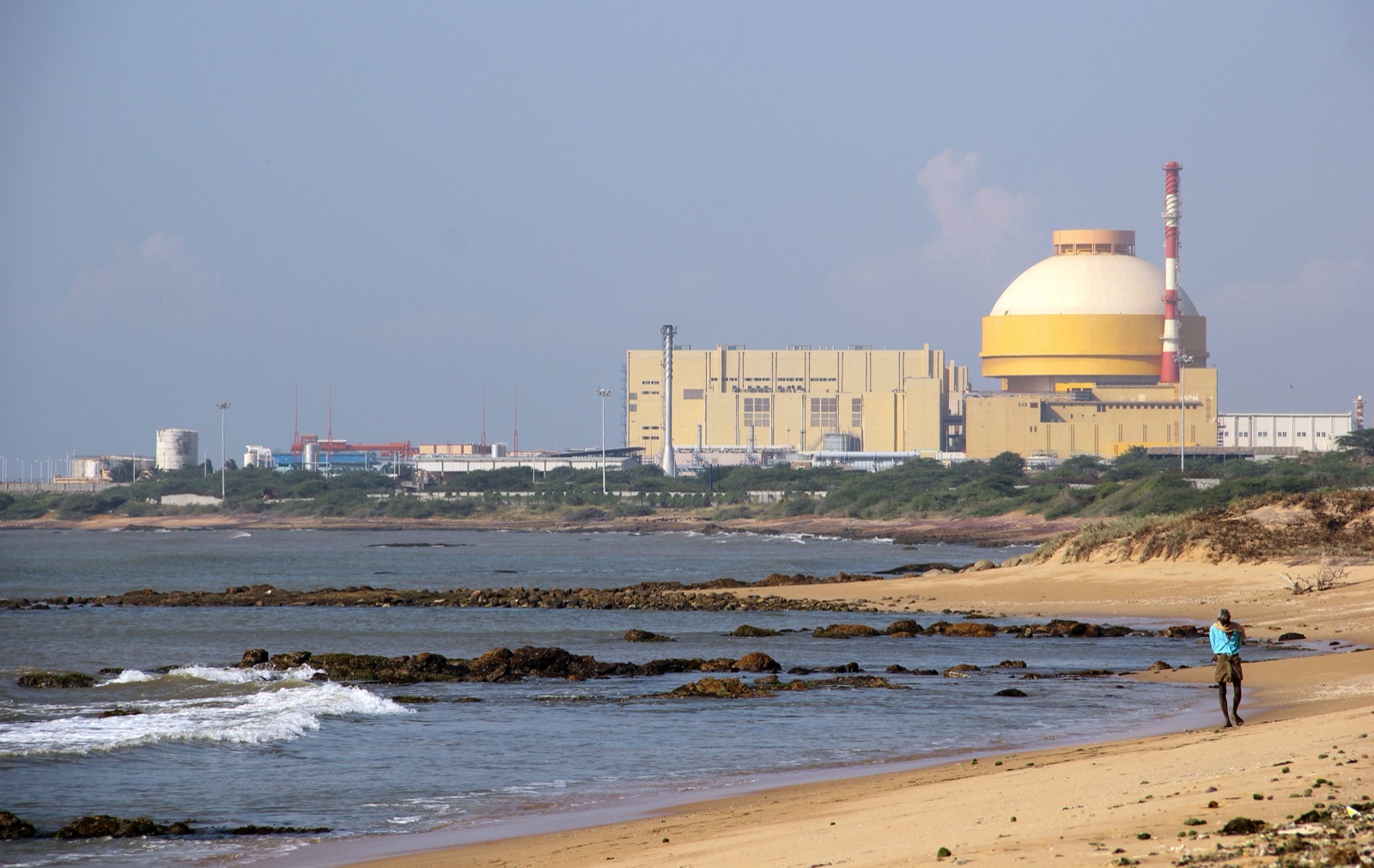
Source: Press Information Bureau, Government of India (PRID 2278309)