

Ragi, also known as finger millets, are coarse grains that are mostly consumed in rural and southern India, grown through sustainable farming practices. It contains several nutrients and ragi imparts several benefits to both kids and adults when included in diet. Let us discuss about ragi and the benefits of ragi for kids.
Nutritional value of Ragi
Ragi has a lot of nutrients. Along with necessary fats, proteins, vitamins, and minerals, it also provides a wide range of macro and micronutrients. Overall, ragi can be considered a superfood.
| Nutrient | Nutritional Value per 100g |
|---|---|
| Calories | 354 kcal |
| Total Fat | 3.4g |
| Saturated Fat | 0.7g |
| Polyunsaturated Fat | 2g |
| Monounsaturated Fat | 0.7g |
| Cholesterol | 0mg |
| Sodium | 5mg |
| Potassium | 40mg |
| Carbohydrates | 80g |
| Dietary Fibre | 2.7g |
| Sugars | 0.6g |
| Protein | 13g |
Health Benefits of Ragi for Adults
Ragi isn’t just a children’s food — its nutrient profile makes it one of the more useful everyday grains for adults too, especially compared to refined wheat flour. Here’s how it stacks up.
Supports Bone Health
Ragi is one of the richest plant-based sources of calcium available in the Indian diet — significantly more per 100g than most other grains or even milk. Regular consumption supports bone density and may help reduce the risk of osteoporosis, particularly useful for older adults and women post-menopause.
Helps Manage Blood Sugar
Ragi has a lower glycemic index than white rice or refined wheat, meaning it releases glucose into the bloodstream more slowly. This makes it a commonly recommended grain for people managing diabetes or looking to avoid blood sugar spikes, though it should still be eaten as part of a balanced diet rather than as a standalone fix.
Aids Weight Management
The high fibre content in ragi keeps you feeling fuller for longer, which naturally helps reduce overeating. It also contains tryptophan, an amino acid linked to appetite regulation.
Supports Heart Health
Ragi’s fibre and complex carbohydrates help manage cholesterol levels, while its low sodium and zero cholesterol content (see the nutrition table above) make it a heart-friendly staple grain, especially when substituted for more processed alternatives.
Naturally Gluten-Free
For anyone managing gluten sensitivity or celiac disease, ragi is a safe, nutrient-dense alternative to wheat-based flours — usable in rotis, dosas, porridge, and baked goods without any gluten content.
Ragi vs. Wheat: Quick Comparison
| Nutrient (per 100g) | Ragi | Wheat Flour |
|---|---|---|
| Calcium | ~344mg | ~34mg |
| Dietary Fibre | 2.7–3.6g | ~1.9g |
| Gluten | None | Present |
| Glycemic Index | Lower | Higher |
Ragi comes out ahead on calcium, fibre, and glycemic load, while wheat offers slightly more protein in some varieties — making the two complementary rather than strict substitutes in a balanced diet.
Benefits of Ragi for kids
Ragi flour is a completely natural baby food that is rich in calcium, fiber, and vitamin D. Because organic ragi food is entirely natural, gluten-free, low in fat, and free of any additional preservatives or artificial colors, adding it to your baby’s diet is a wise decision. Let us discuss about the benefits of Ragi in detail.
1. Rich in Calcium
More than twice as much calcium is present in ragi as in chickpeas and almost three times as much as in cow’s milk per 100 gm. Children who are growing require a lot of calcium every day, ranging from 700 mg for newborns to 1,300 mg for teenagers. A ragi-based evening snack will assist in achieving this goal and assisting in preventing later issues like osteoporosis and fracture risk along with healthy meals.
2. Easy to make healthy recipes for babies
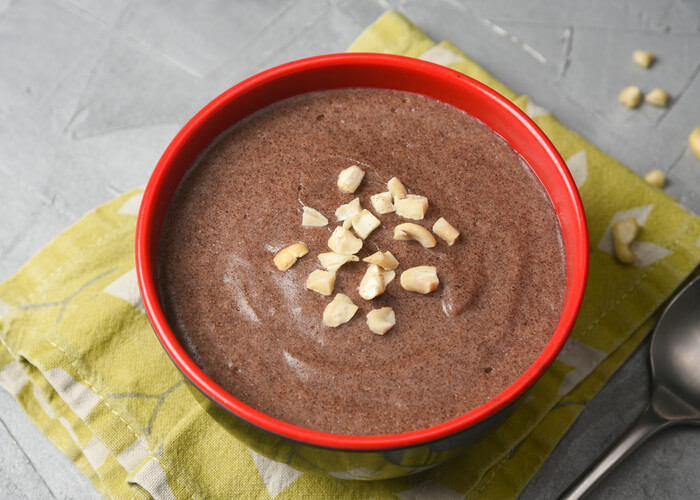
Because of its adaptability, ragi can be simply combined with milk or cooked into a delicious porridge. Many ragi recipes can be prepared easily and serves tasty and healthy baby food. All you need to create porridge is ragi, salt, water, and optionally, milk. Ragi can be used to produce tasty idlis or dosas when combined with oats and semolina.
3. Helps babies and kids to sleep
Numerous amino acids, including tryptophan, which has the ability to raise the body’s level of serotonin a source to the hormone melatonin that aids in moderating sleep are abundant in ragi.
4. Ragi is rich in Fibre that helps in digestion
Ragi contains a lot of dietary fiber, which aids in digestion and makes babies feel full and satisfied longer. The amino acids in ragi eliminate the extra fat that builds up around the liver and lower a child’s blood cholesterol levels, preventing obesity.
5. Rich in Iron
Children’s anemia can be prevented by the natural iron found in ragi. The high vitamin C content of sprouted ragi promotes higher iron absorption. Ragi prevents infant malnutrition because of its high nutritious content.

Organic Ragi Flour
Natural Ragi Powder is also known as Nachini Flour or Satva / Kodra / Taidalu / Kezhvaragu / Finger Millet Flour. This is easy to digest for babies, kids and can be be used to make porridge, halwa, roti, dosa or idli.
5 Amazing Ragi Recipes for Kids
Read Ahead